
Anti-Aging Rubber Extrusion for Outdoors | OEM Supplier
By Zhouxin Sealing Engineering Team · · 242 views
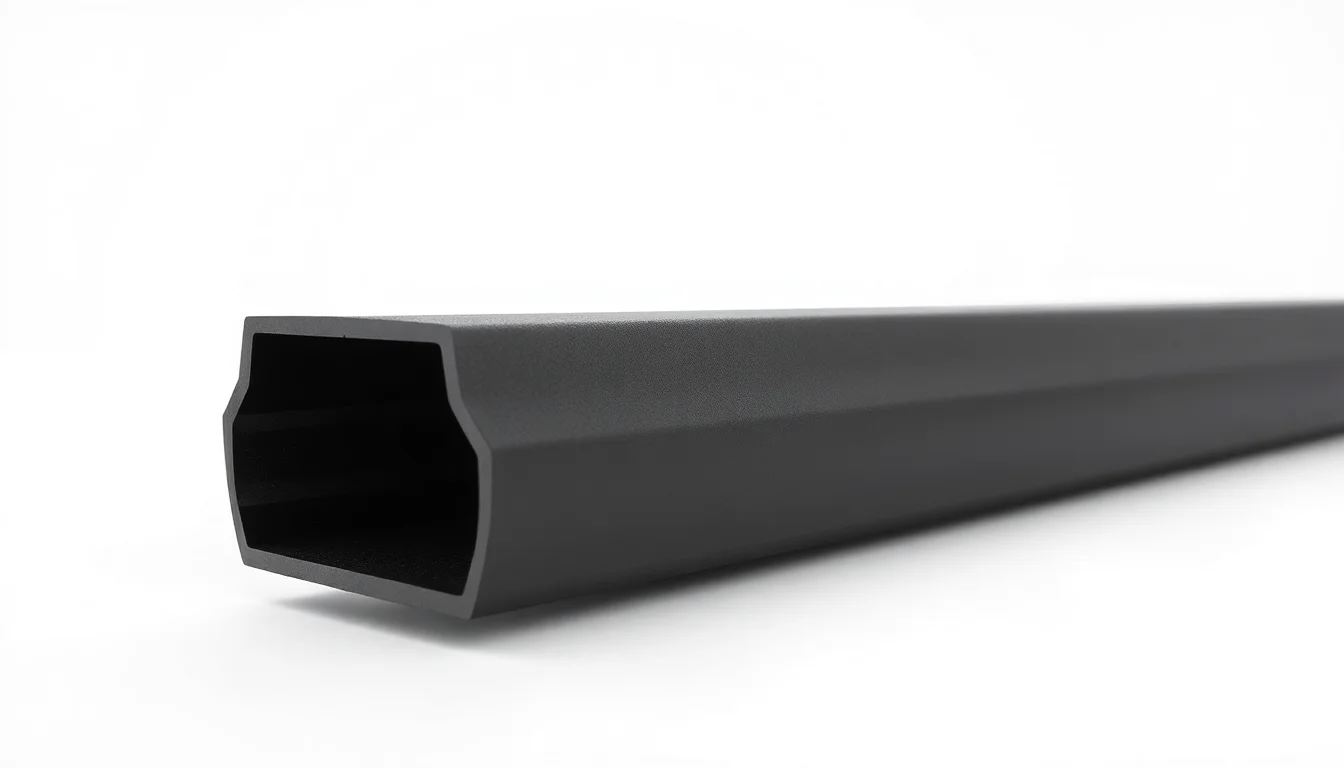
If you are sourcing anti-aging rubber extrusion for outdoors, the core differentiator is not the base polymer — it is the formulation’s resistance to thermal aging, ozone cracking, and UV degradation over 1000+ hours. A standard EPDM 70 Shore A compound aged 70 hours at 125°C per ASTM D573 may lose 30% tensile strength; our outdoor-grade formulas hold tensile drop under 15% after 168 hours at 125°C. That delta defines whether your gasket fails in Year 2 or Year 12.
Why Outdoor Extrusion Compounds Differ from Indoor Grades
Polymer Matrix Selection
For outdoor applications, the elastomer backbone must resist ozone and UV. Three workhorses dominate:
- EPDM: Best ozone resistance among general-purpose rubbers. Compression set per ASTM D395 Method B (22h/70°C) ≤ 25%.
- Silicone (VMQ): Superior thermal stability (-60 to 250°C) but lower tear strength. Used where flame retardancy (UL 94 V-0) is required.
- Neoprene (CR): Moderate oil and weather resistance. Used in marine or chemical exposure.
Anti-Aging Additive Packages
Our silicone series uses hindered amine light stabilizers (HALS) and carbon black loading optimized for 2000+ hours QUV testing. For EPDM, we adjust the sulfur-to-peroxide cure ratio to minimize reversion during thermal cycling.
| Property | Standard EPDM (Indoor) | Anti-Aging EPDM (Outdoor) | Test Method |
|---|---|---|---|
| Shore A Hardness | 70 ± 5 | 70 ± 3 | ASTM D2240 |
| Tensile Strength (MPa) | 8.0 | 10.5 | ASTM D412 |
| Elongation at Break (%) | 350 | 420 | ASTM D412 |
| Compression Set (%) | 30 | 22 | ASTM D395 B |
| Heat Aging (70h/125°C) | Tensile loss ~30% | Tensile loss ≤ 15% | ASTM D573 |
| Ozone Resistance (50 pphm, 40°C, 20% strain) | Cracks at 48h | No cracks at 168h | ASTM D1149 |
The Custom Extrusion Process: From CAD to Shipping Container
Step 1: Drawing Review and Tolerance Confirmation
Send your CAD file (.step, .igs, or .dxf). We check three critical parameters:
- Extrusion tolerance: ±0.15 mm for cross-sections under 10 mm; ±0.25 mm for 10–25 mm. ISO 3302-1 class E2.
- Draft angles: Not required for extrusion, but sharp internal corners (radius < 0.3 mm) may cause flow lines.
- Gates and mandrel design: Hollow profiles need balanced wall thickness to avoid collapse during vulcanization.
In our Hunan factory experience, the single biggest delay in overseas projects is missing the closed-cell vs. solid specification on the drawing. If you need a sponge seal for compression recovery, note it in the title block.
Step 2: Tooling Fabrication (2–3 Weeks)
- Single-cavity die: $450–$1,200 depending on cross-section complexity.
- Multi-port dies: For multiple profiles simultaneously, tooling cost splits across cavities.
- MOQ: 500 meters per profile for solid extrusions; 300 meters for sponge. Lower MOQ possible with tooling cost sharing.
Step 3: Sample Production and Validation
Lead time for first samples: 7–12 working days after tooling approval. We run 10 meters of trial extrusion, cure-test at three oven zones, and check dimensional compliance with a Mitutoyo optical comparator. Samples shipped DDP for your fit-check.
Step 4: Production and Packing
- Continuous vulcanization: Hot air or salt bath, depending on profile thickness.
- Packing options: Coils (100–300m per roll on cardboard cores), cut lengths (wooden crates for straight pieces), or spools for automated assembly.
- Export: FOB Shanghai or Shenzhen. Full fumigation-certified plywood crates with weatherproof lining.
Material Selection for Common Outdoor Profiles
| Application | Recommended Material | Key Requirement |
|---|---|---|
| Door sealing strips | EPDM 65 Shore A | Ozone resistance, 10-year UV stability |
| Cabinet seals | Silicone 50–70 Shore A | UL 94 V-0, -60 to 200°C |
| WPC profiles | EPDM/PP blend | Co-extruded rigid carrier, UV-stable cap |
| Window glazing gaskets | EPDM 70 Shore A | Compression set ≤ 25%, 100% ozone resistance |
Frequently Asked Questions
What is your MOQ for custom anti-aging rubber extrusions?
Standard MOQ is 500 meters per profile for solid EPDM and 300 meters for sponge or silicone. For first-time buyers, we accept 200 meters with a 20% tooling cost surcharge. Multi-profile orders combine toward MOQ.
How long do samples take, and what do they cost?
Sample lead time is 7–12 working days after tooling approval. Sample cost is $150–$350 including tooling amortization and express shipping (DHL/FedEx). Cost is refunded with production order over $3,000.
What extrusion tolerance can you hold?
We hold ±0.15 mm for cross-section dimensions under 10 mm, ±0.25 mm for 10–25 mm, and ±0.40 mm for features over 25 mm. ISO 3302-1 class E2 is our standard; class E1 (±0.10 mm) available at 15% higher tooling cost.
How do you pack for ocean freight?
Coils: wound on 300mm ID cardboard cores, wrapped in PE film, packed in plywood crates with silica gel desiccant. Cut lengths: bundled with PP straps, crated with foam dividers. Each crate labeled with heat-shrink plastic cover and export marks.
Can you match a competitor’s compound or a physical sample?
Yes. Send 200g of the existing rubber or a 10cm profile piece. We perform FTIR analysis, TGA, and Shore A durometer check. Our lab reformulates within 5 working days and provides a compliance report per ASTM D573 and ISO 1817.
How to Send CAD Drawings That Reduce Back-and-Forth
- Format: .step or .igs for 3D; .dxf or .dwg for 2D cross-section. Include a .pdf with dimensions and tolerance notes.
- Call out: Material (EPDM/Silicone/Neoprene), durometer (Shore A), density (solid vs. sponge), and flame rating if required.
- Mark the direction of extrusion: Arrow on the cross-section showing the continuous axis.
- Include mating surface details: If the seal compresses against a metal or plastic frame, note the gap dimension and required compression force (N/m).
| CAD Requirement | Why It Matters |
|---|---|
| Cross-section with GD&T | Avoids ±0.5 mm interpretation errors |
| Wall thickness labeled | Prevents collapse during vulcanization |
| Material hardness noted | Ensures correct die land length |
| Surface finish (Ra) | Reduces secondary grinding operations |
Send your CAD drawing for a 24-hour quote. We respond with a technical review, tooling estimate, and sample lead time — same business day for files received before 14:00 CST.
Need a Custom Quote?
Send your CAD drawing or specs (material, hardness, profile, temperature range, MOQ) — our engineering team will respond within 24 hours.