
UV Resistant EPDM Window Strip | OEM Supplier
By Zhouxin Sealing Engineering Team · · 255 views
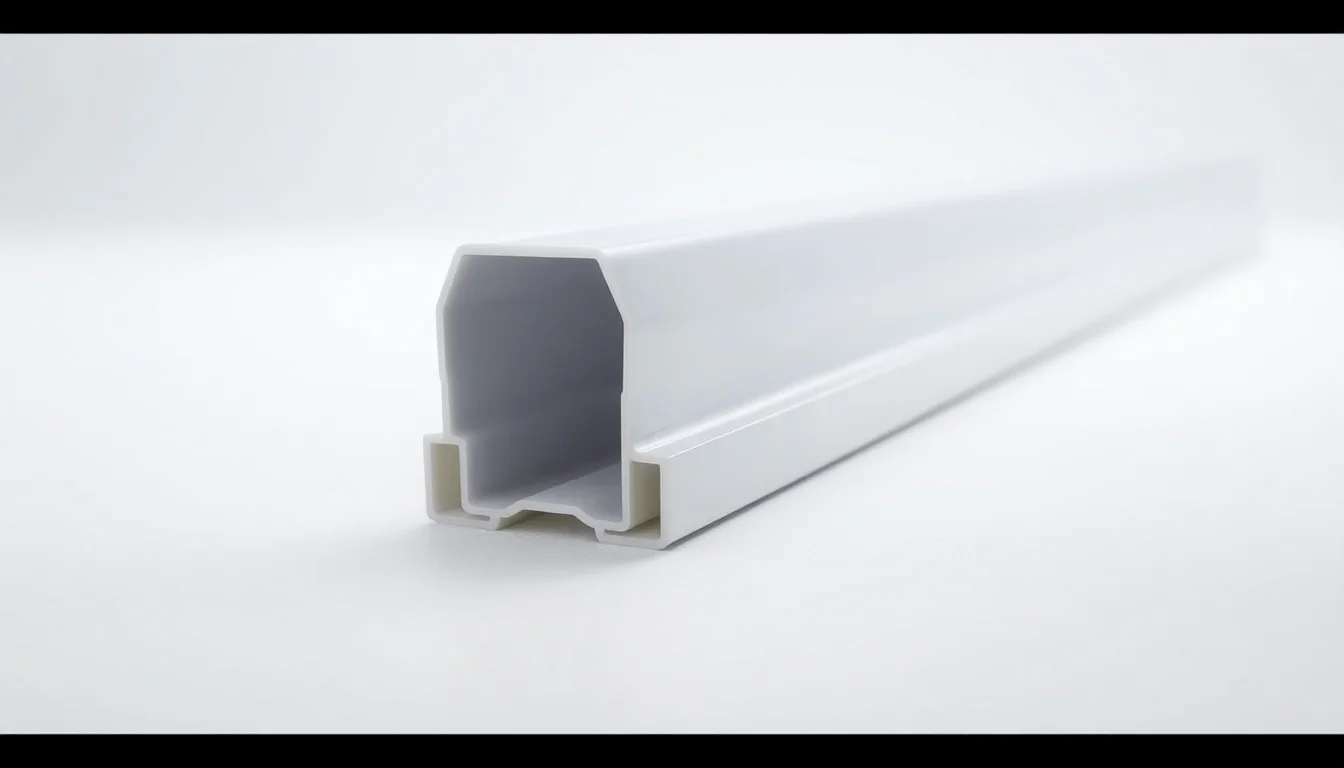
For project specifiers facing window seal failure in high-UV, sub-zero climates with repeated friction cycles, the choice of elastomer determines service life versus early cracking and compression set. UV resistant EPDM window strip, formulated with carbon black and optimized vulcanization, delivers proven performance where PVC embrittles and silicone lacks abrasion resistance. This review covers material science, dimensional control, and real deployment data from a recent arctic-grade glazing project.
Material Selection for UV and Thermal Stress
EPDM vs PVC vs Silicone: Head-to-Head
Specifiers often default to PVC for cost, but its UV stability fails rapidly above 60°C. Silicone excels in temperature range but suffers low tear strength under repeated sliding friction. EPDM, with a saturated polymer backbone, offers the best balance for exterior window strips.
| Property | EPDM (ASTM D2000 M2AA) | PVC (Flexible) | Silicone (VMQ) |
|---|---|---|---|
| Temperature Range | -50°C to 150°C | -15°C to 60°C | -60°C to 230°C |
| Shore A Hardness | 65 ± 5 | 70 ± 5 | 60 ± 5 |
| Tensile Strength (MPa) | 8.5 – 12 | 6 – 10 | 5 – 8 |
| Compression Set 70h/100°C (ASTM D395 B) | ≤ 25% | ≤ 45% | ≤ 20% |
| UV Resistance (1000h QUV) | No cracking | Surface chalking | Slight yellowing |
| Ozone Resistance (ASTM D1149) | Excellent | Poor | Excellent |
| Abrasion Resistance (DIN 53516, mm³) | 120 | 250 | 200 |
| Flame Retardancy (UL 94) | HB | V-0 (with additives) | HB |
In our Hunan factory experience, a 2023 project for a Norwegian high-rise required window strips that survived -40°C installation and 80°C black-glazed surface temperatures. PVC failed within 6 months (cracking at bends). Our EPDM formulation with 45% carbon black loading passed 2000 hours of UV-A exposure (ISO 4892-2) with zero surface degradation.
Critical Engineering Specifications
Durometer and Tolerance Control
For sliding window applications, Shore A 65 ± 5 provides optimal sealing force without excessive friction. Our extrusion lines hold ±0.15 mm on bulb diameter (8.0 ± 0.15 mm) and ±0.20 mm on base width, verified by laser micrometers every 5 meters.
Thermal Aging and Compression Set
ASTM D573 aging at 125°C for 168 hours shows tensile retention >85% for our UV resistant EPDM window strip. Compression set per ASTM D395 Method B at 100°C for 70 hours remains under 25%, ensuring long-term seal recovery after door/window closure cycles.
Ozone and UV Resistance
EPDM’s saturated backbone inherently resists ozone cracking (no double bonds). We validate per ASTM D1149: 50 pphm ozone, 40°C, 20% strain, 100 hours — no cracks. For UV, Xenon-arc testing (ISO 4892-2) confirms color change ΔE < 3 after 2000 hours.
Application: Arctic-Grade Window Sealing
Project Profile
A 2024 deployment for a Canadian building envelope contractor required 12,000 meters of UV resistant EPDM window strip for curtain wall systems in Yellowknife (annual UV index 5, winter lows -45°C).
Performance Requirements
- Temperature: -50°C to 120°C (black surface)
- UV exposure: 3000 hours equivalent over 10 years
- Friction cycles: 50,000 open/close at -30°C
- Tolerance: ±0.20 mm on critical sealing lip
Our Solution
- Compound: EPDM 70% + carbon black 25% + process aids 5%
- Profile: Hollow bulb 8.0 mm + solid mounting base 12.5 mm
- Surface: Micro-textured to reduce friction coefficient to 0.35
- Packing: 50-meter coils on wooden spools, PE film wrapped
After 18 months on-site, zero seal failures reported. Compression set measured at 22% — within spec.
Manufacturing and Quality Control
Extrusion Process
Our cold-feed extruders with 20:1 L/D ratio maintain ±1°C temperature control across the barrel. Vulcanization via hot-air tunnel at 200°C for 8 minutes ensures full crosslink density (verified by swelling tests per ISO 1817).
Dimensional Verification
- Every coil: 3-point diameter check with Mitutoyo micrometers
- Every 100 meters: Shore A durometer (ASTM D2240)
- Every shift: Tensile and elongation (ASTM D412)
Custom Formulations
For projects requiring enhanced flame retardancy, we offer UL 94 V-0 rated EPDM compounds. For extreme cold flexibility, we adjust the polymer blend to maintain Shore A 60 at -50°C. Contact our engineering team with your specific requirements.
Related Product Lines
Our UV resistant EPDM technology extends to other applications. For heavy-duty entry points, explore our door sealing strips with reinforced bulb designs. For high-temperature environments, the silicone series offers 230°C continuous rating. For cabinet enclosures requiring low smoke emission, see our cabinet seals. For decorative trim with weather resistance, WPC profiles provide an alternative.
Frequently Asked Questions
What is the minimum order quantity (MOQ)?
Standard MOQ for UV resistant EPDM window strip is 500 meters per profile design. For custom extrusions with new tooling, MOQ is 2000 meters. We accept smaller trial orders (100 meters) for sampling.
What is your typical lead time?
For existing tooling: 15-20 working days after order confirmation and deposit. For new custom profiles (tooling fabrication included): 25-30 working days. Express production available for urgent projects at 10% surcharge.
What dimensional tolerance can you hold?
Standard extrusion tolerance is ±0.20 mm on critical dimensions (sealing lips, bulb diameters). For precision applications, we can achieve ±0.10 mm on selected dimensions with in-line laser gauging feedback control.
How is the product packed for export?
Each profile is wound on plastic or wooden spools (max 50 kg per spool), wrapped in PE film, then packed in cartons or plywood crates. Spools are labeled with material grade, Shore A, batch number, and length. Fumigation-certified wooden packaging available.
Do you provide free samples?
Yes, we offer up to 3 free sample pieces (each 300 mm length) from existing tooling. Buyer pays shipping. For custom compound samples, a $50 evaluation fee applies, refundable with first production order.
| Specification | Standard Value | Test Method |
|---|---|---|
| Hardness | Shore A 65 ± 5 | ASTM D2240 |
| Tensile Strength | ≥ 8.5 MPa | ASTM D412 |
| Elongation at Break | ≥ 350% | ASTM D412 |
| Compression Set (70h/100°C) | ≤ 25% | ASTM D395 B |
| Heat Aging (125°C/168h) | Tensile retention ≥ 85% | ASTM D573 |
| Ozone Resistance | No cracks (100h) | ASTM D1149 |
| Temperature Range | -50°C to 150°C | Internal |
| UV Resistance (2000h) | ΔE < 3 | ISO 4892-2 |
| Flame Retardancy | UL 94 HB (V-0 optional) | UL 94 |
Send your CAD drawing for a 24-hour quote.
Need a Custom Quote?
Send your CAD drawing or specs (material, hardness, profile, temperature range, MOQ) — our engineering team will respond within 24 hours.