
UV Resistant EPDM Window Strip | OEM/ODM Manufacturer
By Zhouxin Sealing Engineering Team · · 12 views
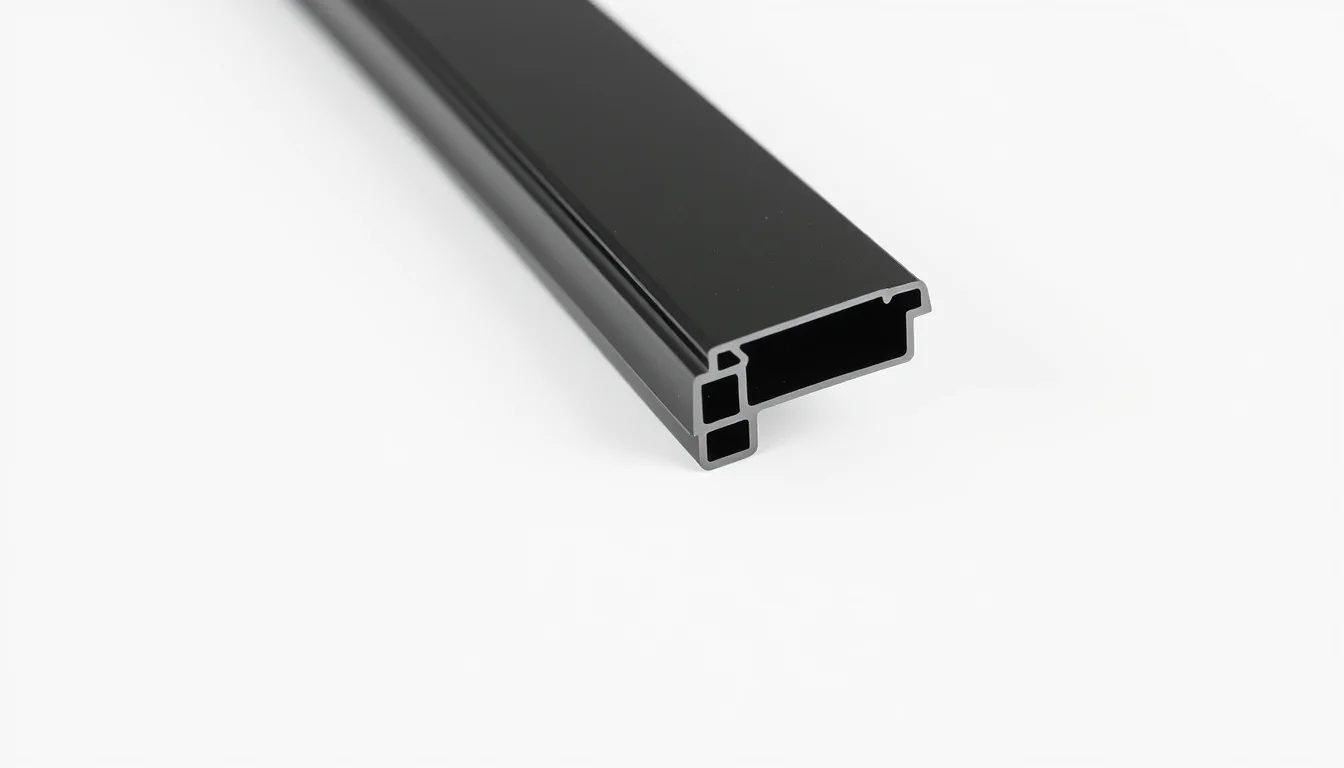
For overseas buyers sourcing UV resistant EPDM window strip, the critical procurement data points are tooling cost, MOQ, extrusion tolerance, and sample lead time — and a factory that can hold those specs across repeat POs. This guide walks through the real custom extrusion process, from CAD review to export packing, so you can qualify suppliers without wasting three weeks on back-and-forth.
Factory Capability Comparison: What Actually Matters
When comparing quotes for UV resistant EPDM window strip, price per meter is the last thing to look at. The first is whether the supplier runs a true vulcanization line or outsources curing. The second is whether they co-extrude rigid and flexible polymers in one pass — critical for window strips that combine a dense EPDM foot with a soft bulb.
Equipment and Process Signals
A capable EPDM extrusion plant should have:
- Cold-feed or hot-feed extruders with L/D ratio above 16:1 for consistent polymer matrix dispersion
- Microwave or hot-air continuous vulcanization (CV) lines, not batch ovens
- In-line laser micrometers for dimensional feedback
- Salt-bath or fluidized-bed curing for dense profiles
Material Grade Transparency
Ask for the exact EPDM grade, carbon black type, and cure system. A UV-stabilized EPDM window strip typically uses an EPDM with high ethylene content (60–70%) and a sulfur or peroxide cure. Peroxide-cured EPDM gives better compression set and thermal aging performance, which matters for window strips exposed to 90°C+ surface temperatures in tropical installations.
In our Hunan factory experience, a European window hardware OEM rejected three supplier samples before coming to us because the bulb section collapsed after 500 hours of ASTM D573 air-oven aging at 100°C. The root cause was under-cured EPDM in the thin bulb wall — the outsourced batch oven never reached the core temperature. We moved the profile to a microwave CV line with a 12-meter hot-air tunnel, and compression set dropped from 38% to 22% (ASTM D395, 70h @ 100°C). That single process change is the difference between a 5-year and a 15-year window seal.
UV Resistant EPDM vs. Alternative Elastomers
Buyers often ask whether EPDM is still the right choice versus silicone or TPE. The table below uses typical values for window sealing profiles — verify against your specific grade and test standard.
| Property | EPDM (UV-stabilized) | Silicone | TPE/TPV | PVC (flexible) |
|---|---|---|---|---|
| Continuous service temp | -40 to 120°C | -60 to 200°C | -60 to 125°C | -10 to 70°C |
| Shore A hardness range | 50–80 | 30–70 | 55–85 | 60–90 |
| Tensile strength (MPa) | 8–14 | 6–10 | 5–9 | 8–15 |
| Compression set (%, 70h @ 100°C) | 20–30 | 15–25 | 30–45 | 40–60 |
| Ozone resistance | Excellent | Excellent | Good | Poor |
| UV/weathering (1000h QUV) | ΔE < 3 | ΔE < 2 | ΔE < 4 | ΔE > 8 |
| Flame retardancy (UL 94) | HB (additives for V-0) | HB to V-0 | HB | V-0 achievable |
| Relative cost | $$ | $$$$ | $$ | $ |
EPDM wins on cost-to-performance for exterior window strips in most climates. Silicone is specified when the window strip sees sustained temperatures above 130°C or requires UL 94 V-0 without halogenated additives. TPE is a fit for interior cabinet seals where UV exposure is minimal.
The Custom Extrusion Process: From CAD to Container
Step 1 — Drawing Review (Day 0–1)
Send a 2D DXF or DWG with the cross-section, plus a 3D STEP file if available. Include the cut length, corner treatment, and any post-extrusion operations (punching, notching, splicing). We review for draft angles, wall thickness uniformity, and minimum radii. A 1.5 mm minimum wall on EPDM is safe; below 1.0 mm, the profile risks tearing during take-off.
Step 2 — Tooling and DFM Feedback (Day 1–3)
We return a DFM report flagging any feature that will drive tooling cost or scrap rate. Typical extrusion die cost for a window strip profile ranges from USD 600 to USD 2,500 depending on complexity and number of co-extrusion streams. A co-extruded EPDM + rigid PVC profile sits at the higher end.
Step 3 — Sample Extrusion and Testing (Day 5–10)
First-article samples are extruded, vulcanized, and tested for durometer (Shore A), tensile strength (ASTM D412), compression set (ASTM D395), and ozone resistance (ASTM D1149). Thermal aging per ASTM D573 at 70h/100°C confirms the cure state. For window strips in automotive or rail applications, we also run ISO 1817 fluid resistance if requested.
Step 4 — Sample Approval and Production (Day 10–30)
Once you sign off the sample, production runs on the same line with the same cure recipe. Extrusion tolerance for EPDM window strip is typically ±0.15 mm on critical dimensions and ±0.30 mm on non-critical, per ISO 3302-1 Class E2 or E3. Tighter than ±0.10 mm requires post-cure grinding or a secondary calibration die — possible, but adds cost and lead time.
Sending CAD Drawings That Reduce Back-and-Forth
Most delays in custom EPDM window strip projects come from incomplete drawings, not factory capacity. A clean RFQ package includes:
- Cross-section drawing with all dimensions and tolerances called out
- Material specification (EPDM grade, hardness, color, UV package)
- Cut length and tolerance
- Annual volume and first PO quantity
- Any regulatory requirements (RoHS, REACH, UL 94, FMVSS 302)
- Packing preference (coil, straight length, or pre-cut with adhesive)
If you only have a physical sample, send it by courier — we can reverse-engineer the profile and return a drawing for your approval. That adds 3–5 days but avoids a wrong die.
For related profiles, our door sealing strips and silicone series pages show the range of cross-sections we run. We also co-extrude WPC profiles with EPDM seals for composite window systems.
MOQ, Tooling, Packing, and Export
MOQ
Standard MOQ for a custom UV resistant EPDM window strip is 500–1,000 meters per profile per color. For stock profiles, MOQ can drop to 200 meters. Co-extruded or dual-durometer profiles start at 1,000 meters.
Tooling Cost
| Profile Type | Typical Tooling (USD) |
|---|---|
| Single-extrusion EPDM | 600–1,200 |
| Co-extrusion EPDM + rigid | 1,500–2,500 |
| Post-processing (punch, notch) | 300–800 |
Packing and Export
Window strips are coiled in 50–100 m rolls, wrapped in PE film, then packed in cartons on pallets. For long straight lengths, we use rigid tubes or wooden crates. All export packing meets ISPM 15 for wood. We ship FOB Shanghai or Ningbo, or CIF/CFR to your port. Typical container load: 12–18 tons per 20' GP depending on profile density.
Frequently Asked Questions
What is the MOQ for a custom UV resistant EPDM window strip?
For a new custom profile, MOQ is typically 500–1,000 meters per color and per hardness. If you accept a stock profile and standard black EPDM, MOQ can be as low as 200 meters. Co-extruded profiles with a rigid carrier start at 1,000 meters because of higher setup scrap.
What is the sample lead time?
First-article samples for a new extrusion die ship in 7–10 working days after drawing approval. If you send a physical sample for reverse engineering, add 3–5 days. Stock profile samples ship in 2–3 days. We courier samples via DHL or FedEx at your account or ours, depending on the agreement.
What extrusion tolerance can you hold on EPDM window strip?
Standard production tolerance is ±0.15 mm on critical dimensions and ±0.30 mm on non-critical, per ISO 3302-1 Class E2/E3. Tolerances tighter than ±0.10 mm require secondary calibration or grinding and should be specified early because they affect tooling design and cost.
How are UV resistant EPDM window strips packed for export?
Standard packing is coiled rolls of 50–100 meters, PE-wrapped, in cartons on ISPM 15 pallets. Straight lengths ship in rigid tubes or crates. We can add desiccant, VCI film, or custom labels for OEM buyers. Container loading is 12–18 tons per 20' GP.
What is your sample policy?
Stock profile samples are free; you cover courier. Custom samples are charged at a nominal fee that credits back against the first production PO above 5,000 meters. We provide full test reports with samples: durometer, tensile strength, compression set, and thermal aging per ASTM D573.
Send Your CAD Drawing for a 24-Hour Quote
Email your DXF, DWG, or STEP file with material and volume details. Our engineering team returns a DFM report, tooling quote, and FOB price within 24 hours on working days. For reverse-engineering from a physical sample, courier it to our Changde, Hunan facility and we will return a drawing for approval.
Need a Custom Quote?
Send your CAD drawing or specs (material, hardness, profile, temperature range, MOQ) — our engineering team will respond within 24 hours.