
T-Shape Rubber Seal Supplier | Material Science & Bulk OEM
By Zhouxin Sealing Engineering Team · · 48 views
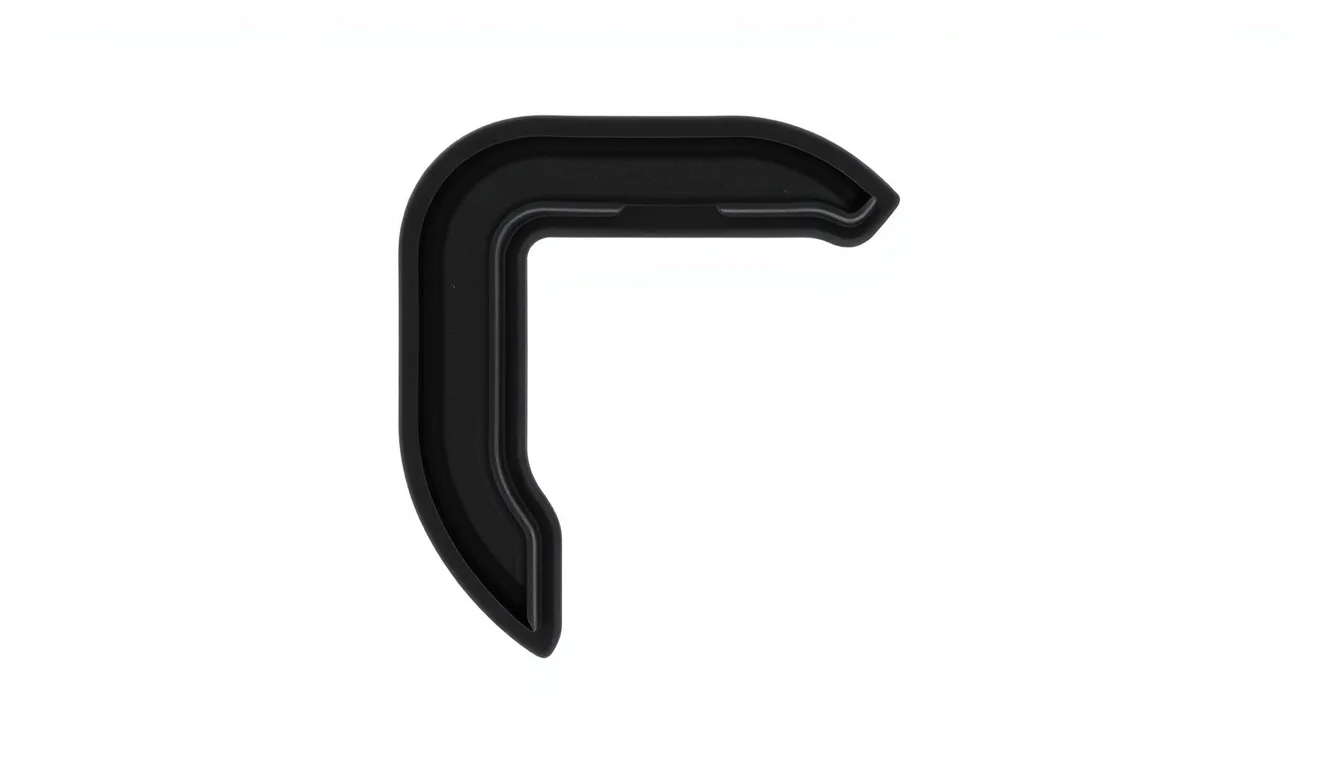
Material Selection for T-Shape Rubber Seals: A Data-Driven Comparison
Overseas B2B buyers specifying T-shape rubber seals must evaluate elastomer performance against tensile strength (MPa), compression set (%), thermal aging (ASTM D573), and fluid resistance (ISO 1817). This datasheet-style guide compares EPDM, silicone, FKM, NBR, and CR compounds for extrusion-based T-profile seals, with verified metrics for Shore A hardness, temperature range, and ozone resistance.
Elastomer Comparison Table for T-Shape Profiles
| Material | Shore A | Tensile Strength (MPa) | Temp Range (°C) | Compression Set % (70h @ 100°C) | Oil Resistance | Acid/Alkali Resistance | Ozone Resistance | Relative Cost |
|---|---|---|---|---|---|---|---|---|
| EPDM | 60–90 | 8–15 | -40 to +150 | 20–30 | Poor | Good | Excellent | $ |
| Silicone (VMQ) | 40–80 | 6–10 | -60 to +200 | 15–25 | Fair | Good | Excellent | $$ |
| FKM (Viton®) | 60–90 | 10–18 | -20 to +200 | 15–25 | Excellent | Excellent | Excellent | $$$$ |
| NBR | 50–90 | 10–20 | -30 to +100 | 15–25 | Excellent | Fair | Poor | $$ |
| CR (Neoprene) | 50–80 | 10–17 | -40 to +120 | 20–30 | Good | Good | Good | $$ |
Tensile Strength and Elongation at Break
Tensile strength for T-shape rubber seals ranges from 6 MPa (silicone) to 20 MPa (NBR). High-tensile compounds (>15 MPa) are required for profiles with thin web sections or high pull-out forces. Elongation at break typically exceeds 200% for EPDM and 150% for FKM. Verify tensile data per ASTM D412.
Compression Set and Sealing Force Retention
Compression set measured per ASTM D395 Method B (70h @ 100°C) should remain below 25% for dynamic T-seals and below 30% for static applications. Lower compression set correlates with longer sealing force retention in door sealing strips and cabinet seals.
Thermal Aging and Ozone Resistance
Thermal aging per ASTM D573 at 100°C for 70h or 168h determines tensile retention. EPDM retains >80% tensile after 1000h at 125°C; silicone retains >70% after 1000h at 200°C. Ozone resistance per ASTM D1149: EPDM and silicone show no cracking at 50 pphm for 1000h; NBR cracks within 72h.
Fluid and Chemical Resistance Data
| Medium | EPDM | Silicone | FKM | NBR | CR |
|---|---|---|---|---|---|
| ASTM Oil #1 | Poor | Fair | Excellent | Excellent | Good |
| ASTM Oil #3 | Poor | Fair | Excellent | Good | Fair |
| Dilute Acids (10%) | Good | Good | Excellent | Fair | Good |
| Dilute Alkalis (10%) | Good | Good | Excellent | Fair | Good |
| Ketones | Poor | Poor | Poor | Poor | Fair |
| Water (80°C) | Excellent | Good | Good | Fair | Good |
Extrusion Tolerance and Vulcanization Control
Dimensional Tolerance for T-Profiles
Extrusion tolerance for T-shape rubber seals follows ISO 3302-1 Class E2 or M2. Typical tolerances: ±0.15 mm for cross-section ≤10 mm, ±0.25 mm for 10–25 mm, ±0.40 mm for >25 mm. T-slot width tolerance is critical for snap-fit engagement; specify ±0.10 mm on mating surfaces.
Vulcanization and Polymer Matrix Stability
Continuous vulcanization (CV) lines with hot air or microwave achieve uniform crosslink density. Polymer matrix stability depends on cure system: peroxide-cured EPDM offers better compression set than sulfur-cured. For silicone series, platinum-cure provides lower volatiles for cleanroom applications.
Flame Retardancy and Special Compounds
UL 94 V-0 flame retardancy is achievable with halogen-free additives in EPDM and silicone. Limiting oxygen index (LOI) >28% for V-0. Flame-retardant T-seals are specified for WPC profiles in transit and electrical cabinets. Note that flame retardants can reduce tensile strength by 10–20% and increase compression set by 5–10%.
In our Hunan factory experience, ...
In our Hunan factory experience, a European OEM specified T-shape EPDM seals for outdoor cabinet doors with a required compression set ≤20% after 70h at 100°C. Initial sulfur-cured EPDM failed at 28%. Switching to peroxide-cured EPDM with a higher ethylene content reduced compression set to 18% and improved ozone resistance to 500h at 50 pphm. This required adjusting extrusion screw speed and vulcanization temperature to 180°C to avoid porosity.
Frequently Asked Questions
What is the MOQ for T-shape rubber seals?
MOQ is 500 meters for standard compounds (EPDM, NBR, silicone) and 1,000 meters for custom colors or flame-retardant grades. For OEM profiles with new tooling, MOQ is 2,000 meters. We accept mixed-material orders to meet container load efficiency.
What is the lead time for bulk T-shape rubber seal orders?
Standard lead time is 15–20 days after drawing approval and deposit. Custom compound development adds 7–10 days for lab verification (tensile, compression set, aging). Expedited 10-day production is available for repeat orders with existing tooling.
What tolerance can you hold on T-shape extrusion?
We hold ±0.15 mm on cross-section dimensions ≤10 mm, ±0.25 mm on 10–25 mm, and ±0.40 mm on >25 mm, per ISO 3302-1 Class E2. T-slot width can be held to ±0.10 mm on request. All dimensions are verified with laser micrometers and optical comparators.
How are T-shape rubber seals packed for export?
Seals are coiled in PE bags, then packed in double-wall corrugated cartons with desiccant. Carton dimensions and weights comply with ISPM 15 for wooden pallets. We offer vacuum packing for silicone and FKM to prevent contamination during ocean freight.
What is your sample policy for T-shape rubber seals?
Free samples up to 1 meter per profile are provided for evaluation. Buyer pays courier (DHL/FedEx) unless a freight collect account is provided. Custom compound samples require a $150 lab fee, refundable against a production order exceeding 5,000 meters.
Specification Summary for T-Shape Rubber Seal Supplier Selection
| Parameter | Standard Range | Test Method |
|---|---|---|
| Shore A Hardness | 40–90 | ASTM D2240 |
| Tensile Strength | 6–20 MPa | ASTM D412 |
| Elongation at Break | 150–400% | ASTM D412 |
| Compression Set | 15–30% | ASTM D395 B |
| Thermal Aging | 70–1000h | ASTM D573 |
| Ozone Resistance | 50–500 pphm | ASTM D1149 |
| Extrusion Tolerance | ±0.10–0.40 mm | ISO 3302-1 |
| Flame Retardancy | UL 94 V-0 | UL 94 |
| Fluid Resistance | Per ISO 1817 | ISO 1817 |
Send your CAD drawing for a 24-hour quote.
Need a Custom Quote?
Send your CAD drawing or specs (material, hardness, profile, temperature range, MOQ) — our engineering team will respond within 24 hours.