
Marine Hatch Rubber Seal | Material Science OEM Supplier
By Zhouxin Sealing Engineering Team · · 4 views
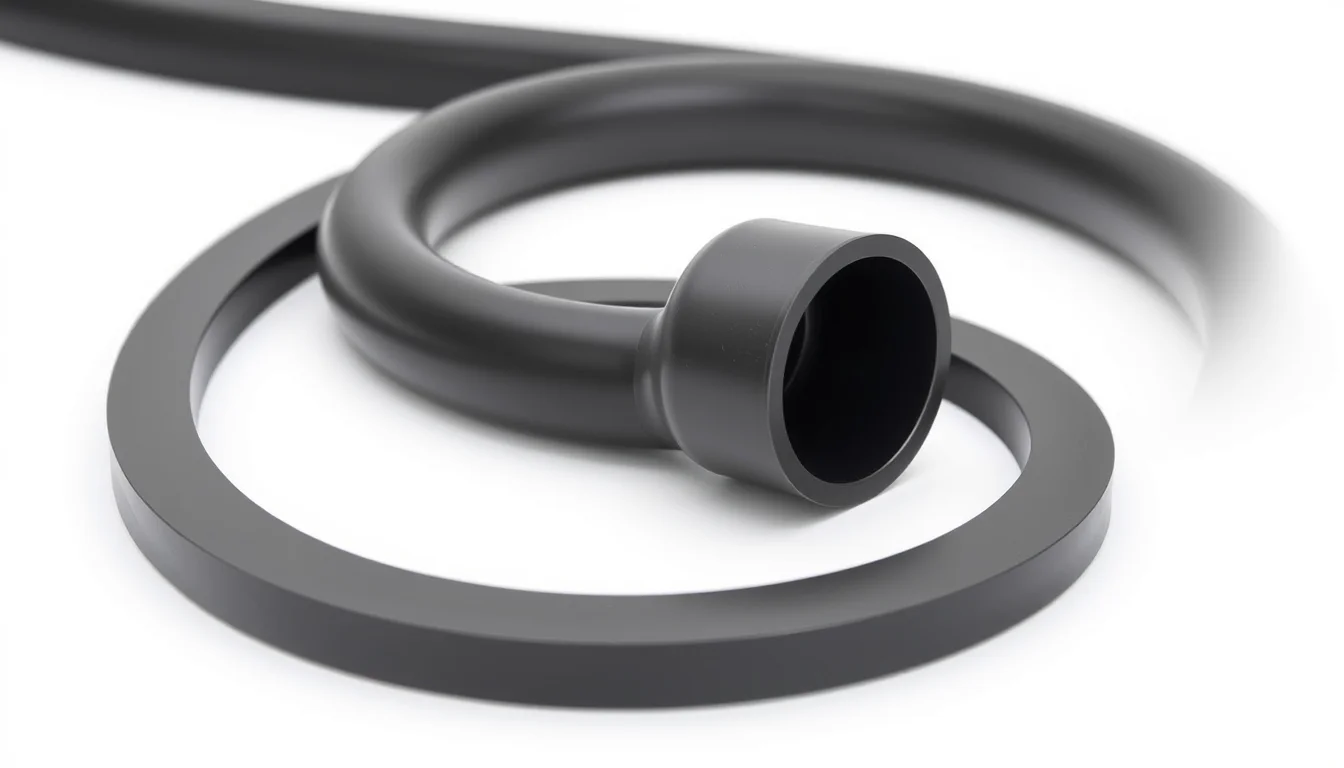
For marine hatch rubber seals, EPDM with 60–70 Shore A and a compression set under 20% at 70h/100°C delivers the best balance of ozone resistance, seawater aging, and cost for most offshore and deck applications. The table below compares the four elastomers most specified for hatch covers, access panels, and pressure doors, using ASTM D573 thermal aging, ASTM D395 compression set, and ISO 1817 fluid immersion data.
Material Comparison for Marine Hatch Rubber Seals
| Property | EPDM | Silicone (VMQ) | Neoprene (CR) | Nitrile (NBR) |
|---|---|---|---|---|
| Hardness range (Shore A) | 40–90 | 30–80 | 40–90 | 40–90 |
| Tensile strength (MPa) | 10–18 | 6–10 | 10–17 | 10–20 |
| Elongation at break (%) | 300–500 | 200–400 | 250–500 | 200–450 |
| Service temp range (°C) | -40 to +150 | -60 to +200 | -30 to +120 | -30 to +100 |
| Compression set, 70h/100°C (%) | 15–25 | 20–35 | 20–30 | 15–25 |
| Ozone resistance | Excellent | Excellent | Good | Poor |
| Seawater aging, 1000h | Excellent | Good | Good | Fair |
| Oil / fuel resistance | Poor | Fair | Good | Excellent |
| Acid / alkali resistance | Good | Fair | Good | Fair |
| UV / weathering | Excellent | Excellent | Good | Poor |
| Relative cost index | 1.0 | 2.2–3.0 | 1.3–1.6 | 1.0–1.2 |
Data reflect typical values for peroxide-cured or sulfur-cured compounds tested per ASTM D412 (tensile), ASTM D2240 (durometer), and ASTM D573 (thermal aging).
Tensile Strength, Durometer, and Compression Set Trade-offs
Tensile strength vs. sealing force
Higher tensile MPa does not automatically mean a better marine hatch rubber seal. A 70 Shore A EPDM at 14 MPa tensile will resist extrusion through a 2 mm gap at 0.5 MPa working pressure, but the same compound at 85 Shore A may crack at low temperature because the polymer matrix loses elasticity below -30°C. For hatch covers cycled by hand or hydraulic actuator, specify 60–70 Shore A with a tensile strength of 12–16 MPa and elongation above 350%.
Compression set as the primary life predictor
ASTM D395 Method B at 70h/100°C is the single most useful number for hatch seal service life. An EPDM compound with 18% set will recover within 0.15 mm after 10,000 compression cycles; a compound at 30% set will take a permanent deformation of 0.5 mm or more, causing leakage at the hatch coaming. Target values:
- EPDM: ≤20%
- Silicone: ≤30% (but compensates with wider temperature range)
- Neoprene: ≤25%
- Nitrile: ≤20% (only when oil contact is present)
Thermal aging and ozone resistance
ASTM D573 aging at 100°C for 70h should show tensile retention above 80% and elongation retention above 70% for a marine-grade EPDM. Ozone resistance per ASTM D1149 at 50 pphm, 40°C, 20% strain must show no cracks after 100h. Neoprene passes ozone testing but fails UV exposure after 2000h in direct deck sunlight. Silicone passes both but costs 2–3× more.
Chemical Resistance for Deck and Engine Room Environments
Seawater and salt spray
EPDM and neoprene both resist chloride attack. EPDM is preferred because it does not contain the chlorine-bearing backbone that can release HCl under prolonged UV. For hatch seals exposed to continuous salt spray, specify EPDM with a zinc oxide cure system and a carbon black loading of 40–60 phr.
Oil, fuel, and hydraulic fluid
Nitrile (NBR) with 28–35% acrylonitrile content resists diesel, hydraulic oil, and grease per ISO 1817 (Volume change ≤15% after 72h at 23°C). However, NBR has poor ozone resistance and should not be used on exposed hatch covers unless protected by a cover plate. Where both oil and ozone are present, a nitrile/PVC blend or a fluoroelastomer (FKM) is specified, but FKM costs 8–12× EPDM.
Acid and alkali wash-down
Deck wash chemicals range from pH 2 to pH 12. EPDM resists both dilute sulfuric acid and sodium hydroxide at 50°C for 500h with less than 10% volume swell. Silicone swells in strong alkali. Neoprene degrades in concentrated sulfuric acid. For chemical tanker hatch seals, specify EPDM with a peroxide cure.
Flame Retardancy and Standards Compliance
Marine hatch rubber seals on SOLAS-regulated vessels must meet IMO FTP Code Part 2 for flame spread. EPDM compounds can be formulated to pass UL 94 V-0 with aluminum trihydrate (ATH) loading at 80–120 phr, but tensile strength drops from 14 MPa to 8–10 MPa. Silicone naturally passes UL 94 V-0 without additives but has lower tensile strength. Neoprene passes UL 94 V-0 with antimony trioxide, but the compound becomes denser and less flexible at low temperature.
For non-SOLAS inland vessels, flame retardancy is often waived. Specify standard EPDM to keep cost down.
Extrusion Tolerance and Vulcanization Control
Dimensional tolerance
Marine hatch rubber seal profiles are extruded, not molded, for lengths above 500 mm. Achievable tolerances per ISO 3302-1 Class E2:
| Dimension range | Tolerance (±mm) |
|---|---|
| 0–4 mm | 0.15 |
| 4–10 mm | 0.25 |
| 10–25 mm | 0.40 |
| 25–63 mm | 0.65 |
For hatch covers with a compression groove of 3 mm, a ±0.25 mm tolerance on the bulb height is sufficient. For pressure doors requiring 0.5 MPa sealing, specify ±0.15 mm and request a 100% dimensional inspection report.
Vulcanization and cure state
Insufficient vulcanization shows up as high compression set and low tensile strength. A properly cured EPDM hatch seal will show a cure state (MH-ML) above 80% of the rheometer curve. Request the rheometer curve with the first article inspection. Batch-to-batch variation in cure state should be within ±5%.
In our Hunan factory experience, a European shipyard rejected an EPDM hatch seal batch because compression set measured 28% instead of the specified ≤20%. The root cause was a 12% shortfall in peroxide curative due to moisture absorption in the compound during a rainy week in Changde. We added a desiccant masterbatch and a 2-hour pre-dry at 80°C, and the next 5 batches measured 16–18% set. The lesson: marine hatch seals are not just about the polymer — moisture control in the mixing room is a critical control point.
FAQ
What is the MOQ for marine hatch rubber seals?
Standard EPDM and neoprene profiles have an MOQ of 500 meters per cross-section. Custom silicone or flame-retardant compounds have an MOQ of 1,000 meters because of minimum compound batch sizes. For trial orders, we can supply 100–200 meters at a 15% surcharge. MOQ is based on extrusion die cost amortization, not raw material cost.
What is the lead time for a custom hatch seal profile?
Sample lead time is 7–10 working days after drawing approval. Production lead time is 15–20 working days for 1,000–5,000 meters. For orders above 10,000 meters, lead time is 25–30 working days. Tooling (extrusion die) takes 5–7 working days and is a one-time cost. We ship from Changde, Hunan, via Shanghai or Shenzhen port.
What extrusion tolerance can you hold?
We hold ±0.15 mm for dimensions under 4 mm, ±0.25 mm for 4–10 mm, and ±0.40 mm for 10–25 mm, per ISO 3302-1 Class E2. For critical sealing dimensions, we can hold ±0.10 mm on the bulb height with 100% inspection. Tolerance is verified with a laser profile scanner and reported per batch.
How are marine hatch rubber seals packed for export?
Seals are coiled in 50 m or 100 m lengths, wrapped in PE film, then packed in double-wall corrugated cartons with desiccant. For long profiles above 2 meters, we use wooden crates. Each carton is labeled with batch number, cure date, and shore hardness. We can print your logo and part number on the carton for OEM orders.
Do you provide free samples for evaluation?
Yes. We provide 1–2 meters of standard profile free of charge. For custom profiles, we provide a 300 mm sample from the first production run at no cost, but you pay the courier. Sample lead time is 7–10 days. We also supply a test report with tensile strength, elongation, compression set, and hardness for each sample batch.
Specification Summary
| Parameter | Recommended Specification |
|---|---|
| Material | EPDM, peroxide-cured |
| Hardness | 65 ± 5 Shore A |
| Tensile strength | ≥12 MPa |
| Elongation at break | ≥350% |
| Compression set (70h/100°C) | ≤20% |
| Ozone resistance | No cracks, 100h at 50 pphm |
| Thermal aging (100°C, 70h) | Tensile retention ≥80% |
| Service temperature | -40 to +120°C |
| Extrusion tolerance | ±0.25 mm (4–10 mm section) |
| Flame retardancy | UL 94 V-0 (optional, ATH-filled) |
| Standard | ASTM D2000, ISO 3302-1 |
Send your CAD drawing for a 24-hour quote.
Need a Custom Quote?
Send your CAD drawing or specs (material, hardness, profile, temperature range, MOQ) — our engineering team will respond within 24 hours.