
Low Temperature Flexibility EPDM | OEM Supplier
By Zhouxin Sealing Engineering Team · · 255 views
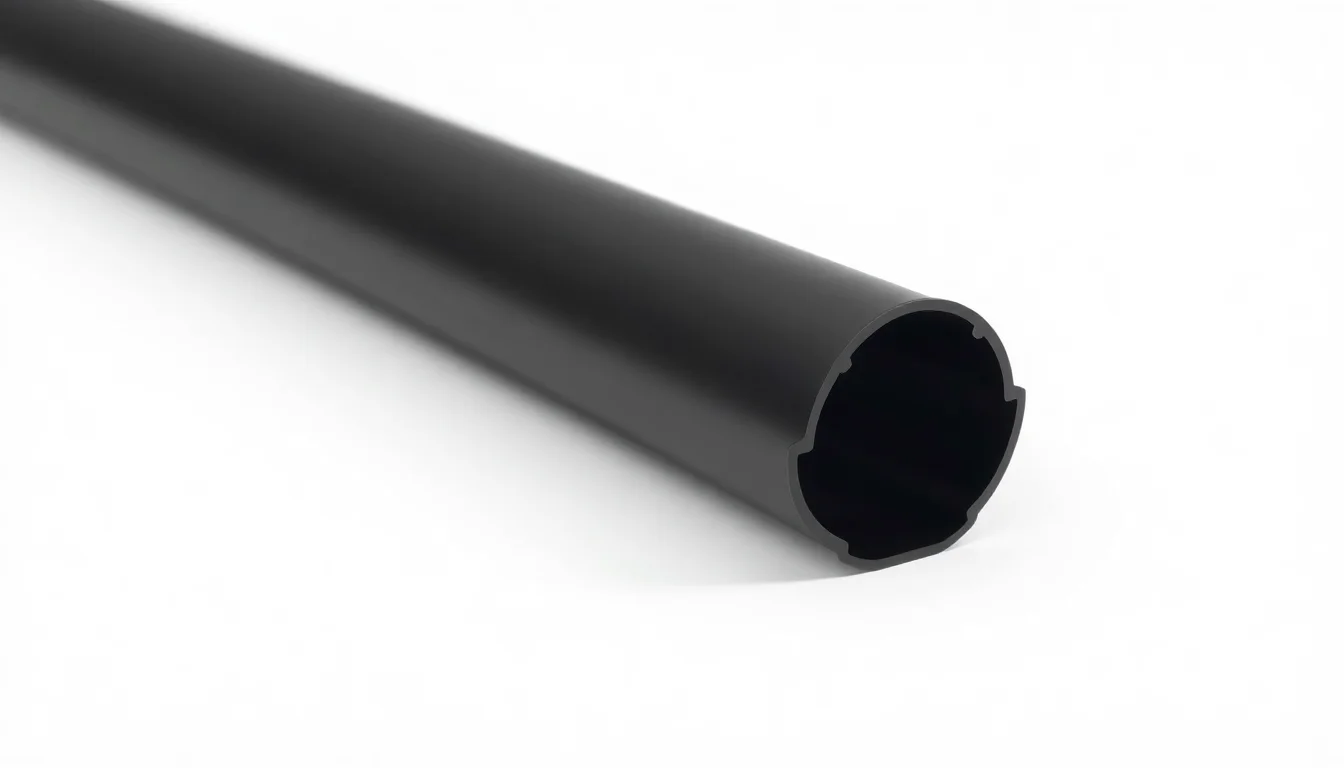
For overseas buyers sourcing elastomer profiles that must remain flexible at -40°C or lower, standard EPDM compounds fail — you need a specifically formulated low temperature flexibility EPDM with a polymer matrix optimized for glass transition suppression. At our Hunan factory, we have run over 200 custom EPDM formulations for refrigeration rail, cold storage door seals, and Arctic-grade enclosure gaskets, consistently delivering Shore A 50–70 compounds with tensile strength >8 MPa and compression set below 25% after 70 hours at 100°C per ASTM D395 Method B.
Why Low Temperature Flexibility EPDM Demands a Different Compound
Standard EPDM (ethylene propylene diene monomer) typically maintains flexibility down to -40°C. But for applications requiring reliable sealing at -50°C or cyclic thermal shock from -40°C to +120°C, the polymer backbone must be modified. We adjust the ethylene/propylene ratio and select peroxide-cured vulcanization systems rather than sulfur-cured, which reduces crystallization at low temperatures.
Key Performance Indicators for Cold-Formulated EPDM
| Property | Standard EPDM | Low Temp Flexible EPDM | Test Method |
|---|---|---|---|
| Brittle point (ASTM D2137) | -45°C | -55°C | ASTM D2137 Method A |
| TR-10 (temperature retraction) | -38°C | -48°C | ASTM D1329 |
| Compression set (70h @ 100°C) | 30% max | 22% max | ASTM D395 Method B |
| Tensile strength | 7 MPa | 9 MPa | ASTM D412 |
| Thermal aging (70h @ 125°C) | ±30% change | ±15% change | ASTM D573 |
| Ozone resistance (50 pphm, 40°C, 100h) | No cracks | No cracks | ASTM D1149 |
The Real Custom Extrusion Process: From CAD to Container
Most overseas buyers send a 2D drawing and expect a quote in 48 hours. Here is how we actually move from your CAD file to a production-ready tool.
Step 1: Drawing Review and Die Design
We require a DXF or DWG file with cross-section dimensions, tolerance callouts (we hold ±0.15 mm for critical sealing surfaces), and material hardness specification. In our Hunan factory experience, the single biggest delay in custom projects is missing tolerance notes — we once had a client's door sealing strips rejected because the compression lip was 0.3 mm undersized at -40°C. Always indicate which surfaces are sealing interfaces.
Step 2: Tooling Fabrication (4–7 Days)
For low temperature flexibility EPDM, the extrusion die must account for die swell (typically 2–4% depending on compound Mooney viscosity). We use CNC-machined tool steel dies. Tooling cost for a simple solid profile (10–30 mm cross-section) runs $300–$800. Complex hollow profiles with undercuts run $900–$2,200. Tooling is your property — we store it for 5 years at no charge.
Step 3: Sample Production and Validation
Sample lead time is 5–8 business days from tooling approval. We ship 3-meter samples via DHL or FedEx. For cold flexibility validation, we offer a -50°C bend test per ISO 3601-5 at no extra cost. We require your sign-off on dimensional report and durometer before production.
Step 4: Production and QC
MOQ for custom low temperature flexibility EPDM profiles is 500 meters per color per compound. For standard black EPDM, MOQ drops to 200 meters. We run continuous vulcanization (CV) lines with microwave and hot air curing — this ensures uniform cross-link density across the entire profile length.
Packing, Export, and Compliance for Overseas Shipments
All profiles are wound on cardboard spools (max 50 kg per spool) or cut-to-length and bundled with polypropylene straps. For fragile bulb seals or cabinet seals with hollow chambers, we use foam-filled cardboard boxes to prevent deformation during container transit.
Export Documentation We Provide
- Packing list and commercial invoice
- Certificate of Analysis (compound batch, hardness, tensile, compression set)
- Fumigation certificate for wooden pallets (ISPM 15)
- Country of origin certificate (China)
- UL 94 flame rating report if specified (we offer HB and V-0 grades)
Material Comparison: When to Choose Low Temp EPDM vs. Silicone vs. FKM
Many specifiers assume silicone is always the cold-temperature answer. That is not correct for cost-sensitive projects requiring ozone resistance and moderate oil resistance.
| Material | Low Temp Limit | High Temp Limit | Cost Index | Oil Resistance | Ozone Resistance |
|---|---|---|---|---|---|
| EPDM (low temp grade) | -55°C | +130°C | 1.0 (baseline) | Poor | Excellent |
| Silicone (VMQ) | -60°C | +230°C | 2.5 | Poor | Excellent |
| FKM (Viton) | -25°C | +200°C | 6.0 | Excellent | Excellent |
| Neoprene (CR) | -35°C | +120°C | 1.3 | Good | Good |
For refrigerated truck door seals or cold storage door sealing strips, low temperature EPDM is the most cost-effective choice. If you need flame retardancy plus cold flexibility, we can incorporate halogen-free flame retardants meeting UL 94 V-0 while maintaining -45°C flexibility.
Frequently Asked Questions
What is the MOQ for a custom low temperature EPDM profile?
500 meters per compound and color for custom formulations. If you accept standard black EPDM (which still meets -50°C brittle point), MOQ drops to 200 meters. For large-volume projects (10,000+ meters), we offer tiered pricing with 8% discount.
What is the typical sample lead time?
5–8 business days after tooling approval. We ship samples via DHL Express (3–5 days transit to North America or Europe). Sample cost is $80–$150 including shipping, refundable on first production order.
What extrusion tolerances can you hold?
Standard extrusion tolerance is ±0.20 mm for dimensions under 10 mm, ±0.30 mm for 10–30 mm, and ±0.50 mm for larger profiles. For critical sealing surfaces, we hold ±0.15 mm with dedicated tooling adjustments. We report actual measurements per ISO 3302-1 class E2.
How do you pack for ocean freight?
Profiles are wound on heavy-duty cardboard spools (50 kg max) or cut-to-length and strapped. For WPC profiles and rigid hollow sections, we use corrugated cartons with internal supports. All shipments include desiccant packs and rust-inhibiting VCI paper if metal inserts are used.
Can I get free samples before tooling?
We stock 5 standard low temperature EPDM compounds (Shore A 50, 60, 70). Free 300 mm samples of these standard durometers are available with you covering shipping. For custom formulations, tooling must be made first — we charge only material cost for the first sample run.
How to Send CAD Drawings That Eliminate Back-and-Forth
To get an accurate quote within 24 hours, include these elements in your DXF or DWG:
- Nominal dimensions with tolerance callouts — specify which surfaces are sealing faces
- Material hardness target — e.g., "Shore A 65 ±5"
- Temperature range — e.g., "-45°C to +100°C continuous"
- Surface finish requirement — smooth (Ra < 1.6 μm) or textured
- Flame rating if needed — UL 94 HB or V-0
We also accept PDF with dimensioned cross-sections. Our engineers will extract the profile and create a CAD-ready file for tooling.
| Specification | Your Input | Our Standard Capability |
|---|---|---|
| Cross-section area | ≤ 500 mm² | Up to 2,000 mm² |
| Wall thickness | ≥ 0.8 mm | ≥ 0.5 mm possible with tight tolerance |
| Shore A hardness | 50–70 | 40–90 (custom compound) |
| Color | Black or RAL | Any RAL with 500 kg MOQ |
Send your CAD drawing for a 24-hour quote.
Need a Custom Quote?
Send your CAD drawing or specs (material, hardness, profile, temperature range, MOQ) — our engineering team will respond within 24 hours.