
Hollow EPDM Bulb Seal OEM Supplier | Industrial Specs
By Zhouxin Sealing Engineering Team · · 303 views
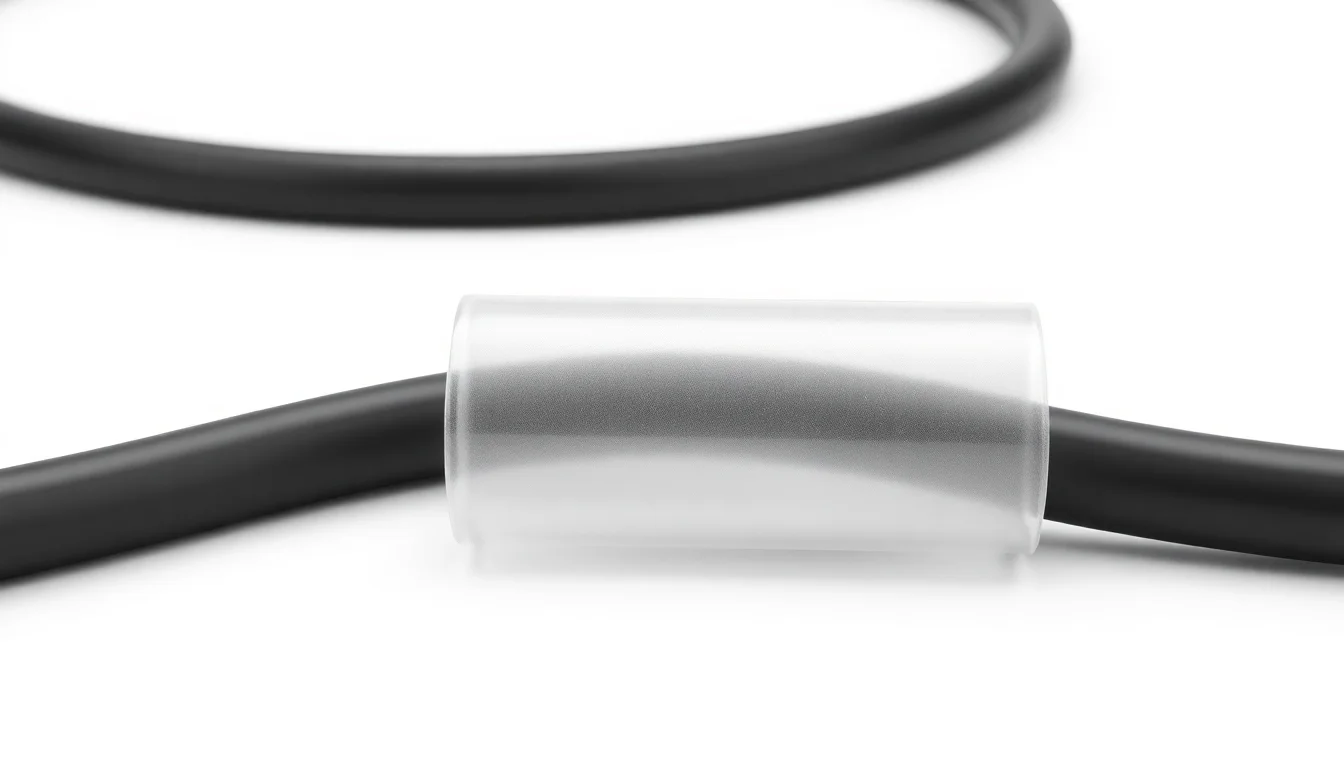
For project specifiers facing premature seal failure under combined UV exposure, sub-zero cycling, and repeated high-pressure friction, a hollow EPDM bulb seal offers the proven elastomer resilience and compression-set resistance that PVC or TPE blends cannot match. This review covers material selection, extrusion tolerances, and real-world deployment data from our Changde factory floor.
Material Performance Under Harsh Conditions
When a sealing profile must maintain contact force from -40°C to +150°C while resisting ozone cracking, the polymer matrix choice is non-negotiable. Hollow bulb designs amplify the need for consistent durometer and low compression set because the bulb wall must recover after each door closure or equipment cycle.
EPDM vs. PVC vs. Silicone: Head-to-Head
| Property | EPDM (Sulfur-Cured) | PVC (Flexible Grade) | Silicone (VMQ) |
|---|---|---|---|
| Temperature Range | –40°C to +150°C | –10°C to +60°C | –60°C to +200°C |
| Shore A Hardness (Typical) | 60 ±5 | 65 ±8 | 50 ±5 |
| Tensile Strength (MPa) | ≥7.0 | ≥4.5 | ≥6.5 |
| Compression Set (22h/70°C, ASTM D395 B) | ≤25% | ≤45% | ≤20% |
| Ozone Resistance (50 pphm, 40°C, 100h) | No cracks | Cracks <100h | No cracks |
| Thermal Aging (70h/100°C, ASTM D573) | Hardness change ≤+5 | Hardness change ≥+15 | Hardness change ≤+3 |
| Flame Retardancy (UL 94) | V-0 (with additive) | V-2 | V-0 (with additive) |
| Cost per meter (reference) | $$ | $ | $$$ |
For outdoor industrial doors or rail vehicle compartment seals, EPDM delivers the best balance of ozone resistance, low-temperature flexibility, and cost efficiency. Silicone wins only where extreme low-temp flexibility (–60°C) or high-temp sterilization is required.
Extrusion Tolerance and Dimensional Stability
A hollow bulb seal’s sealing force depends on the wall thickness and bulb diameter being held within ±0.2 mm across the entire extrusion length. Our production lines use laser micrometer feedback to maintain:
- Bulb diameter tolerance: ±0.15 mm
- Wall thickness tolerance: ±0.10 mm
- Overall profile width: ±0.20 mm
These tolerances comply with ISO 3601 for elastomeric seals and ensure consistent compression force even when the mating frame has minor dimensional variation.
In our Hunan factory experience, a recent project for cold-storage dock levelers required a 35 mm hollow bulb seal that maintained 85% original height after 100,000 cycles at –30°C. The customer had previously used PVC which cracked after 12,000 cycles. Our EPDM compound with 70 phr carbon black and optimized vulcanization time delivered the required durability.
Thermal Aging and Compression Set Data
Long-term seal life in heated environments (e.g., engine compartments, solar tracker frames) demands low compression set and thermal aging resistance. We test every production batch to:
- ASTM D573 – 70 hours at 100°C, hardness change ≤ +5 points, tensile retention ≥ 85%
- ASTM D395 Method B – 22 hours at 70°C, compression set ≤ 25%
- ISO 1817 – Fluid immersion resistance (ASTM #1 oil, IRM 903) – volume swell ≤ 15%
A hollow EPDM bulb seal with a 60 Shore A durometer typically achieves a 15–18% compression set after 22h/70°C, which translates to stable sealing force over years of use.
Application Examples for Project Specifiers
Heavy-Duty Access Doors
For door sealing strips on industrial ovens or freezer rooms, a hollow EPDM bulb provides thermal break and dust sealing. The bulb collapses under closure pressure and recovers when opened, even after prolonged compression.
Electrical Enclosures
NEMA 4X and IP66 rated cabinet seals often specify hollow EPDM bulbs because they require no adhesive backing—the compression fit holds the profile in the groove. We extrude with a rigid EPDM base (Shore A 70) and a hollow bulb (Shore A 55) in a dual-durometer co-extrusion.
Solar Panel Frame Gaskets
Ultraviolet exposure at 1000 W/m² for 2000 hours (ASTM G154 cycle 2) shows no surface cracking on our EPDM compound. The hollow bulb design allows for thermal expansion of aluminum frames without losing seal integrity.
Customization and OEM/ODM Capabilities
We offer three compound families for hollow EPDM bulb seals:
- Standard Industrial – 60 Shore A, –40°C to +120°C, black, for general doors and panels
- Low-Temperature – 50 Shore A, –50°C to +100°C, for cold storage and Arctic equipment
- Flame-Retardant – 65 Shore A, –30°C to +130°C, UL 94 V-0 rated, for rail and marine
All compounds can be co-extruded with a metal carrier insert or a rigid PVC base for snap-fit installation. For silicone series we offer similar hollow profiles but at higher cost.
Frequently Asked Questions
What is the minimum order quantity (MOQ) for custom hollow EPDM bulb seals?
Our MOQ is 500 meters per profile for standard compounds. For flame-retardant or low-temperature grades, MOQ is 1000 meters due to compound mixing setup. We can discuss lower quantities for first-time sampling.
What is the typical lead time for a custom extrusion?
After CAD approval, production takes 10–15 working days for standard compounds, 18–22 working days for specialty grades. Air freight is available for urgent orders.
What dimensional tolerance can you hold on bulb diameter?
We guarantee ±0.15 mm on bulb diameter and ±0.20 mm on overall profile width for hollow EPDM bulb seals. For wall thickness below 1.0 mm, tolerance tightens to ±0.10 mm.
How are the seals packaged for export?
Coils on cardboard spools (50–100 m per coil), wrapped in PE film and packed in cartons or plywood cases. For profiles longer than 2 m, we use straight lengths bundled and strapped.
Can I get a sample before placing a production order?
Yes. We provide free samples (up to 500 mm length) for your evaluation. You pay only shipping. Send your drawing or profile cross-section to our engineering team.
| Specification | Standard Industrial | Low-Temperature | Flame-Retardant |
|---|---|---|---|
| Shore A Hardness | 60 ±5 | 50 ±5 | 65 ±5 |
| Tensile Strength (MPa) | ≥7.0 | ≥6.5 | ≥6.5 |
| Elongation at Break (%) | ≥350 | ≥400 | ≥300 |
| Compression Set (22h/70°C) | ≤25% | ≤20% | ≤30% |
| Temperature Range | –40 to +120°C | –50 to +100°C | –30 to +130°C |
| Ozone Resistance (50 pphm, 40°C) | No cracks | No cracks | No cracks |
| UL 94 Rating | HB | HB | V-0 |
Send your CAD drawing for a 24-hour quote.
Need a Custom Quote?
Send your CAD drawing or specs (material, hardness, profile, temperature range, MOQ) — our engineering team will respond within 24 hours.