
High & Low Temperature Silicone Sealing Strips -60 to 300°C | OEM Supplier
By Zhouxin Sealing Engineering Team · · 246 views
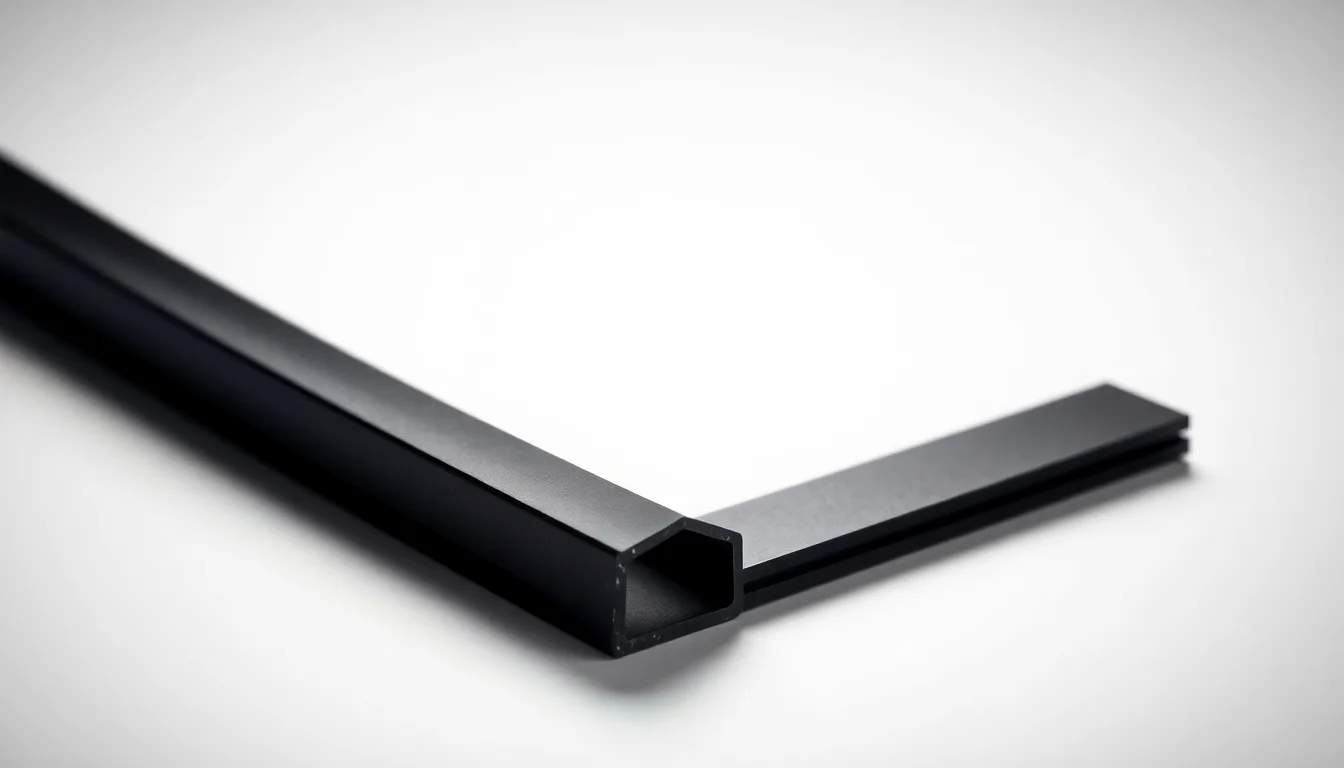
If your equipment operates at -60°C or cycles up to +300°C, standard EPDM or PVC seals will fail — you need a platinum-cured silicone elastomer with a durometer that stays stable across that entire thermal range.
We engineer custom silicone strips and profiles for industrial OEMs that demand sealing reliability in autoclaves, freeze tunnels, solar thermal collectors, and high-heat process chambers. Below I walk through material selection, real-world specs, and the factory tolerances you can expect from our Changde production line.
Why Silicone Beats EPDM and PVC for Extreme Thermal Cycling
Most specifiers default to EPDM for outdoor sealing because of its ozone resistance. But at -40°C, EPDM stiffens to the point of leakage, and above 150°C it begins irreversible thermal aging. PVC becomes brittle below -10°C and softens above 80°C.
Silicone elastomers maintain useful flexibility from -60°C to +300°C. Our high-temp silicone strips use a methyl-vinyl polysiloxane polymer matrix that resists thermal degradation for over 1,000 hours at 250°C (ASTM D573). For low-temp applications, we adjust the polymer side-chain ratio to keep the glass transition temperature below -70°C.
| Material | Continuous Temp Range | Shore A Hardness | Tensile Strength (MPa) | Compression Set @ 175°C / 22h | Ozone Resistance |
|---|---|---|---|---|---|
| Standard EPDM | -40 to 150°C | 60 ±5 | 7 | 30% | Excellent |
| PVC / NBR | -10 to 80°C | 65 ±5 | 5 | 45% | Poor |
| Platinum-Cured Silicone (our HT series) | -60 to 300°C | 50 ±5 | 8.5 | 12% | Excellent |
| Low-Temp Silicone (our LT series) | -70 to 220°C | 40 ±5 | 7.2 | 8% @ 150°C | Excellent |
In our Hunan factory experience, a European freezer-tunnel OEM switched from EPDM to our low-temp silicone profile after repeated failures at -55°C. The EPDM seals cracked after 300 cycles; the silicone strips have exceeded 5,000 cycles with no visible degradation. That project taught us that compression set at low temperature is just as critical as high-heat resistance.
Platinum-Cured Silicone Gaskets for Clean and High-Heat Environments
When your application involves food processing, pharmaceutical sterilization, or semiconductor equipment, standard peroxide-cured silicone can leave volatile residues. Platinum-cured silicone gaskets use a noble-metal catalyst that produces no by-products, giving you:
- UL 94 V-0 flame retardancy without halogen additives
- Low volatile condensables (<0.1% weight loss at 200°C per ISO 1817)
- FDA CFR 21.177.2600 compliance for food contact
We extrude these gaskets with a tolerance of ±0.15 mm on cross-section dimensions up to 20 mm, and ±0.3 mm on larger profiles. For complex hollow shapes used in cabinet seals, we hold wall thickness variation to under 0.1 mm.
Extrusion Tolerance and Surface Finish: What OEMs Must Specify
A common mistake is specifying only the Shore A hardness without defining the extrusion tolerance band. For a 10 mm wide silicone strip, a ±0.5 mm tolerance might seem acceptable, but that 1 mm total variation can cause 30% variation in sealing force.
We recommend specifying:
- Profile tolerance: ±0.15 mm for critical sealing faces
- Hardness range: ±5 Shore A points (we blend to target ±2)
- Surface finish: 32 microinch (0.8 μm) for dynamic seals, 64 microinch (1.6 μm) for static
Our silicone series covers both solid and sponge profiles. Sponge silicone (closed-cell) gives lower compression force and better sealing at light closure pressures, while solid silicone handles high-pressure friction and abrasive contact.
Thermal Aging and Compression Set: The Real Failure Modes
High-temperature failure is rarely a single event — it is progressive loss of elasticity. We test every production batch for compression set at 175°C for 22 hours per ASTM D395 Method B. Our target is ≤15% set for solid silicone and ≤10% for sponge.
For low-temperature applications, we use a TR-10 test (temperature retraction) to confirm the seal will not leak at -55°C. The LT series achieves TR-10 at -62°C.
If your equipment sees repeated high-pressure steam cleaning or UV exposure, we recommend adding a UV-stabilizer package to the silicone matrix. Standard silicone is inherently UV-resistant, but outdoor service in equatorial regions benefits from additional stabilization.
When to Choose a Composite Profile (Silicone + Other Materials)
For some extreme applications, a monolithic silicone strip is not the best solution. We manufacture co-extruded profiles where the sealing lip is silicone and the mounting base is a harder material:
- Silicone lip + EPDM base: For applications where the base sees moderate temperatures but the lip must flex at -60°C
- Silicone + aluminum insert: For structural retention in high-vibration equipment
- Silicone + magnetic strip: For removable access panels on temperature chambers
These composites are available in our door sealing strips and WPC profiles lines, though the WPC line is primarily for decorative rather than thermal sealing.
Frequently Asked Questions
What is the minimum order quantity for custom silicone strips?
MOQ for a new extrusion tool is 300 meters per profile. For existing tooling or standard shapes, MOQ drops to 100 meters. We can split across multiple colors or hardness grades within the same order.
What is the typical lead time from CAD approval?
Tooling fabrication takes 5–7 working days. Production for orders under 1,000 meters ships within 10 working days after tooling approval. Larger orders (5,000+ meters) require 15–18 working days.
What extrusion tolerance can you hold for silicone strips?
For cross-section dimensions up to 25 mm, we hold ±0.15 mm. For 25–50 mm, ±0.25 mm. For overall length (cut-to-length parts), ±0.5 mm per meter. These tolerances are tighter than ISO 3302-1 E2 class.
How are silicone strips packed for export?
Standard packing is on wooden spools (300–500 meters per spool) wrapped in polyethylene and sealed in corrugated cartons. For cut-to-length gaskets, we use flat cartons with foam dividers. All shipments from Changde include fumigation-free pallets.
Can I get samples before placing an order?
Yes. We provide free A4-sized sample sheets (2 mm thick) of our HT and LT silicone materials within 3 working days via express courier. For profile samples, we charge tooling cost only, refundable on first production order.
| Specification | HT-300 Series (High Temp) | LT-70 Series (Low Temp) |
|---|---|---|
| Temperature range | -60 to 300°C | -70 to 220°C |
| Shore A hardness | 50 ±5 (custom 30–80 available) | 40 ±5 |
| Tensile strength | 8.5 MPa | 7.2 MPa |
| Elongation at break | 450% | 500% |
| Compression set (175°C/22h) | 12% | 8% @ 150°C |
| Extrusion tolerance | ±0.15 mm (<25 mm) | ±0.15 mm |
| Flame rating | UL 94 V-0 | UL 94 HB |
Send your CAD drawing for a 24-hour quote.
Need a Custom Quote?
Send your CAD drawing or specs (material, hardness, profile, temperature range, MOQ) — our engineering team will respond within 24 hours.