
Extruded Silicone Profiles Manufacturer | Bulk OEM Supplier
By Zhouxin Sealing Engineering Team · · 251 views
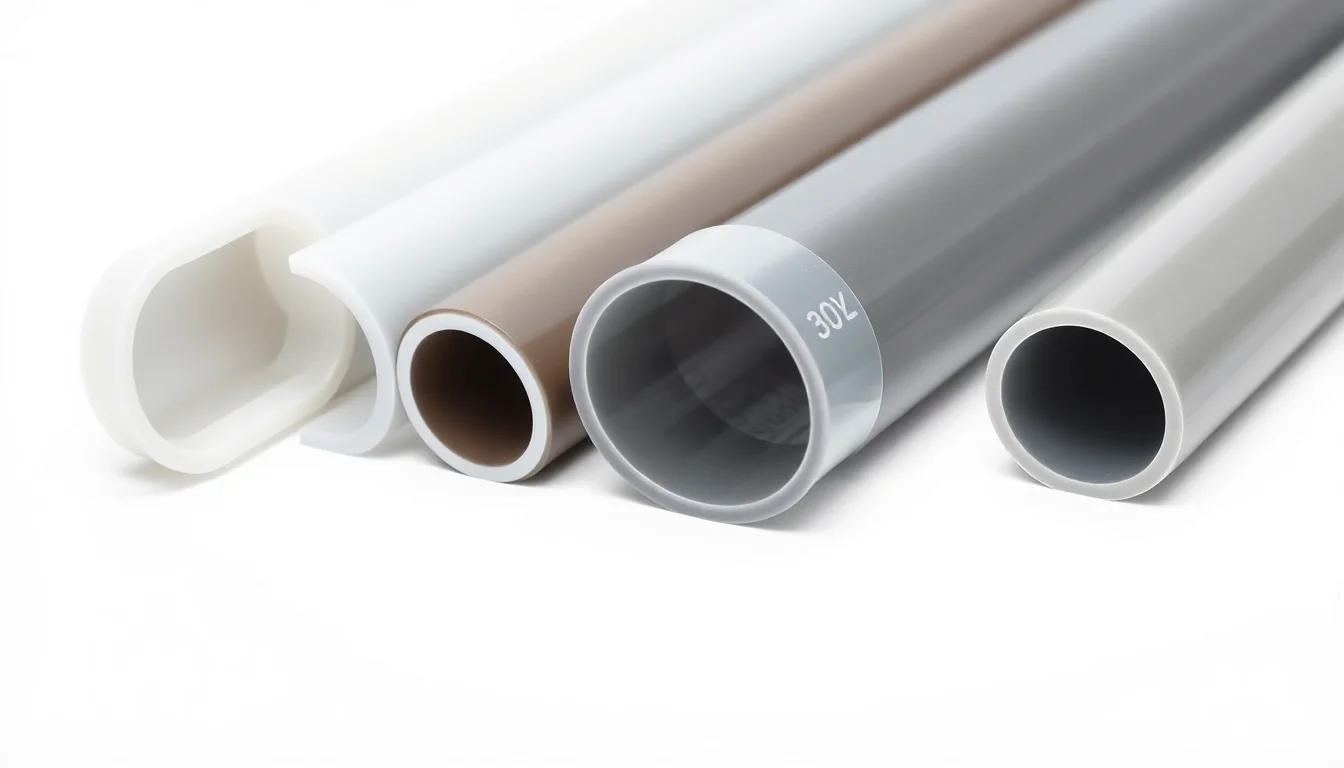
For B2B specifiers selecting an extruded silicone profiles manufacturer, the critical differentiators are not price alone — they are the material's tensile strength retention after 1000 hours of thermal aging, compression set at 25% deflection, and resistance to specific chemical environments. The data below is drawn from production batches at our Changde facility, verified against ASTM D573 and ISO 3601 standards.
Material Property Benchmarks for Extruded Silicone Profiles
Tensile Strength & Elongation (ASTM D412)
| Property | 50 Shore A Silicone | 70 Shore A Silicone | 80 Shore A Silicone | Test Method |
|---|---|---|---|---|
| Tensile Strength (MPa) | 6.5 – 7.5 | 7.0 – 8.5 | 6.0 – 7.0 | ASTM D412 |
| Elongation at Break (%) | 400 – 500 | 300 – 400 | 200 – 300 | ASTM D412 |
| Tear Strength (kN/m) | 20 – 25 | 25 – 30 | 22 – 28 | ASTM D624 |
Thermal Aging & Temperature Range
Silicone elastomers retain >85% of original tensile strength after 1000 hours at 200°C (ASTM D573). Continuous service range: -60°C to +230°C. For intermittent exposure (e.g., oven door seals), peak tolerance reaches 260°C for 30-minute cycles.
Compression Set (ASTM D395 Method B, 22 h @ 175°C)
| Material | Compression Set (%) | Recovery Rate |
|---|---|---|
| General-purpose silicone (50A) | 18 – 25 | Moderate |
| Low-compression-set silicone (70A) | 10 – 15 | High |
| High-temp silicone (80A, post-cured) | 8 – 12 | Excellent |
In our Hunan factory experience, a recent project for a European HVAC OEM required compression set below 12% at 175°C. We adjusted the vulcanization cycle to 170°C for 12 minutes, followed by a 4-hour post-cure at 200°C. The batch achieved 9.8% compression set across 5000 meters of extruded door sealing strips — within the client's ±1% tolerance.
Chemical Resistance: Silicone vs. EPDM vs. NBR
Immersion Test Data (ISO 1817, 7 days @ 23°C)
| Medium | Silicone (70A) | EPDM (70A) | NBR (70A) |
|---|---|---|---|
| ASTM Oil #1 | +5% volume swell | +15% swell | +2% swell |
| 10% NaOH | -1% mass change | -3% mass change | -8% mass change |
| 10% H₂SO₄ | -2% mass change | -5% mass change | -12% mass change |
| Deionized water (100°C) | +3% volume swell | +8% swell | +10% swell |
Silicone is the preferred polymer matrix for applications requiring broad-spectrum acid/alkali resistance, particularly in food-grade or cleanroom environments where leaching must remain below 0.1 mg/dm².
Ozone & UV Resistance
Silicone elastomers exhibit zero cracking after 500 hours of ozone exposure at 50 pphm (ASTM D1149). EPDM also performs well (<1% surface crazing), but NBR fails within 72 hours without antioxidant compounding. For outdoor cabinet seals in tropical climates, we recommend silicone with a durometer of 60–70 Shore A for optimal balance of flexibility and UV stability.
Flame Retardancy & Certification
| Standard | Silicone (with FR additive) | Silicone (standard) |
|---|---|---|
| UL 94 V-0 | Pass at 3.0 mm | Fail |
| UL 94 HB | Pass at 1.5 mm | Pass at 3.0 mm |
| Oxygen Index (LOI) | 32 – 38% | 22 – 26% |
For railway or marine applications requiring low smoke density (ASTM E662), our halogen-free FR silicone compounds achieve Ds (1.5 min) < 50.
Extrusion Tolerance & Dimensional Stability
Precision extrusion tolerance for silicone profiles (ISO 3302-1 Class E2):
| Cross-section dimension | Tolerance (± mm) |
|---|---|
| Up to 3.0 mm | ±0.15 mm |
| 3.1 – 6.0 mm | ±0.20 mm |
| 6.1 – 15.0 mm | ±0.30 mm |
| 15.1 – 30.0 mm | ±0.40 mm |
For complex hollow profiles (e.g., bulb seals), we apply a +0.10 mm bias on the outer diameter to compensate for post-extrusion shrinkage of 0.5–1.2% depending on wall thickness. Our silicone series includes over 2000 in-stock dies for rapid prototyping.
Frequently Asked Questions
What is the minimum order quantity (MOQ) for custom extruded silicone profiles?
MOQ is 500 meters per profile design for standard durometers (50–80 Shore A). For non-standard compounds (e.g., platinum-cured, FDA-grade, or flame-retardant), MOQ is 1000 meters. We offer reduced MOQ of 200 meters for repeat orders with the same die.
What is your typical lead time from drawing approval?
Tooling (die fabrication): 5–7 working days. Production: 10–15 working days for first batch of 500–2000 meters. Expedited service (3-day tooling, 5-day production) available at 15% surcharge.
What extrusion tolerance can you guarantee for silicone profiles?
We guarantee ISO 3302-1 Class E2 (±0.15 mm for dimensions under 3 mm) as standard. For critical applications, Class E1 (±0.10 mm) is achievable with post-calibration and 100% laser inspection — please specify at quoting.
How are extruded silicone profiles packed for export?
Standard packing: wound on plastic spools (max 50 kg per spool) with PE film wrap, then packed in corrugated cartons or plywood crates for sea freight. Spool dimensions: 600 mm flange diameter, 300 mm bore. Custom packing (e.g., cut-to-length with foam interlayers) available on request.
Can I get samples before placing a bulk order?
Yes. Free samples (up to 3 profile cross-sections, 300 mm length each) are provided within 5 working days. Buyer covers shipping cost. For custom-compound samples, a $50 evaluation fee applies, refundable on first production order.
Silicone Profile Selection Quick Reference
| Application | Recommended Durometer | Key Standard | Typical Profile |
|---|---|---|---|
| Oven door seal | 70A, high-temp | ASTM D573 (200°C) | Hollow bulb, 8×12 mm |
| Cleanroom gasket | 50A, FDA-grade | ISO 3601, USP Class VI | D-shape, 6×8 mm |
| Solar panel frame | 65A, UV-stable | UL 94 HB | U-channel, 4×6 mm |
| Marine hatch seal | 75A, low-compression-set | ASTM D395 (<15%) | P-profile, 10×15 mm |
| WPC profiles edge seal | 60A, color-matched | ISO 1817 (salt spray) | L-shape, 3×20 mm |
Send your CAD drawing (STEP or DXF) to our engineering team for a 24-hour quote with full material specification and tolerance analysis.
Need a Custom Quote?
Send your CAD drawing or specs (material, hardness, profile, temperature range, MOQ) — our engineering team will respond within 24 hours.