
Custom Rubber Extrusion Service | OEM Supplier & Factory
By Zhouxin Sealing Engineering Team · · 4 views
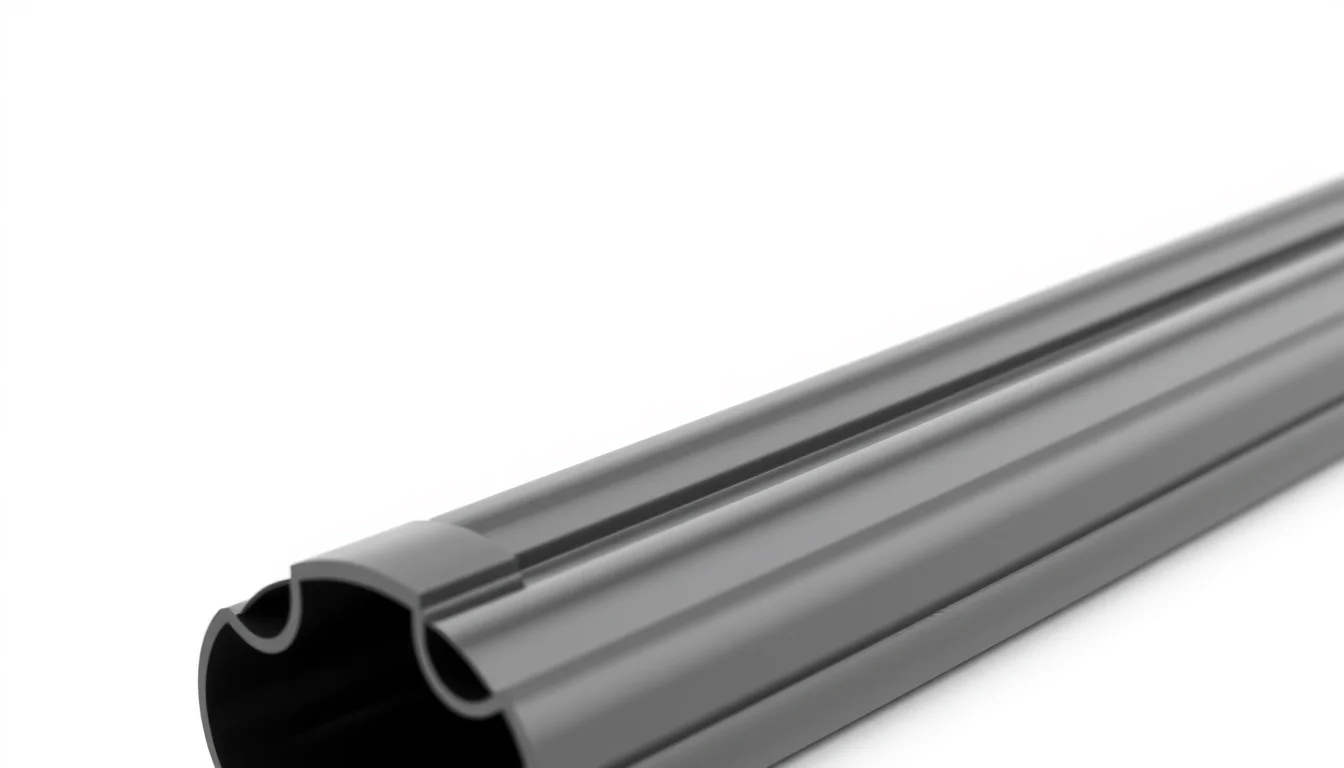
For overseas project specifiers, the critical question is not whether a custom rubber extrusion service can produce a profile, but whether that profile will hold its durometer, compression set, and dimensional tolerance after years of UV exposure, sub-zero cycling, or repeated high-pressure friction. This engineering review compares material systems and extrusion tolerances against real deployment data, so you can specify the right compound before the first prototype is cut.
The Harsh-Environment Failure Modes Buyers Actually Face
UV and Ozone Degradation
A sealing strip that passes a 72-hour lab check can still craze and crack within 18 months on a south-facing facade. Ozone resistance is not a cosmetic property — it determines whether the polymer matrix retains elasticity at the sealing interface. ASTM D573 thermal aging and ASTM D1149 ozone testing separate compounds that look identical on a datasheet.
Sub-Zero Embrittlement
Below -30°C, low-quality EPDM grades cross their glass transition and lose compression recovery. A door gasket that seals at +20°C may leak air at -35°C because the durometer effectively rises 10–15 Shore A. Specifiers working in cold-chain, cold-climate construction, or refrigerated transport must verify low-temperature brittleness, not just the headline temperature range.
Repeated High-Pressure Friction
Dynamic seals in sliding windows, cabinet doors, and industrial enclosures experience abrasion cycles that static gaskets never see. Tensile strength and tear resistance become the limiting factors, not initial hardness. A 70 Shore A compound with 12 MPa tensile and good tear propagation resistance will outlast a 60 Shore A compound with 8 MPa tensile in the same friction cycle.
Material Head-to-Head: EPDM vs PVC vs Silicone vs TPE
The table below reflects production-verified figures from our Hunan lines, not generic catalog values. Compression set is measured per ASTM D395 Method B (22 h @ 70°C), and thermal aging per ASTM D573.
| Material | Temp Range | Shore A | Tensile (MPa) | Compression Set | UV/Ozone | Relative Cost |
|---|---|---|---|---|---|---|
| EPDM (sulfur-cured) | -50 to +150°C | 50–90 | 8–14 | 20–30% | Excellent | $$ |
| EPDM (peroxide-cured) | -50 to +150°C | 60–90 | 10–16 | 15–25% | Excellent | $$$ |
| PVC (flexible) | -20 to +70°C | 55–85 | 6–12 | N/A (plasticized) | Good (needs UV stabilizer) | $ |
| Silicone | -60 to +200°C | 30–80 | 6–10 | 20–35% | Excellent | $$$$ |
| TPE/TPV | -40 to +125°C | 50–90 | 6–12 | 25–40% | Good | $$ |
When EPDM Wins
For exterior door sealing strips and architectural gaskets, sulfur-cured EPDM at 70 Shore A remains the workhorse. It delivers the best balance of ozone resistance, low-temperature flexibility, and cost. Peroxide-cured EPDM is specified when compression set below 20% is mandatory — for example, in cabinet seals that must maintain a constant closing force over 10+ years.
When PVC Is the Wrong Choice
PVC is inexpensive and extrudes at tight tolerances, but plasticizer migration causes embrittlement and shrinkage over time. In outdoor applications above 60°C surface temperature, PVC profiles can lose 2–4% of their dimensional stability within three years. For any specification requiring long-term UV exposure, PVC should be excluded unless a UV-stabilized formulation is explicitly validated.
When Silicone Is Justified
Silicone series are the correct specification when operating temperatures exceed +150°C or fall below -50°C, or when flame retardancy per UL 94 V-0 is required. The trade-off is tensile strength — silicone typically runs 6–10 MPa versus 10–16 MPa for peroxide-cured EPDM — and cost.
Extrusion Tolerance: What ±mm Really Means
Standard vs Precision Tolerance
A custom rubber extrusion service lives or dies on tolerance discipline. Standard extruded profiles typically hold ±0.5 mm on critical dimensions. Precision profiles — those used in automotive and appliance sealing — hold ±0.2 mm to ±0.3 mm. Anything tighter than ±0.15 mm usually requires post-cure grinding or a molded transition.
Vulcanization and Tolerance Drift
The vulcanization process introduces shrinkage that varies by compound and cross-section. A 70 Shore A EPDM profile may shrink 1.5–2.5% from die dimensions. Specifiers should require the supplier to state shrinkage compensation in the PPAP or first-article inspection report, not just the final tolerance band.
In our Hunan factory experience, a European OEM specified a 65 Shore A EPDM profile for a refrigerated container door seal with a ±0.3 mm tolerance on the sealing lip. First-article inspection showed the lip running 0.42 mm under nominal after cure. We re-cut the die with a 2.1% shrinkage compensation and moved the compound to peroxide-cured EPDM, which reduced compression set from 28% to 19% and eliminated a cold-weather leak complaint at -38°C. The lesson: tolerance and compound selection must be validated together, not sequentially.
Engineering Review Checklist for Project Specifiers
Compound Validation
Request thermal aging data per ASTM D573 (70 h or 168 h @ 100°C) and compression set per ASTM D395. For fluid-contact applications, ISO 1817 swelling data is mandatory. For O-ring-adjacent profiles, ISO 3601 dimensional standards may apply.
Profile Geometry and Friction
Dynamic sealing strips should specify tear strength and, where relevant, a low-friction surface treatment. For sliding cabinet seals, a co-extruded TPE slip layer can reduce actuation force by 20–30% versus bare EPDM.
Flame and Smoke
Enclosures for electronics or public transport may require UL 94 V-0 or equivalent. Silicone and specialty EPDM formulations can meet this, but the flame retardant package affects compression set — validate both properties on the same sample.
Related Product Lines
Specifiers often combine extrusion profiles with door sealing strips for architectural openings and cabinet seals for enclosure doors. Where a rigid decorative or structural element is needed alongside the seal, WPC profiles can be co-specified. For high-temperature or flame-rated applications, review the silicone series before defaulting to EPDM.
Frequently Asked Questions
What is the MOQ for a custom rubber extrusion service?
MOQ depends on profile complexity and compound. Standard EPDM profiles typically start at 500–1,000 meters per size; custom compound development or co-extrusion may require 2,000 meters. We quote MOQ against your drawing and annual usage so the figure reflects real tooling amortization.
What is the lead time for custom extrusion?
First-article samples usually ship in 10–15 working days after drawing approval and compound confirmation. Production lead time is 20–30 days for standard compounds and 30–45 days for custom formulations or multi-durometer co-extrusion. Tooling fabrication adds 7–10 days for new dies.
What extrusion tolerance can you hold?
Standard tolerance is ±0.5 mm on critical dimensions; precision profiles hold ±0.2 to ±0.3 mm. Tolerances tighter than ±0.15 mm require post-cure grinding or a molded transition. We report shrinkage compensation and first-article dimensions per ASQ Z1.4 sampling.
How are profiles packed for export?
Profiles are coiled, straight-length bundled, or cut-to-length per your specification. Standard export packing uses PE film, woven bags, and wooden crates or pallets. We can add desiccant and VCI film for sea freight, and label cartons per your warehouse SKU system.
What is your sample policy?
Stock-profile samples are free; custom-extruded samples are charged at a tooling and setup rate, credited against the first production order. Sample lead time is 10–15 working days after drawing and compound approval. Send your CAD drawing for a 24-hour quote.
Specification Reference Table
| Parameter | Standard Range | Precision Range | Test Method |
|---|---|---|---|
| Shore A hardness | 50–90 | ±3 | ASTM D2240 |
| Tensile strength | 8–16 MPa | — | ASTM D412 |
| Elongation at break | 200–500% | — | ASTM D412 |
| Compression set | 15–30% | ≤20% (peroxide EPDM) | ASTM D395 B |
| Thermal aging | 70–168 h @ 100°C | — | ASTM D573 |
| Ozone resistance | 50 pphm, 20% strain | No cracks | ASTM D1149 |
| Extrusion tolerance | ±0.5 mm | ±0.2–0.3 mm | Internal QMS |
| Temperature range | -50 to +150°C (EPDM) | — | — |
Send your CAD drawing for a 24-hour quote.
Need a Custom Quote?
Send your CAD drawing or specs (material, hardness, profile, temperature range, MOQ) — our engineering team will respond within 24 hours.