
Aluminum Window Sealing Strips | Custom OEM Supplier & Bulk
By Zhouxin Sealing Engineering Team · · 2 views
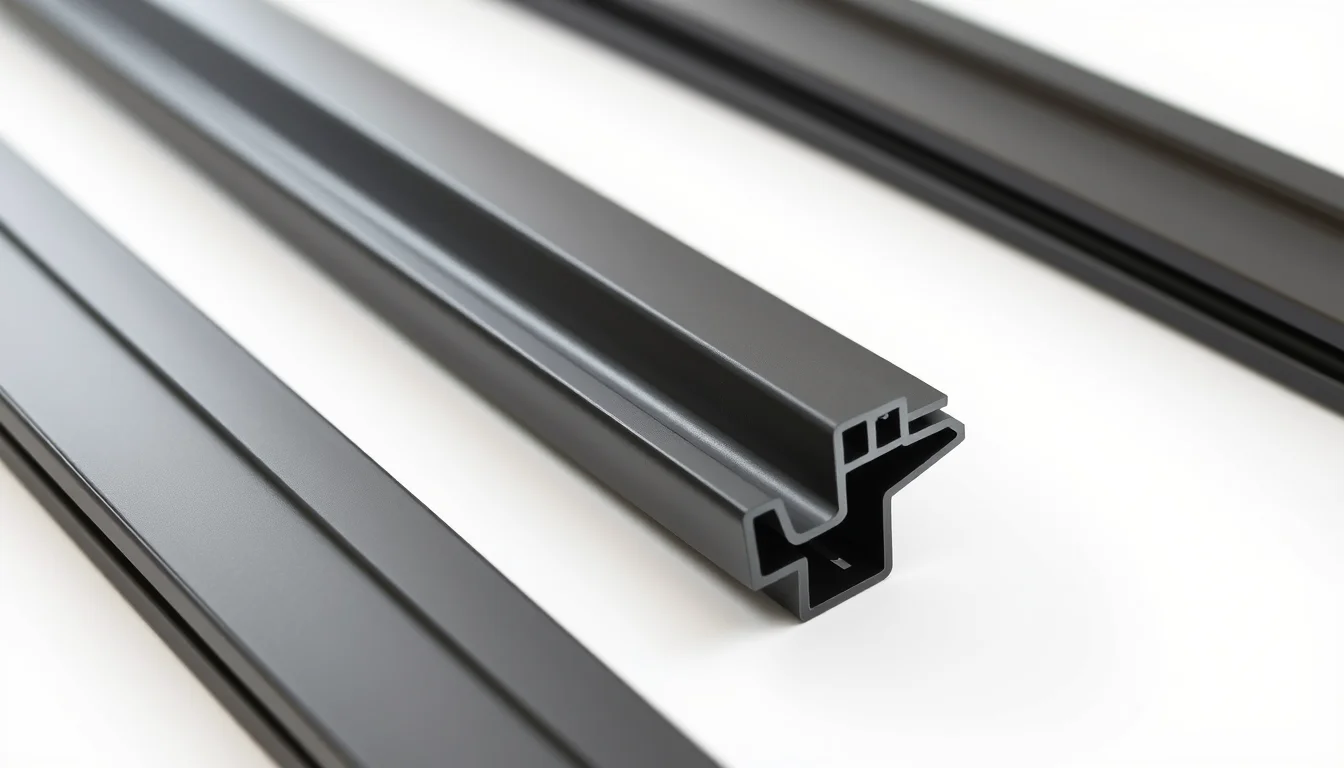
For overseas buyers sourcing aluminum window sealing strips, the critical path is matching the right elastomer and extrusion tolerance to your window system, then locking in tooling, MOQ, and sample lead time before production. This guide walks through the real custom extrusion process, factory capability comparison, and how to send CAD drawings that eliminate back-and-forth.
Material Selection for Aluminum Window Sealing Strips
Aluminum window profiles demand sealing strips that resist compression set, UV, and thermal cycling. The polymer matrix you choose directly affects durometer, tensile strength, and service life.
| Material | Temp Range | Shore A | Tensile Strength | Compression Set (70h @ 100°C) | Ozone Resistance | Cost Index |
|---|---|---|---|---|---|---|
| EPDM | -40 to 150°C | 60–80 | 8–12 MPa | 20–30% | Excellent | $$ |
| Silicone | -60 to 200°C | 40–70 | 6–10 MPa | 15–25% | Excellent | $$$ |
| TPE/TPV | -40 to 120°C | 55–75 | 5–9 MPa | 25–35% | Good | $$ |
| NBR | -30 to 120°C | 60–85 | 10–15 MPa | 15–25% | Fair | $ |
| PVC | -10 to 70°C | 65–85 | 4–8 MPa | 40–60% | Good | $ |
EPDM remains the workhorse for aluminum window sealing strips due to its balance of ozone resistance, thermal aging performance (ASTM D573), and cost. Silicone is specified for high-temperature or low-temperature extremes. TPE/TPV offers co-extrusion compatibility with rigid PVC or aluminum carriers.
Durometer and Compression Set Targets
For window gaskets, target 65–75 Shore A. Lower durometer improves sealing at low compression but risks extrusion damage. Compression set below 30% after 70h at 100°C (ASTM D395 Method B) ensures long-term rebound.
Thermal Aging and Ozone Resistance
ASTM D573 testing at 100°C for 70h should show less than 20% tensile loss. Ozone resistance per ASTM D1149 at 50 pphm, 40°C, 20% strain — no cracks after 72h.
Custom Extrusion Process: From CAD to Container
Step 1: Drawing Review and DFM Feedback
Send a 2D PDF or DXF with critical dimensions, tolerances, and material callout. We return a DFM report within 24 hours, flagging thin walls below 0.8mm, undercuts, or tolerance conflicts.
Step 2: Tooling and Sample Lead Time
Extrusion die tooling: 7–10 working days. Sample lead time: 10–15 days after tooling approval. Tooling cost ranges $300–$800 depending on profile complexity and number of cavities.
Step 3: Vulcanization and Post-Curing
Continuous vulcanization (CV) lines run 8–12 m/min. Post-curing for silicone ensures low volatile content per ISO 1817.
Step 4: Cutting, Punching, and Assembly
In-line cutting to ±1.0mm length tolerance. Corner vulcanization or ultrasonic welding for frame gaskets.
In our Hunan factory experience, a European window system OEM sent a 12-cavity aluminum profile drawing with a 0.6mm sealing lip. Our DFM review flagged the lip as too thin for EPDM extrusion — it would tear during demolding. We recommended a 0.9mm lip with a 0.3mm radius, which passed 5,000-cycle compression testing. That single change saved the customer two tooling revisions and six weeks of lead time.
Factory Capability Comparison for B2B Buyers
| Capability | Tier 1 (Zhouxin) | Typical Trading Co. | Small Workshop |
|---|---|---|---|
| Extrusion lines | 12 | 0 (outsourced) | 2–3 |
| In-house tooling | Yes | No | Partial |
| Material compounding | Yes | No | No |
| Tolerance control | ±0.10mm | ±0.25mm | ±0.30mm |
| QC reports | Full ASTM/ISO | Basic | Minimal |
| MOQ per profile | 500–1,000m | 2,000m+ | 3,000m+ |
| Sample lead time | 10–15 days | 20–30 days | 25–35 days |
| Export packing | Custom | Standard | Basic |
Tier 1 factories control the full chain: polymer matrix compounding, extrusion, vulcanization, and testing. This matters when your project requires flame retardancy (UL 94 V-0) or specific compression set limits.
MOQ and Tooling Cost Realities
MOQ for custom aluminum window sealing strips: 500–1,000 meters per profile for standard EPDM. Silicone or flame-retardant compounds may require 1,500–2,000 meters. Tooling cost is one-time and amortized over production.
Packing and Export Compliance
Standard export packing: coils in PE bags, cartons on pallets, shrink-wrapped. For long profiles, use wooden crates. Include desiccant for humid destinations. HS code: 4016.93 or 3926.90 depending on material.
How to Send CAD Drawings That Reduce Back-and-Forth
File Format and Layers
Send DXF or DWG with separate layers for profile geometry, tolerances, and material notes. PDF is acceptable for initial review. Include a 1:1 scale reference.
Critical Dimensions to Mark
Mark all mating surfaces, compression gaps, and insertion depths. Specify extrusion tolerance per ISO 3302-1 Class E2 or E3. For window gaskets, ±0.15mm on sealing lips is typical.
Material and Performance Callouts
State elastomer type, durometer ±5 Shore A, tensile strength minimum, compression set maximum, and any flame retardancy standard (UL 94, FMVSS 302). Reference ASTM D2000 line callout for rubber specification.
Common Drawing Mistakes
Missing corner radii, unspecified parting lines, and unrealistic tolerances on flexible lips. Also, not indicating whether the strip is co-extruded with a rigid carrier.
Quality Control and Testing Protocols
Incoming Raw Material Inspection
Verify polymer matrix, carbon black content, and cure system per batch. FTIR and Mooney viscosity testing.
In-Process Extrusion Tolerance Checks
Laser micrometers check cross-section every 30 minutes. Extrusion tolerance maintained at ±0.10mm for critical dimensions.
Final Batch Testing
Tensile strength (ASTM D412), elongation at break, compression set (ASTM D395), thermal aging (ASTM D573), and ozone resistance (ASTM D1149). Reports provided with each shipment.
Frequently Asked Questions
What is the MOQ for custom aluminum window sealing strips?
MOQ is 500–1,000 meters per profile for standard EPDM. Silicone or specialty compounds may require 1,500–2,000 meters. For trial orders, we can negotiate 300 meters with a surcharge.
What is the lead time for samples and mass production?
Sample lead time is 10–15 days after tooling approval. Mass production is 15–25 days after sample approval, depending on order volume and material availability.
What extrusion tolerance can you hold?
We hold ±0.10mm on critical dimensions and ±0.15mm on sealing lips. Standard extrusion tolerance per ISO 3302-1 Class E2. Tighter tolerances available on request.
How are aluminum window sealing strips packed for export?
Coils in PE bags, then cartons on pallets, shrink-wrapped. Long profiles ship in wooden crates. Desiccant added for humid climates. Custom labeling available.
What is your sample policy?
Free samples for standard profiles. Custom samples are charged at tooling cost plus material, refundable against a 5,000-meter order. Sample lead time is 10–15 days.
Related Sealing Solutions
For complementary profiles, review our door sealing strips and silicone series. For cabinet and enclosure applications, see cabinet seals. We also extrude WPC profiles for hybrid window systems.
| Parameter | Specification |
|---|---|
| Material | EPDM, Silicone, TPE/TPV, NBR, PVC |
| Shore A Hardness | 40–85 ±5 |
| Tensile Strength | 5–15 MPa |
| Compression Set | ≤30% (70h @ 100°C) |
| Thermal Aging | ASTM D573, 70h @ 100°C |
| Ozone Resistance | ASTM D1149, 50 pphm, 72h |
| Extrusion Tolerance | ±0.10mm critical, ±0.15mm lip |
| Flame Retardancy | UL 94 V-0 available |
| MOQ | 500–1,000m per profile |
| Sample Lead Time | 10–15 days |
| Production Lead Time | 15–25 days |
| Packing | Coils, cartons, pallets, wooden crates |
| Export HS Code | 4016.93 / 3926.90 |
Send your CAD drawing for a 24-hour quote.
Need a Custom Quote?
Send your CAD drawing or specs (material, hardness, profile, temperature range, MOQ) — our engineering team will respond within 24 hours.