
Universal Sealing Strips for Ovens & Cold Storages | OEM Supplier
By Zhouxin Sealing Engineering Team · · 33 views
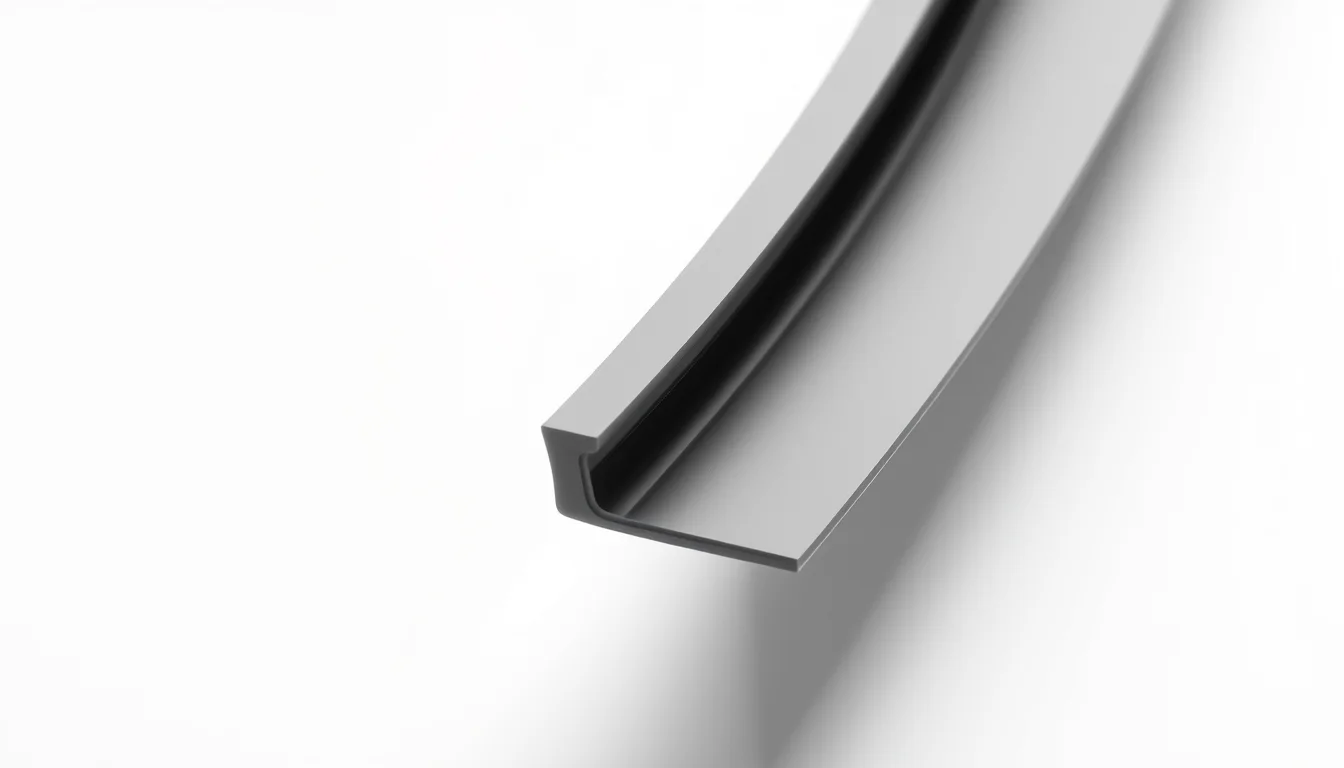
Overseas buyers sourcing universal sealing strips for ovens and cold storages need a single elastomer profile that holds sealing force from -70°C to +250°C, and silicone is the only practical polymer matrix that delivers that range without cracking or taking a permanent set. This guide walks through the real specs, tooling costs, MOQ, and CAD submission process so your PO moves without rework. We build these profiles daily at our Changde, Hunan factory for commercial oven OEMs and refrigeration door manufacturers.
Why Silicone Dominates Wide-Temperature Sealing
Thermal envelope and polymer limits
Silicone (VMQ) maintains flexibility from -70°C to +250°C continuous, with short excursions to +300°C. EPDM tops out near +150°C and stiffens below -40°C. For a commercial oven door seal that sees 220°C bake cycles and a cold storage door gasket that sees -45°C blast freezing, silicone is the only single-material answer. Thermal aging per ASTM D573 at 200°C for 72 hours shows silicone retaining 80%+ of original tensile strength, while EPDM drops below 50%.
Compression set and sealing force retention
Compression set (ASTM D395, Method B, 22h @ 175°C) for our standard silicone compound runs 15-25%. That means the door gasket keeps pushing back against the frame after thousands of thermal cycles. EPDM at the same test conditions typically reads 30-40%. For cold storage doors that cycle between ambient and -40°C, low compression set is what prevents frost-bridge leaks.
Ozone and UV resistance
Silicone's saturated backbone gives inherent ozone resistance without adding antiozonants. For outdoor walk-in cooler doors or rooftop oven exhausts, this eliminates the cracking seen in unsaturated rubbers. Flame retardancy to UL 94 V-0 is available in a halogen-free silicone grade for oven applications where fire code requires it.
Material Comparison for Oven and Cold Storage Seals
| Material | Temp Range (°C) | Shore A | Tensile (MPa) | Compression Set % | Relative Cost |
|---|---|---|---|---|---|
| Silicone (VMQ) | -70 to +250 | 30-80 | 6-10 | 15-25 | $$$ |
| EPDM | -40 to +150 | 50-90 | 10-15 | 30-40 | $$ |
| Neoprene (CR) | -30 to +120 | 40-80 | 10-15 | 25-35 | $$ |
| FKM (Viton) | -20 to +200 | 60-90 | 8-12 | 20-30 | $$$$$ |
| TPE/TPV | -40 to +120 | 50-90 | 5-10 | 40-50 | $ |
For oven door seals, specify silicone 50-60 Shore A with a dense skin and optional closed-cell sponge core. For cold storage door gaskets, silicone 40-50 Shore A with a magnetic insert channel is the standard. Both profiles run on the same extrusion line, which is why we call them universal.
Custom Extrusion Process: From CAD to Container
Step 1 — Drawing review and DFM feedback
Send a 2D PDF or DXF with the cross-section, durometer, and tolerance callouts. We return a DFM note within 24 hours flagging any wall thickness under 1.5mm, undercut that needs a split die, or tolerance tighter than ±0.15mm that would drive cost. This step alone eliminates 80% of back-and-forth.
Step 2 — Tooling and sample
Extrusion die cost for a standard silicone profile runs USD 350-800 depending on complexity. Tooling lead time is 7-10 working days. We then run a 50-100m sample lot, cure it, and ship 3-5m cut samples for your fit test. Sample lead time is 3-5 days after tooling is ready.
Step 3 — Vulcanization and post-cure
Silicone profiles are vulcanized in a horizontal hot-air tunnel at 200-250°C, then post-cured at 200°C for 4 hours to drive off volatiles. Post-cure matters for oven seals because it prevents outgassing at service temperature. We verify cure with a rheometer curve and durometer check every 500m.
Step 4 — Cutting, splicing, and packing
Profiles are cut to length on a flying knife or waterjet, then corners are vulcanized into closed frames if you need a finished gasket. Packing is coil-on-spool for long runs, or straight lengths in PE bags and cartons for frames. Export packing includes desiccant and a moisture barrier for sea freight.
In our Hunan factory experience, ... one European oven OEM sent a DXF with a 0.8mm lip that would tear during demolding. We flagged it, they thickened to 1.2mm, and the first sample passed the 10,000-cycle door slam test. That single DFM note saved them a second tooling round and six weeks.
Sourcing Checklist for Overseas Buyers
Tolerance and extrusion capability
Our standard extrusion tolerance is ±0.15mm on critical dimensions and ±0.25mm on non-critical. For reference, ISO 3601 Class 2 is ±0.20mm on a 5mm section. We hold ±0.10mm on request for magnetic gasket channels where the magnet fit is critical.
MOQ and price breaks
| Order Quantity | MOQ (meters) | Unit Price Index | Tooling Amortized |
|---|---|---|---|
| Trial | 100 | 1.00 | No |
| Small batch | 500 | 0.85 | No |
| Production | 2,000 | 0.70 | Yes |
| Container | 10,000+ | 0.55 | Yes |
MOQ for a new profile is 500m per size. For existing tooling, we run 100m trial lots. Mixed sizes in one container are fine.
Packing and export
Standard export packing: PE bag + carton + pallet, or coil on spool for long lengths. We provide HS code 4016.93, REACH/RoHS declarations, and a mill certificate with each shipment. FOB Shanghai or Ningbo, CIF to your port.
Product Lines for Your Project
For oven door seals, our silicone series covers dense, sponge, and co-extruded profiles. For cold storage doors, the door sealing strips line includes magnetic gasket channels and corner-vulcanized frames. If your project also needs cabinet gaskets, see cabinet seals. For non-rubber trim on the same door, we also run WPC profiles.
Frequently Asked Questions
What is the MOQ for custom silicone sealing strips?
MOQ is 500 meters per profile size for a new tooling order, and 100 meters for a trial run on existing tooling. We can mix multiple sizes in one production batch to help you hit the MOQ. For OEM programs with forecast, we hold safety stock and release monthly.
What is the lead time for samples and production?
Sample lead time is 3-5 days after tooling is ready. Tooling itself takes 7-10 working days. Production lead time is 15-20 days for 2,000m, and 25-30 days for container volumes. We ship samples by DHL or FedEx with tracking.
What extrusion tolerance can you hold?
Standard tolerance is ±0.15mm on critical dimensions and ±0.25mm on non-critical. We can hold ±0.10mm on magnetic gasket channels. Tolerance tighter than ±0.10mm requires a secondary grinding operation and should be discussed at DFM stage.
How are the strips packed for export?
Long runs ship as coils on spools or in straight lengths in PE bags and cartons. Finished frames ship flat in cartons with corner protection. All export packing includes desiccant and moisture barrier. We provide pallet dimensions and gross weight for your freight forwarder.
What is your sample policy?
We provide 3-5m cut samples free of charge for standard compounds. For custom tooling, sample cost is USD 50-100 to cover material and setup, refundable against the first production PO. Send your CAD drawing for a 24-hour quote.
Need a Custom Quote?
Send your CAD drawing or specs (material, hardness, profile, temperature range, MOQ) — our engineering team will respond within 24 hours.