
U-Channel Rubber Edge Trim | OEM Manufacturer & Bulk Supplier
By Zhouxin Sealing Engineering Team · · 230 views
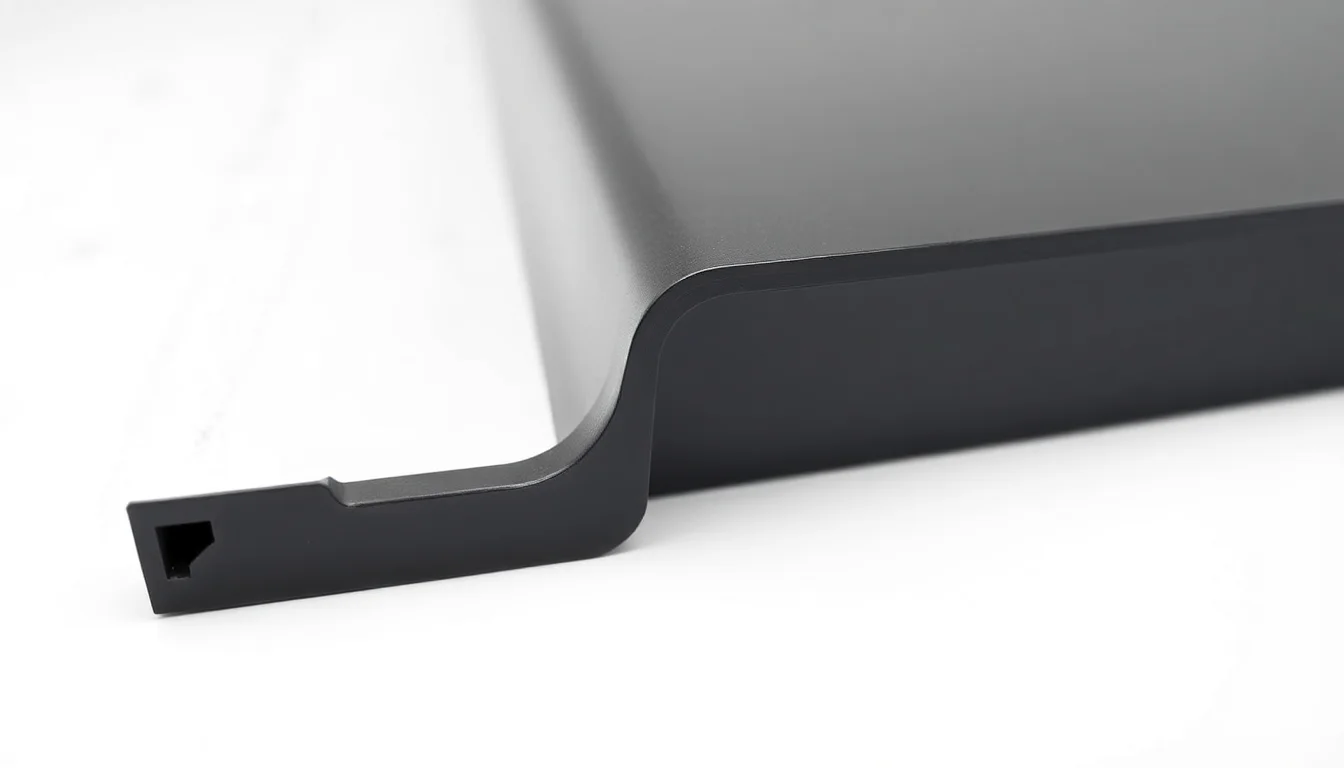
If you are sourcing U-channel rubber edge trim for industrial enclosures, automotive panels, or edge protection on sheet metal, the critical difference between a seal that fails in six months and one that lasts a decade is the polymer matrix design and extrusion tolerance control. As a factory that has run over 300 custom rubber extrusion projects for overseas buyers since 2009, we walk you through exactly what matters in procurement: material selection, tooling investment, dimensional compliance, and export logistics.
Material Selection for U-Channel Rubber Edge Trim
The elastomer you choose determines the trim's durometer, thermal aging, and chemical resistance. For edge trim applications, we typically recommend three base polymers depending on your service environment.
EPDM for Outdoor and Weather Resistance
EPDM offers excellent ozone resistance and a wide temperature range. It is the standard for door sealing strips and automotive edge trim exposed to UV and rain. Typical hardness: 60–70 Shore A, tensile strength ≥ 7 MPa, compression set (22h/70°C per ASTM D395) ≤ 25%.
Silicone for High and Low Temperature Extremes
Silicone rubber maintains flexibility from -60°C to 230°C. It is the preferred choice for cabinet seals in oven doors or refrigeration units. However, silicone has lower tear strength (≈ 8 kN/m) and higher cost. It also passes UL 94 HB flame retardancy without additives.
PVC/NBR Blends for Oil Resistance and Cost Savings
For applications requiring resistance to oils and fuels (e.g., engine bay edge trim), an NBR/PVC blend provides a balance of oil resistance and mechanical strength. Cost is roughly 30% lower than silicone, but UV stability is limited.
| Material | Temp Range (°C) | Shore A Hardness | Tensile Strength (MPa) | Compression Set (22h/70°C) | Ozone Resistance | Relative Cost |
|---|---|---|---|---|---|---|
| EPDM | -40 to 150 | 60–70 | ≥ 7 | ≤ 25% | Excellent | $$ |
| Silicone | -60 to 230 | 50–70 | ≥ 5 | ≤ 20% | Excellent | $$$ |
| NBR/PVC | -30 to 100 | 65–80 | ≥ 8 | ≤ 30% | Fair | $ |
| Neoprene (CR) | -30 to 120 | 60–75 | ≥ 9 | ≤ 30% | Good | $$ |
All materials above can be formulated to meet specific flame retardancy requirements (UL 94 V-0 or HB) or fluid resistance per ISO 1817.
The Custom Extrusion Process: From CAD to Container
Step 1 — Tooling Design and Cost
Every U-channel profile requires a dedicated extrusion die. For a standard U-channel (wall thickness 1.0–3.0 mm, leg height 5–30 mm), the tooling cost at our Changde factory ranges from $280 to $650. The die is machined from tool steel and lasts for 50,000+ meters of extrusion. We hold the die for the life of the product—no recurring tooling fees on repeat orders.
Step 2 — Material Compounding and Vulcanization
We compound the elastomer in-house, controlling the polymer matrix and curing system. For EPDM, we use a peroxide cure system to optimize thermal aging (tested per ASTM D573: 70h at 100°C, tensile retention ≥ 85%). The compound is extruded through the die, then vulcanized in a hot-air oven or microwave tunnel, depending on wall thickness.
Step 3 — Dimensional Inspection and Tolerances
Extrusion tolerance for U-channel profiles is typically ±0.30 mm on leg height and ±0.20 mm on wall thickness. For critical dimensions (e.g., groove width to fit 1.5 mm sheet metal), we can hold ±0.15 mm with secondary calibration. We use optical measurement systems and go/no-go gauges on every production batch.
Step 4 — Cutting, Packing, and Export
Standard lengths are 10 m, 20 m, or 50 m coils. For rigid profiles, we cut to 1–3 m sticks. Packing: polybag + carton + pallet with stretch wrap. For sea freight, we add desiccant and edge protectors. FOB Shanghai or Shenzhen.
In our Hunan factory experience, the most common mistake overseas buyers make is sending a 2D drawing without specifying the sheet metal thickness the U-channel must grip. We once received a drawing for an edge trim that looked correct, but the groove width was designed for 2.0 mm steel while the buyer’s application used 1.2 mm aluminum. That mismatch cost two weeks in revision. Always include the mating part thickness and desired interference fit (typically 0.2–0.4 mm undersize for a tight grip).
How to Send a Proper CAD Drawing for a Quote
To reduce back-and-forth, follow this checklist when emailing your drawing:
- Format: .STEP or .IGES preferred. PDF with tolerances if no 3D file.
- Critical dimensions: Groove width (A), leg height (B), wall thickness (C), overall width (D).
- Mating part thickness: e.g., "Sheet metal = 1.5 mm ±0.1 mm"
- Surface finish: Smooth (as extruded) or textured (e.g., matte, anti-slip rib)
- Hardness range: e.g., "Shore A 65 ±5"
- Color: RAL code or black only
- Quantity and packaging: e.g., "5,000 meters, cut to 2 m lengths, boxed"
We quote within 24 hours of receiving a complete drawing. Samples are produced in 7–10 working days after tooling approval.
MOQ, Lead Time, and Sample Policy
| Parameter | Standard | Custom (e.g., special color, UL rating) |
|---|---|---|
| MOQ | 500 m per profile | 1,000 m per profile |
| Tooling time | 5–7 working days | 7–10 working days |
| Sample lead time | 7–10 working days | 10–14 working days |
| Sample cost | $50–$100 (deducted from production) | $100–$200 (deducted) |
| Production lead time | 15–20 working days after sample approval | 20–30 working days |
| Packing | Polybag + carton + pallet | Custom labeling, barcode, export crating |
Sample cost is fully refunded on the first production order over $2,000. We ship samples via DHL or FedEx with tracking.
Frequently Asked Questions
What is your MOQ for U-channel rubber edge trim?
Minimum order quantity is 500 linear meters per profile for standard EPDM or NBR/PVC compounds. For silicone or custom colors, MOQ is 1,000 meters. We can combine multiple profiles in one container to meet MOQ.
What lead time should I expect for samples and production?
Tooling fabrication takes 5–7 working days. Samples ship in 7–10 working days after tooling approval. Production lead time is 15–20 working days after sample sign-off. For rush orders (e.g., 500 m of standard EPDM black), we can deliver in 10 working days with a 15% surcharge.
What extrusion tolerances can you hold?
Standard tolerance is ±0.30 mm on leg height and ±0.20 mm on wall thickness. For critical groove width dimensions, we can achieve ±0.15 mm with secondary calibration. All dimensions are verified with optical measurement per ISO 3601 guidelines.
How do you pack U-channel edge trim for export?
Flexible profiles are coiled on spools or in loops (10 m, 20 m, 50 m), wrapped in polybag, and packed in cartons. Rigid profiles are cut to length (1–3 m) and bundled. Cartons are palletized and stretch-wrapped. For sea freight, we add desiccant and corner protectors. Custom labeling and barcode scanning are available.
Can I get free samples before placing an order?
We charge a nominal sample fee of $50–$100 (depending on profile size) to cover tooling and shipping. This fee is fully credited on your first production order over $2,000. We do not offer free samples for custom extrusions because each die is unique, but we provide a 3D model for fit verification before cutting steel.
Specifications at a Glance
| Property | EPDM | Silicone | NBR/PVC |
|---|---|---|---|
| Hardness (Shore A) | 60–70 | 50–70 | 65–80 |
| Tensile Strength (MPa) | ≥ 7 | ≥ 5 | ≥ 8 |
| Elongation at Break (%) | ≥ 300 | ≥ 250 | ≥ 250 |
| Compression Set (22h/70°C) | ≤ 25% | ≤ 20% | ≤ 30% |
| Thermal Aging (70h/100°C) | Tensile retention ≥ 85% | Tensile retention ≥ 90% | Tensile retention ≥ 80% |
| Temperature Range (°C) | -40 to 150 | -60 to 230 | -30 to 100 |
| Flame Retardancy | UL 94 HB (standard) | UL 94 V-0 (with additive) | UL 94 HB (standard) |
Send your CAD drawing for a 24-hour quote.
Need a Custom Quote?
Send your CAD drawing or specs (material, hardness, profile, temperature range, MOQ) — our engineering team will respond within 24 hours.