
TPV Thermoplastic Rubber Profile | OEM Manufacturer
By Zhouxin Sealing Engineering Team · · 7 views
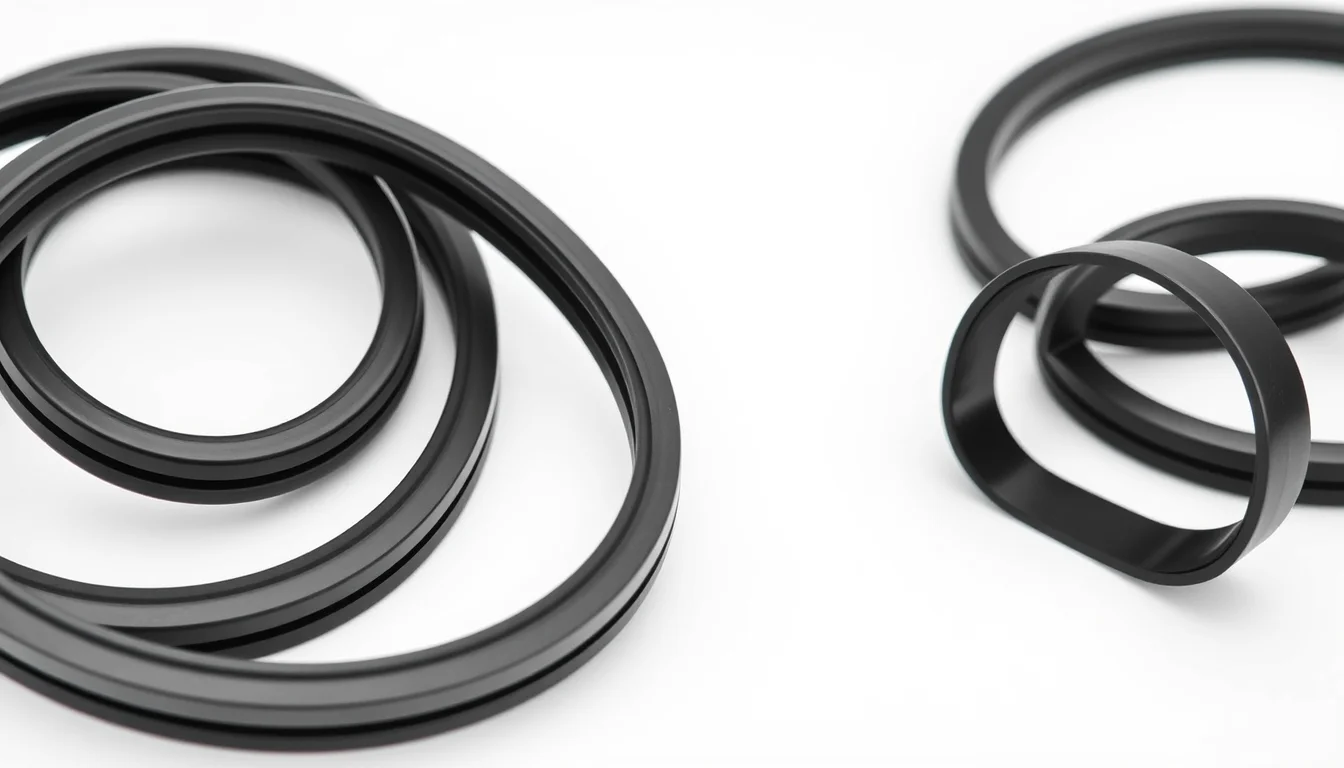
TPV thermoplastic rubber profile is a co-extruded elastomer sealing strip that holds its compression set under simultaneous UV, sub-zero, and repeated high-pressure friction — typically specified at 65–85 Shore A with extrusion tolerances of ±0.15 mm on critical sealing faces. If your current EPDM or PVC gasket is cracking at year three or flattening under load, the failure is usually in the polymer matrix, not the profile geometry. This review compares TPV against the common alternatives using real deployed numbers, then walks through the spec sheet a project buyer should demand before releasing a PO.
Why TPV Thermoplastic Rubber Profile Outperforms in Harsh Environments
The polymer matrix advantage
TPV (thermoplastic vulcanized) is a dynamically vulcanized blend of EPDM rubber particles dispersed in a polypropylene continuous phase. That dual-phase structure delivers rubber-like elastic recovery with thermoplastic processability. For a sealing strip, the practical result is a compression set under ASTM D395 (70°C, 22 h) of 25–35% versus 40–55% for a comparable uncrosslinked PVC compound. Lower compression set means the profile keeps pushing back against the frame after thousands of door cycles.
Where the specifiers get it wrong
Most failed projects we review were specified on hardness alone. A 70 Shore A TPV and a 70 Shore A EPDM feel identical on day one. The divergence appears after thermal aging per ASTM D573 at 100°C for 168 h: TPV retains 85–92% of original tensile strength, while a plasticized PVC can lose 30–45% as the plasticizer migrates. For cold-chain and outdoor cabinet applications, that migration is the root cause of the brittle fracture at the hinge line.
Material Comparison: TPV vs EPDM vs PVC vs Silicone
The table below reflects typical values for extruded sealing profiles in the 60–80 Shore A range, not laboratory maximums. Use it as a screening tool, then validate against your specific media exposure per ISO 1817.
| Property | TPV | EPDM (vulcanized) | PVC (flexible) | Silicone |
|---|---|---|---|---|
| Service temp range | -60 to +135°C | -50 to +150°C | -20 to +70°C | -60 to +200°C |
| Shore A hardness range | 55–90 | 40–90 | 55–95 | 30–80 |
| Tensile strength | 8–14 MPa | 7–12 MPa | 6–12 MPa | 5–10 MPa |
| Compression set (70°C/22 h) | 25–35% | 20–30% | 40–60% | 15–25% |
| Ozone resistance | Excellent | Excellent | Poor | Excellent |
| UV / weathering | Excellent | Excellent | Moderate | Excellent |
| Flame retardancy (UL 94) | V-0 achievable | HB typical | V-0 achievable | HB typical |
| Recyclability | Yes (re-melt) | No | Yes | No |
| Relative cost index | 1.0 | 0.85 | 0.55 | 2.2 |
Two rows matter most for outdoor and industrial projects: ozone resistance and compression set. Flexible PVC is the cheapest line item and the most expensive lifecycle decision — it will chalk and crack under UV within 24–36 months in a high-ozone environment. EPDM beats TPV on raw temperature ceiling but cannot be co-extruded with a rigid PP carrier in a single pass, which is why WPC profiles and TPV are frequently married in composite door systems.
Engineering Tolerances and Extrusion Control
What ±mm actually means on a sealing face
A TPV thermoplastic rubber profile is extruded through a hardened die, then water-quenched and cut. Dimensional control splits into two zones: the sealing lip (critical) and the mounting foot (non-critical). On a production line running at 8–12 m/min, we hold the sealing lip to ±0.15 mm and the overall profile height to ±0.30 mm. Buyers who specify a blanket ±0.5 mm across the whole cross-section are paying for scrap they do not need.
Hardness and durometer banding
Durometer is measured per ASTM D2240 on the finished profile, not the pellet. Because TPV is a two-phase system, the PP phase contributes stiffness at the surface. A nominal 70 Shore A profile can read 68–73 across a production lot. If your assembly uses an automated insertion robot, tighten the band to ±2 Shore A and expect a higher unit price — the extrusion line must run slower to stabilize melt pressure.
In our Hunan factory experience, a European cold-storage door client rejected three supplier lots before switching to TPV. The failure mode was identical each time: the EPDM profile passed initial compression set testing but developed a permanent 2.1 mm gap at the bottom sweep after 18 months at -35°C. We moved the compound to a 75 Shore A TPV with a low-temperature plasticizer-free formulation and ran a 500-hour thermal cycle test from -40°C to +20°C. Compression set after the cycle was 29%, and the door passed its airtightness spec on the first re-test. The lesson: for sub-zero cyclic duty, specify the low-temperature TPV grade explicitly and require the cycle test data, not just the room-temperature datasheet.
Application Areas Where TPV Is the Correct Specification
Refrigerated transport and cold-chain cabinets
Doors on reefer trailers and blast freezers cycle between ambient and -40°C multiple times per day. TPV holds flexibility at -60°C, well below the glass transition of plasticized PVC. Pair the profile with a rigid carrier for the door sealing strips frame and specify a co-extruded TPV/PP dual-durometer construction to eliminate adhesive failure.
Industrial control cabinets and outdoor enclosures
IP54 to IP66 enclosures exposed to direct sun and rain need ozone and UV resistance simultaneously. TPV with carbon black UV stabilization passes 2,000 h QUV without surface crazing. For high-temperature variants in this category, review the cabinet seals range, which can be supplied in TPV or silicone depending on the internal heat load.
High-friction sliding and compression seals
Window and door hardware that slides under load generates abrasion at the sealing lip. TPV's tear strength (typically 25–40 kN/m) resists lip roll-over better than PVC. Where the application also demands extreme temperature, the silicone series is the alternative — at roughly twice the material cost.
Specification Checklist for OEM and ODM Buyers
Before releasing a TPV profile PO, confirm these data points on the supplier datasheet:
- Base polymer grade and whether it is a low-temperature or flame-retardant variant
- Shore A hardness with tolerance band (±2 or ±3)
- Tensile strength and elongation at break per ASTM D412
- Compression set per ASTM D395, Method B, 70°C/22 h
- Thermal aging retention per ASTM D573, 100°C/168 h
- Ozone resistance per ASTM D1149, 50 pphm, 40°C, 20% strain
- Flame rating if applicable (UL 94 V-0 or HB)
- Extrusion tolerance drawing with critical dimensions marked
- Color fastness if the profile is visible (grey, white, or colored TPV)
A supplier who cannot provide the compression set and thermal aging numbers in writing is selling geometry, not material performance.
Frequently Asked Questions
What is your MOQ for a custom TPV thermoplastic rubber profile?
Standard MOQ is 500 kg per profile cross-section for a new die, or 200 kg for an existing die we already hold. For trial orders on catalog-adjacent profiles, we can run 50–100 kg to support your validation build. MOQ is quoted per compound and per color, since switching the extrusion line carries a purge cost.
What is the lead time for TPV profile production?
New die development and first article runs take 15–20 working days. Repeat production orders ship in 10–15 working days after deposit, depending on quantity and whether a color match is required. Air freight samples can be dispatched within 5 days of first article approval.
What extrusion tolerance can you hold on a TPV profile?
We hold ±0.15 mm on sealing lips and critical mating surfaces, and ±0.30 mm on non-critical mounting geometry. Tighter tolerances down to ±0.10 mm are possible on small cross-sections but require a dedicated die and a slower line speed, which affects unit price.
How are TPV profiles packed for export?
Profiles are coiled in 50–100 m rolls, wrapped in PE film, then packed in double-wall cartons or on pallets with corner protection. Long straight lengths ship in rigid tubes. We can print your SKU and handling instructions on the carton without additional tooling cost.
What is your sample policy for TPV sealing profiles?
We provide free 200–300 mm cut samples from existing dies, with the buyer covering courier freight. For custom cross-sections, we produce a paid first article sample (typically USD 150–400 depending on die complexity), and the die cost is credited against the first production order above 1,000 kg.
Send Your Drawing for a 24-Hour Quote
Email your CAD file, durometer target, and operating temperature range to our application engineering team. We will return a TPV compound recommendation, tolerance drawing, and FOB Changde quotation within 24 hours. For projects already in production, include the current failure mode and we will specify the correct grade against it.
Need a Custom Quote?
Send your CAD drawing or specs (material, hardness, profile, temperature range, MOQ) — our engineering team will respond within 24 hours.