
Switchgear Cabinet Door Seal | B2B OEM Supplier
By Zhouxin Sealing Engineering Team · · 4 views
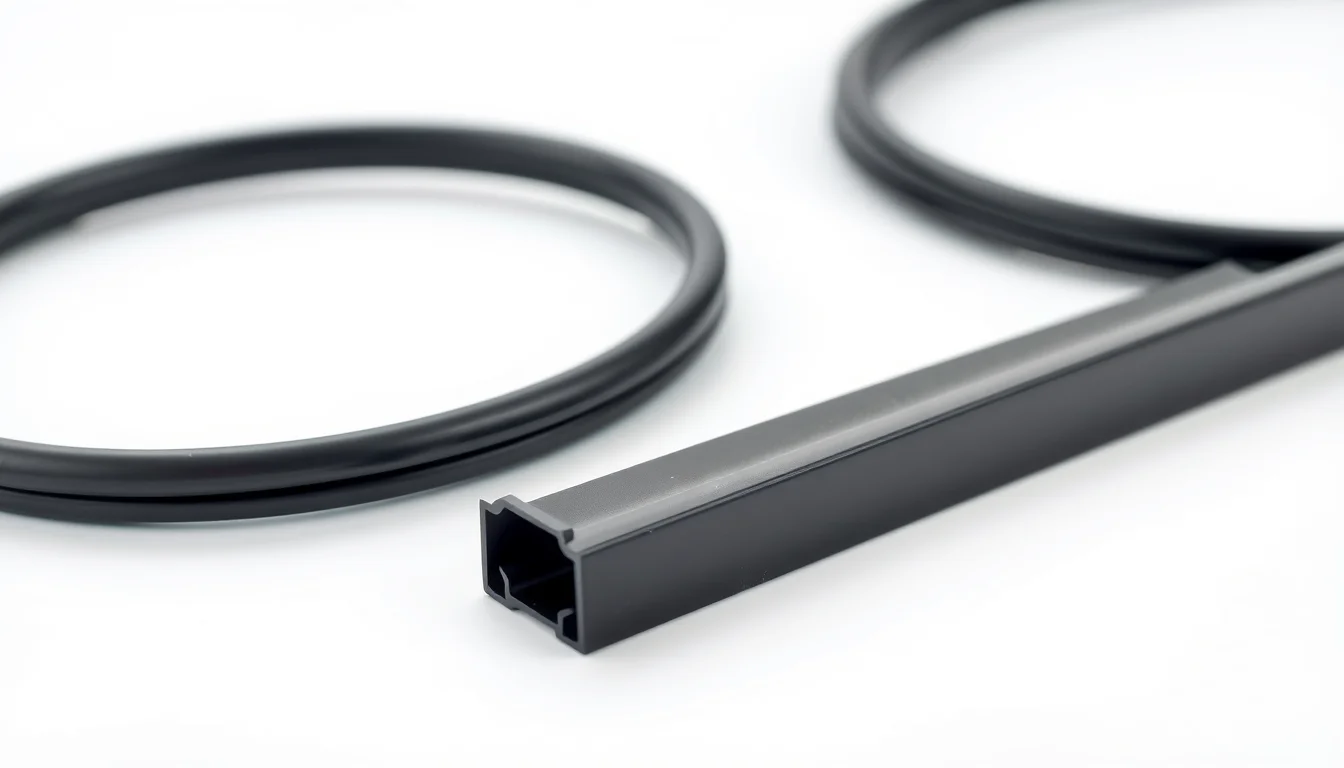
For switchgear cabinet door seal projects exposed to long-term UV, sub-zero temperatures, and repeated high-pressure door closure, specify a peroxide-cured EPDM profile with 70±5 Shore A, ±0.3 mm extrusion tolerance, and compression set under 25% per ASTM D395 — not a standard PVC strip. This review compares material options against real deployment data and outlines the specifications that survive 15+ years in the field.
Why Standard Seals Fail in Harsh Switchgear Environments
Outdoor and semi-exposed switchgear cabinets face a punishing duty cycle: solar UV at 60–80°C surface temperatures, winter drops to -30°C, and door hardware that compresses the seal to 30–40% deflection thousands of times per year. A seal that passes a bench test can still fail in service through three mechanisms: ozone cracking at the compression fold, thermal aging hardening that destroys rebound, and extrusion tolerance stack-up that leaves gaps at corners.
UV and Ozone Degradation
Ultraviolet radiation attacks the polymer matrix, breaking double bonds in the elastomer backbone. For EPDM, the saturated backbone resists this naturally; for SBR and natural rubber blends, UV exposure produces surface chalking and crack initiation within 12–18 months. Ozone resistance follows the same logic — ASTM D1149 testing at 50 pphm ozone typically shows EPDM passing 200+ hours without visible cracking, while nitrile and SBR blends fail within 24–72 hours under 20% strain.
Thermal Cycling and Compression Set
Repeated freeze-thaw cycles combined with door compression accelerate compression set. A seal that starts at 70 Shore A and sets 40% after thermal aging becomes effectively 85 Shore A at the contact line — it no longer rebounds, and water ingress begins. ASTM D573 thermal aging at 100°C for 70 hours is the minimum screening test; we recommend 168 hours for outdoor switchgear.
Abrasion and Door Friction
High-traffic cabinets with hinged doors generate sliding friction at the seal lip. PVC compounds with high plasticizer loading abrade quickly and leave a chalky residue on the door frame. EPDM with a 8–10 MPa tensile strength and 300%+ elongation resists this wear far better, and the absence of migrating plasticizers keeps the contact surface clean.
Material Comparison: EPDM vs PVC vs Silicone vs Neoprene
The table below reflects production-grade compounds we run at our Changde facility, not generic datasheet values. All figures are typical for 70 Shore A compounds unless noted.
| Property | EPDM (peroxide-cured) | PVC (flexible) | Silicone | Neoprene (CR) |
|---|---|---|---|---|
| Shore A hardness | 70 ±5 | 65–75 | 60 ±5 | 70 ±5 |
| Service temperature | -40 to +150°C | -20 to +70°C | -60 to +200°C | -30 to +100°C |
| Tensile strength | 8–12 MPa | 5–8 MPa | 6–9 MPa | 8–11 MPa |
| Elongation at break | 300–450% | 200–350% | 250–400% | 300–450% |
| Compression set (70h @ 100°C) | ≤25% | Not applicable | ≤20% | ≤30% |
| Ozone resistance (ASTM D1149) | Excellent | Poor | Excellent | Good |
| UV resistance | Excellent | Moderate (plasticizer migration) | Excellent | Good |
| Flame retardancy | UL 94 HB (FR grades available) | UL 94 V-0 achievable | UL 94 V-0 achievable | UL 94 HB |
| Relative cost index | 1.0 | 0.6–0.8 | 2.5–3.5 | 1.2–1.5 |
When EPDM Wins
For outdoor switchgear, EPDM is the default specification. The saturated polymer backbone delivers ozone and UV resistance that PVC cannot match, and peroxide curing (versus sulfur curing) reduces compression set and improves heat aging. A 70 Shore A EPDM profile with ±0.3 mm tolerance on critical dimensions handles the -40 to +120°C range that covers 95% of global installations.
When Silicone Is Justified
Silicone enters the conversation when the cabinet sees sustained temperatures above 150°C — for example, seals near transformer or busbar compartments — or when the specification demands -60°C cold flexibility. The trade-off is cost (2.5–3.5× EPDM) and lower tensile strength. For most switchgear door seal applications, silicone is over-specified.
Why PVC Still Appears
PVC remains common in indoor, temperature-controlled switchgear rooms because it is cheap and co-extrudes easily with rigid profiles. The failure mode is predictable: plasticizer migration causes hardening and shrinkage, typically within 3–5 years. If your project specifies PVC, insist on a plasticizer system rated for the ambient temperature and request thermal aging data per ASTM D573.
Specification Tolerances and Testing Protocol
Extrusion tolerance is where most door seal failures originate. A nominal 10 mm bulb that runs 10.8 mm will not compress correctly; a nominal 3 mm lip that runs 2.6 mm leaks. We hold ±0.3 mm on functional dimensions and ±0.5 mm on non-critical sections, measured per ISO 3302-1 Class E2/E3 depending on profile complexity.
Recommended Test Protocol for Switchgear Door Seals
- Hardness: ISO 7619-1, 70 ±5 Shore A
- Tensile and elongation: ASTM D412, minimum 8 MPa / 300%
- Compression set: ASTM D395 Method B, 70h @ 100°C, ≤25%
- Thermal aging: ASTM D573, 168h @ 100°C, hardness change ≤+10 Shore A
- Ozone resistance: ASTM D1149, 50 pphm, 20% strain, 200h, no cracking
- Flame retardancy: UL 94, HB minimum; V-0 for enclosed busbar compartments
- Fluid resistance: ISO 1817, reference fluids for transformer oil and cleaning agents
In our Hunan factory experience, a Middle East switchgear OEM returned to us after two years with a field complaint: their previous PVC seal had hardened and cracked at the hinge-side corner. We re-engineered the profile in peroxide-cured EPDM at 70 Shore A with a ±0.25 mm tolerance on the bulb diameter and a co-extruded rigid foot for clip retention. After 18 months in 55°C ambient with direct UV, the compression set measured 19% and no cracking was visible. The lesson: material selection and extrusion tolerance matter more than profile complexity.
Profile Design and Installation Considerations
A switchgear cabinet door seal is a system: the profile, the retention method, and the door hardware all interact. Bulb-and-lip profiles work well for hinged doors with 30–40% compression; D-profiles suit sliding or plug doors; and magnetic or clip-on retention simplifies field replacement.
Corner and Joint Integrity
Vulcanized corner joints outperform glued corners in every accelerated aging test we run. A glued corner fails at the adhesive line under thermal cycling; a vulcanized corner becomes a continuous elastomer section. For IP54 and IP65 ratings, specify vulcanized corners and request joint pull-strength data.
Compression Deflection and Door Force
A 70 Shore A EPDM bulb at 30% deflection generates roughly 1.5–2.5 N/cm of closure force per centimeter of seal length. Specifiers should confirm the door latch can overcome this force across the full perimeter, especially on large cabinets. Lower-durometer compounds (50–60 Shore A) reduce closure force but increase compression set risk; balance the two against the door hardware specification.
For complementary profiles, review our door sealing strips and cabinet seals ranges, and for high-temperature compartments see the silicone series. Projects that combine rubber seals with enclosure trim can also evaluate WPC profiles for non-sealing decorative sections.
Frequently Asked Questions
What is the MOQ for a custom switchgear cabinet door seal?
MOQ depends on profile complexity and whether a new extrusion die is required. For existing profiles, MOQ is typically 1,000 meters per size. For new custom profiles, MOQ is 3,000–5,000 meters to amortize the die cost, which is quoted separately and can be credited against future orders.
What is your lead time for production orders?
Standard EPDM profiles ship in 15–20 working days after drawing approval. Custom compounds, flame-retardant grades, or vulcanized corner assemblies extend lead time to 25–30 working days. Sample orders ship within 7–10 working days.
What extrusion tolerance can you hold on door seal profiles?
We hold ±0.3 mm on functional dimensions and ±0.5 mm on non-critical sections, measured per ISO 3302-1. For critical bulb or lip dimensions, we can commit to ±0.25 mm with in-process laser gauging and SPC documentation supplied with each lot.
How are seals packed for export?
Seals are coiled in PE film, packed in cartons or woven bags, and palletized for container loading. Coil length is specified per profile — typically 50–100 meters per coil. We can supply neutral packing or buyer-branded labels; full container loads optimize freight cost.
What is your sample policy?
Stock profile samples are free; buyers cover freight. Custom compound or custom profile samples are quoted at a sample fee, typically credited against the first production order. Samples ship within 7–10 working days with material datasheets and test reports.
| Specification | Recommended Value |
|---|---|
| Material | Peroxide-cured EPDM |
| Hardness | 70 ±5 Shore A |
| Service temperature | -40 to +150°C |
| Tensile strength | ≥8 MPa |
| Compression set (ASTM D395) | ≤25% |
| Extrusion tolerance | ±0.3 mm functional |
| Flame rating | UL 94 HB / V-0 available |
| Corner joint | Vulcanized |
Send your CAD drawing for a 24-hour quote.
Need a Custom Quote?
Send your CAD drawing or specs (material, hardness, profile, temperature range, MOQ) — our engineering team will respond within 24 hours.