
Sponge Rubber Strips Bulk Purchase | OEM Factory Supply
By Zhouxin Sealing Engineering Team · · 7 views
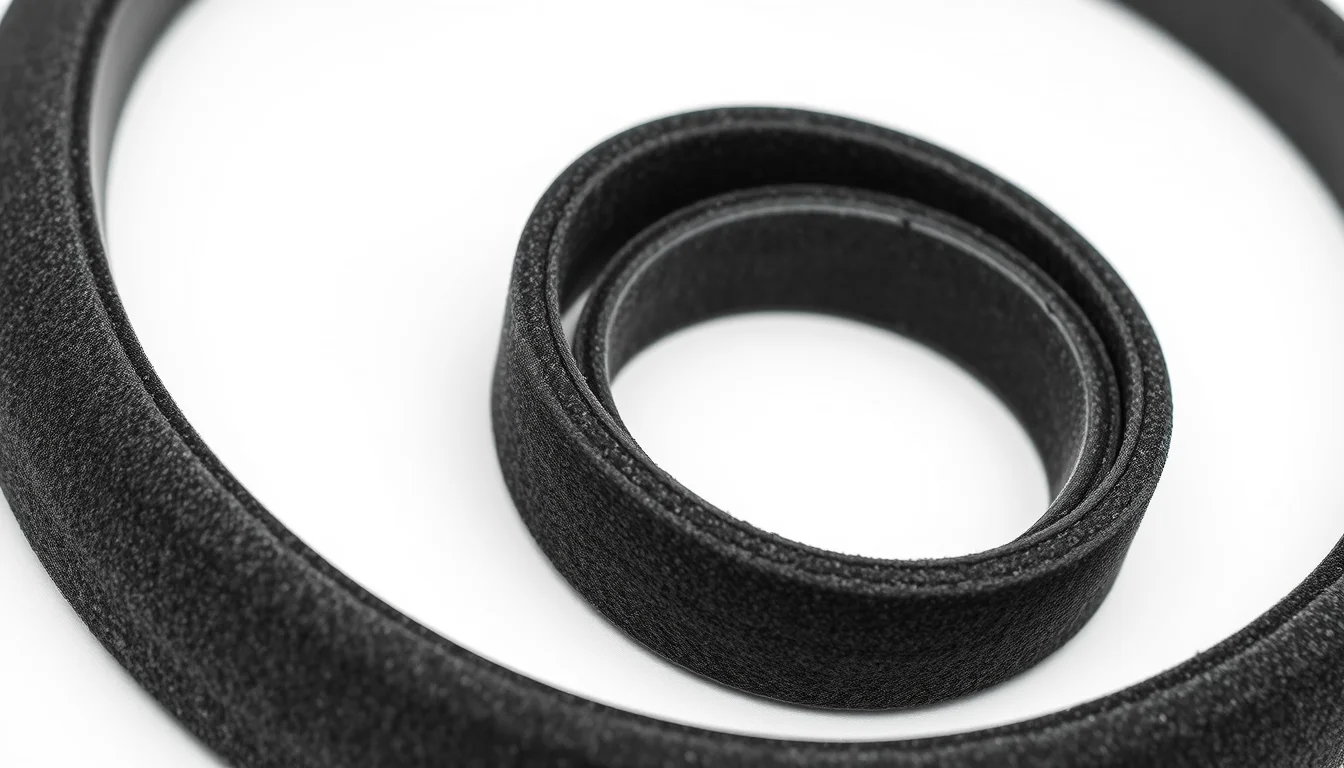
Overseas buyers searching for sponge rubber strips bulk purchase need a factory that can hold extrusion tolerance, control compression set, and ship export-ready pallets without back-and-forth on drawings. This guide walks through the real custom extrusion process at a Hunan sealing manufacturer — from polymer matrix selection to vulcanization, tooling, MOQ, and packing. It is written for project specifiers, OEM/ODM buyers, and trade wholesalers who already have active POs and need a supplier that speaks engineering.
Factory Capability Comparison: What to Verify Before You Issue a PO
Not every rubber extrusion line is set up for sponge (cellular) profiles. Sponge strips require controlled blowing-agent activation, precise die swell management, and continuous vulcanization ovens that maintain stable temperature across the profile cross-section. When you audit a supplier, compare these capability points:
| Capability | Low-Tier Workshop | Mid-Tier Factory | Export-Grade Factory (Zhouxin class) |
|---|---|---|---|
| Extrusion lines | 1–2, manual take-off | 3–5, semi-auto | 6–10, PLC-controlled with laser diameter gauge |
| Sponge density control | ±0.08 g/cm³ | ±0.05 g/cm³ | ±0.03 g/cm³ |
| Extrusion tolerance | ±0.5 mm | ±0.3 mm | ±0.15 mm (tight sections ±0.10 mm) |
| Continuous vulcanization | Batch oven | Hot air tunnel | Hot air + microwave (MW) dual-stage |
| In-house tooling | Outsourced | Partial | Full CNC die shop, 48 h die turnaround |
| QC lab | Visual only | Tensile + hardness | Tensile, hardness, compression set, thermal aging, ozone chamber |
| Export packing | Carton | Carton + pallet | Carton + pallet + desiccant + stretch wrap + fumigation-free crate |
A factory that cannot quote extrusion tolerance in ±mm on the datasheet is not ready for OEM sponge rubber strips bulk purchase. Ask for a PPAP-style dimensional report on a 500 mm cut length before you commit to a container.
Material Selection for Sponge Profiles
Sponge rubber strips are specified by polymer matrix, durometer, and cell structure. The table below reflects typical values we test on production lots; your project may narrow the window further.
| Material | Temp Range | Shore A (sponge) | Tensile MPa | Compression Set (ASTM D395, 22 h @ 70°C) | Ozone Resistance | Relative Cost |
|---|---|---|---|---|---|---|
| EPDM sponge | -40 to 150°C | 20–50 | 1.5–4.0 | ≤25% | Excellent | $$ |
| Neoprene (CR) sponge | -30 to 120°C | 20–50 | 1.5–3.5 | ≤30% | Good | $$$ |
| Silicone sponge | -60 to 200°C | 15–50 | 1.0–3.0 | ≤20% | Excellent | $$$$ |
| PVC/NBR blend sponge | -20 to 100°C | 25–55 | 1.0–2.5 | ≤35% | Fair | $ |
| Flame-retardant EPDM sponge | -40 to 130°C | 25–50 | 1.5–3.5 | ≤28% | Excellent | $$$ |
For outdoor architectural and door sealing strips, EPDM sponge is the default because its saturated backbone resists ozone and UV without antiozonant bloom. For high-temperature cabinet or appliance applications, move to silicone series where thermal aging at 200°C for 70 h per ASTM D573 retains ≥70% elongation. If your project requires UL 94 V-0, specify flame-retardant EPDM or silicone sponge and request the test report with the lot number.
The Real Custom Extrusion Process — Step by Step
Understanding the sequence helps you time your PO and avoid expedite fees.
1. Drawing Review and DFM Feedback
We review your CAD for wall thickness uniformity, undercut, and minimum section. Sponge profiles below 1.5 mm wall are difficult to blow consistently; we will flag these and propose a revised cross-section. A proper DFM reply comes back within 24–48 h.
2. Tooling and Die Fabrication
Extrusion dies are CNC-machined from 45# steel or P20, then nitrided. Tooling cost for a standard sponge profile runs USD 350–900 depending on complexity and number of cavities. Lead time is 5–7 working days for a simple die, 10–14 days for multi-cavity or co-extrusion.
3. Compound Mixing and Blowing Agent Activation
The polymer matrix, blowing agent (typically OBSH or ADC), vulcanization system, and fillers are mixed on a two-roll mill or internal mixer. Sponge density is set here — not on the line. A 0.55 g/cm³ target requires tighter weighing tolerance than a 0.75 g/cm³ target.
4. Extrusion and Continuous Vulcanization
The compound is extruded through the die and enters a hot-air tunnel (and microwave section for thick profiles) where vulcanization and expansion occur simultaneously. Line speed, oven temperature zones, and take-off tension are logged. Extrusion tolerance is measured every 30 minutes with a laser gauge.
5. Cutting, Splicing, and Secondary Operations
Strips are cut to length on automatic flying knives or rotary cutters. Secondary operations include adhesive backing (acrylic or hot-melt), PSA lamination, corner splicing, and punching. For cabinet seals, we often add a pressure-sensitive adhesive tape with 180° peel ≥8 N/25 mm.
6. QC and Lot Release
Each lot is tested for hardness (Shore A), tensile strength, elongation, compression set (ASTM D395), and thermal aging (ASTM D573). Ozone resistance is tested per ASTM D1149 for outdoor grades. A Certificate of Analysis ships with every pallet.
In our Hunan factory experience, ... a European OEM buyer sent a 2D PDF with no tolerances on a 12 mm × 8 mm EPDM sponge profile. We quoted ±0.3 mm, but the buyer's assembly fixture required ±0.15 mm. The first 200 m lot failed fitment. We re-cut the die, ran a 50 m trial, and shipped a dimensional report with 20 measurement points. The lesson: send a 3D STEP file plus a tolerance table, and state the critical-to-function dimensions. That single change cut the back-and-forth from six emails to one.
How to Send CAD Drawings That Reduce Back-and-Forth
A clean drawing package gets you a firm quote in 24 h instead of a week of clarification.
- File format: 3D STEP (.stp) or IGES (.igs) preferred. 2D DWG/DXF is acceptable if fully dimensioned.
- Units: State mm or inches explicitly. Do not assume.
- Tolerance table: List critical dimensions with ±mm. Mark CTF (critical-to-function) dimensions.
- Material callout: Specify polymer, durometer (Shore A), color, and any flame retardancy (UL 94) or ozone requirement.
- Length and cut: State cut length, tolerance, and whether ends are square-cut, chamfered, or spliced.
- Adhesive: Specify backing type, width, and peel strength if required.
- Packing: State carton size, pallet type, and labeling requirements.
- Compliance: List RoHS, REACH, PAHs, or FDA requirements up front.
If you are also sourcing WPC profiles or rigid PVC, send those drawings in the same package — we can consolidate tooling and shipping.
MOQ, Tooling Cost, Sample Lead Time, and Packing
These are the numbers buyers ask about most. They are typical for our Changde, Hunan factory and may vary by profile complexity.
| Item | Standard Range | Notes |
|---|---|---|
| MOQ (stock compound) | 500–1,000 m | Per profile, per color |
| MOQ (custom compound) | 2,000–3,000 m | Custom color or flame-retardant grade |
| Tooling cost | USD 350–900 | Simple single-cavity die; multi-cavity higher |
| Tooling lead time | 5–14 working days | 5–7 days simple, 10–14 days complex |
| Sample lead time | 7–12 working days | After drawing approval and tooling |
| Sample cost | Free for stock profile; tooling + material for custom | Courier collect |
| Production lead time | 15–25 working days | After sample approval and deposit |
| Packing | Carton + pallet + stretch wrap | Desiccant and fumigation-free crate optional |
| Port of loading | Shanghai / Shenzhen / Ningbo | Changde rail-to-port available |
For bulk purchase planning, add 7 days buffer for ocean freight booking and 3 days for documentation (commercial invoice, packing list, CO, Form A/E).
Frequently Asked Questions
What is the MOQ for sponge rubber strips bulk purchase?
For stock EPDM sponge profiles in black, MOQ is typically 500–1,000 m per profile. Custom compound — custom color, flame-retardant, or FDA-grade — moves MOQ to 2,000–3,000 m because of minimum compound batch size. If you are testing a new project, we can quote a 200 m trial run at a higher unit price to validate fit and function before you commit to a full container.
What is the production lead time after sample approval?
Standard production lead time is 15–25 working days after sample approval and receipt of deposit. This covers compound mixing, extrusion, vulcanization, cutting, QC, and packing. Complex profiles with secondary operations such as adhesive lamination or corner splicing may add 3–5 days. Peak season (August–October) can add 5 days, so book your PO early.
What extrusion tolerance can you hold on sponge profiles?
Standard extrusion tolerance is ±0.3 mm on most cross-sections, tightening to ±0.15 mm on critical dimensions and ±0.10 mm on small sections under 6 mm. Sponge is more difficult to hold than dense rubber because of die swell and cell expansion. We recommend marking CTF dimensions on your drawing so we can allocate the die and line settings accordingly.
How are sponge rubber strips packed for export?
Strips are coiled or cut to length, then packed in PE bags inside 5-layer corrugated cartons. Cartons are stacked on fumigation-free plywood pallets, stretch-wrapped, and secured with PP strapping. Desiccant is added for humid destinations. We can print your label and carton mark, and we provide a packing list with carton dimensions and gross/net weight for customs.
Do you provide free samples, and how long do they take?
Stock profile samples are free; you cover courier. Custom samples require tooling and material cost, which is credited back against your first bulk order. Sample lead time is 7–12 working days after drawing approval. Each sample ships with a dimensional report and material datasheet so your engineering team can verify before production.
| Parameter | Specification |
|---|---|
| Material | EPDM / Silicone / Neoprene sponge |
| Hardness | Shore A 20–50 |
| Density | 0.45–0.75 g/cm³ |
| Tensile strength | 1.5–4.0 MPa |
| Elongation at break | 150–350% |
| Compression set | ≤25% (ASTM D395, 22 h @ 70°C) |
| Thermal aging | ASTM D573, 70 h @ 100°C, ≥70% elongation retention |
| Ozone resistance | ASTM D1149, 50 pphm, 40°C, 20% strain, 72 h |
| Extrusion tolerance | ±0.15 mm standard, ±0.10 mm tight |
| Color | Black, grey, white, custom |
| Adhesive | Acrylic or hot-melt PSA, ≥8 N/25 mm peel |
| Packing | Carton + pallet + stretch wrap |
Send your CAD drawing for a 24-hour quote.
Need a Custom Quote?
Send your CAD drawing or specs (material, hardness, profile, temperature range, MOQ) — our engineering team will respond within 24 hours.