
Sponge Rubber Strips Bulk Purchase | OEM Supplier
By Zhouxin Sealing Engineering Team · · 213 views
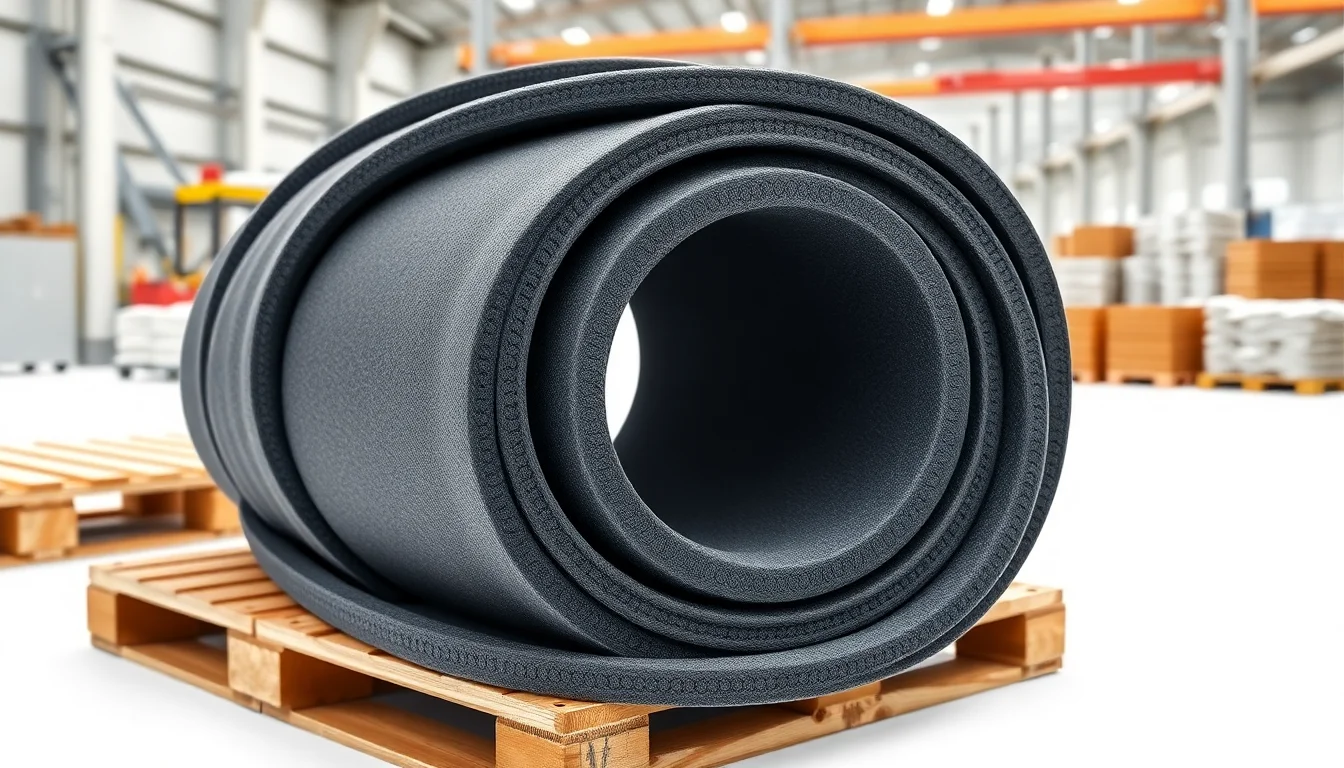
For bulk sponge rubber strip procurement, the decisive variables are not price per kilogram but the polymer matrix's long-term compression set and thermal aging behavior under your specific clamping force. Below are the datasheet-level comparisons we use internally at Hunan Zhouxin Sealing Technology to qualify compounds for export orders.
Material Selection Matrix for Continuous Extrusions
Closed-cell sponge profiles are vulcanized continuously via hot-air or microwave tunnels. The cell structure determines the seal's force-deflection curve, but the polymer determines survival. The following data reflects our standard production compounds, tested per ASTM D573 for thermal aging and ASTM D395 Method B for compression set (22 hrs at 70°C, 25% deflection).
| Property | EPDM (Closed Cell) | Silicone (VMQ) | CR (Neoprene) |
|---|---|---|---|
| Hardness (Shore 00) | 15–25 | 10–20 | 20–30 |
| Tensile Strength (MPa) | 1.2–2.0 | 1.5–2.5 | 1.0–1.8 |
| Compression Set (%) | 15–25 | 10–18 | 20–30 |
| Continuous Temp Range (°C) | -40 to +120 | -60 to +200 | -30 to +100 |
| Thermal Aging (72h @ 100°C, % tensile retention) | 85–92 | 90–95 | 70–80 |
| Oil Resistance (ASTM IRM 901, 24h @ 70°C) | Poor (swell >40%) | Fair (swell 20–30%) | Good (swell <15%) |
| Acid/Alkali Resistance (10% H2SO4, 7 days) | Excellent | Excellent | Good |
| Ozone Resistance (ASTM D1149, 50 pphm) | Excellent (no cracks) | Excellent | Good |
| Flame Retardancy (UL 94) | HB (with additive) | V-0 (with additive) | V-0 (inherent) |
For door sealing strips exposed to UV and rain, EPDM is our default recommendation. For high-heat gaskets in lighting or engine compartments, the silicone series outperforms all others above 150°C.
Compression Set: The Real Cost Driver
A sponge strip that recovers only 70% of its original height after 22 hours of compression will fail as a dust seal within one season. Bulk buyers often overlook that compression set is not linear with density—it is a function of the polymer's cross-link density and the blowing agent's cell wall integrity.
EPDM Formulation vs. Service Life
Our standard EPDM sponge compound (density 0.55 g/cm³) achieves a compression set of 18% after 22h at 70°C. After 168 hours of thermal aging at 100°C (ASTM D573), tensile retention remains above 85%. In accelerated UV/ozone testing (500 hrs, 50 pphm ozone), surface cracking is absent at 10x magnification. This translates to a practical service life of 8–10 years in moderate climates for cabinet seals with 30% compression.
Silicone for Extreme Cycles
Silicone sponge (VMQ) shows a compression set of only 12% under the same test conditions. However, its tear strength is lower—typically 5–8 N/mm versus 10–15 N/mm for EPDM. If your application involves repeated sliding friction or sharp metal edges, silicone's lower abrasion resistance may be a disqualifier despite its superior temperature range.
Extrusion Tolerance & Cross-Section Design
Continuous vulcanization of sponge profiles introduces dimensional variance that dense rubber does not. The cell expansion after the extrusion die exit creates a "skin" that is thinner on the top surface than on the base. This affects the pressure curve.
| Cross-Section Dimension | Standard Tolerance (±mm) | Precision Tolerance (±mm) |
|---|---|---|
| Height (compression direction) | 0.30 | 0.15 |
| Width | 0.50 | 0.25 |
| Cut length (per piece) | 1.0 | 0.5 |
| Base flatness (per meter) | 1.5 | 0.8 |
For bulk purchases exceeding 5,000 meters, we recommend specifying the precision tolerance on the height dimension only. That is where your seal's contact force is determined. Width tolerances of ±0.5 mm rarely affect performance in a groove.
Chemical Resistance: Matching the Elastomer to the Media
ISO 1817 provides the standard immersion testing protocol. The table below shows volume swell percentages after 7 days at 23°C—lower is better.
| Media | EPDM (Swell %) | Silicone (Swell %) | CR (Swell %) |
|---|---|---|---|
| Distilled Water | 2 | 1 | 3 |
| 10% Hydrochloric Acid | 3 | 2 | 8 |
| 10% Sodium Hydroxide | 2 | 2 | 5 |
| ASTM #1 Oil | 25 | 15 | 5 |
| ASTM #3 Oil | 45 | 22 | 12 |
| Isopropanol | 15 | 10 | 8 |
In our Hunan factory experience, a German client once specified CR sponge for a marine hatch seal believing it would outperform EPDM in salt spray. After 500 hours of ASTM B117 salt fog, the CR profiles showed surface hardening and a 20% loss of compression recovery, while EPDM samples from the same production run remained unchanged. The issue was not the polymer itself but the client's assumption that "oil resistance" implies "weather resistance." We now routinely ask buyers to send their actual media exposure list, not just the application name.
Bulk Packaging and Coil Integrity
For orders above 3,000 meters, we ship in reinforced cardboard reels with a 300 mm inner diameter. Each reel is wrapped in PE film with a desiccant bag. The maximum continuous length per reel is 500 meters for profiles under 20 mm cross-section; larger profiles are cut to 2-meter straight lengths and packed in wooden crates. Coil memory can be an issue with silicone sponge—if your assembly line requires a perfectly straight strip, specify the "reversely coiled" option, which adds 2–3 days to lead time but eliminates the curl.
Frequently Asked Questions
What is the minimum order quantity (MOQ) for custom sponge rubber strips?
Our MOQ is 500 meters for standard EPDM sponge profiles and 1,000 meters for silicone or CR. For profiles requiring new extrusion tooling, the MOQ is 2,000 meters to amortize the die cost (typically $300–$800 depending on cross-section complexity). We can produce sample lengths of 5–10 meters for fit testing before you commit to bulk.
What is the typical lead time for a bulk order?
After CAD drawing approval and tooling confirmation, production takes 10–15 working days for orders up to 10,000 meters. Larger orders (50,000+ meters) require 20–25 working days due to raw material procurement and continuous vulcanization line scheduling. We ship via sea freight from Shanghai or Shenzhen; FOB terms are available.
What extrusion tolerance can you guarantee for sponge profiles?
Standard commercial tolerance is ±0.30 mm on the compression height and ±0.50 mm on width. If your seal gland is machined to ISO 3601 tolerances, we recommend our precision grade: ±0.15 mm on height. This requires a secondary grinding or hot-calibration pass, which adds roughly 8% to the unit price.
How is bulk sponge rubber packed for export?
Coiled profiles are wound on 300 mm ID cardboard reels, max 500 meters per reel, wrapped in stretch film with a desiccant pouch. Straight-cut lengths (2m or 3m) are bundled in 25 kg cartons. All wooden packaging is ISPM 15 heat-treated and stamped. We can also provide custom reel labeling with your part number and batch trace code.
Can I get free samples before placing a bulk order?
Yes. We provide up to 3 free straight samples (300 mm length each) of any existing compound, shipped via DHL or FedEx at our cost. For custom-extruded profiles requiring new tooling, a sample fee of $150 applies, which is fully refunded against your first bulk order. Send your CAD drawing to our engineering team for a 24-hour feasibility review.
Specification Checklist for Your RFQ
| Parameter | Your Requirement | Our Standard Offering |
|---|---|---|
| Polymer | EPDM / Silicone / CR | EPDM (default) |
| Density (g/cm³) | 0.4–0.7 | 0.55 |
| Hardness (Shore 00) | 10–30 | 20 |
| Compression Set (%) | <25 | 18 |
| Temp Range (°C) | -40 to +120 | -40 to +120 |
| UL 94 Rating | HB or better | HB (V-0 for silicone) |
| Tolerance (height, ±mm) | 0.15–0.30 | 0.30 |
| Max Continuous Length (m) | 100–500 | 500 |
Send your CAD drawing for a 24-hour quote.
Need a Custom Quote?
Send your CAD drawing or specs (material, hardness, profile, temperature range, MOQ) — our engineering team will respond within 24 hours.