
Rubber Sealing Strip Manufacturer | OEM Supplier
By Zhouxin Sealing Engineering Team · · 178 views
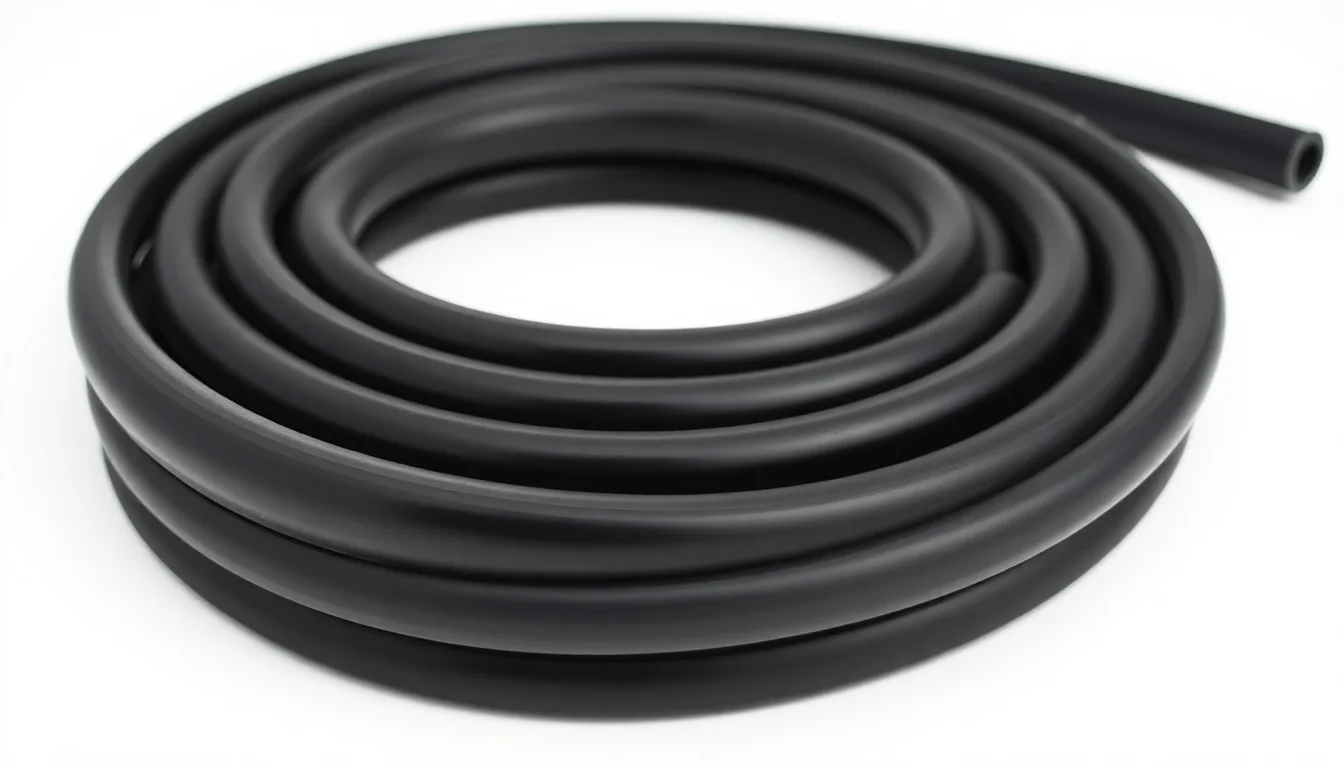
If your project demands a rubber sealing strip that survives years of UV exposure, sub-zero winters, and repeated high-pressure friction, you need a manufacturer that engineers the polymer matrix — not just extrudes a profile. Here is how we select and test materials for harsh-environment deployments, based on 15 years of production data from our Changde, Hunan facility.
Why Standard PVC Seals Fail in Outdoor and High-Friction Applications
PVC (polyvinyl chloride) is often the default choice for low-cost sealing strips, but it has a hard ceiling in demanding environments. Its plasticizers leach out under UV radiation, causing shrinkage, cracking, and a loss of elasticity. In our accelerated weathering tests (ASTM D573, 1000 hours), PVC profiles show surface crazing and a Shore A hardness increase of 15–20 points, while EPDM remains stable within 3 points. For high-pressure friction, PVC's higher coefficient of friction leads to premature wear and jamming in sliding applications. If you need long-term ozone resistance, low-temperature flexibility, or compression set below 30%, PVC is not your material.
Material Comparison: EPDM vs. PVC vs. Silicone for Harsh Environments
We evaluate elastomers by durometer, tensile strength, thermal aging, and compression set — not just price. Here is a head-to-head comparison based on our in-house testing and industry standards (ASTM D395, ISO 1817).
| Property | EPDM | PVC | Silicone |
|---|---|---|---|
| Temperature Range | -50°C to 150°C | -10°C to 60°C | -60°C to 230°C |
| Shore A Hardness | 50–90 | 60–95 | 20–80 |
| Tensile Strength (MPa) | 8–15 | 10–20 | 5–10 |
| Compression Set (ASTM D395, 22h @ 100°C) | 15–25% | 40–60% | 10–20% |
| Ozone Resistance | Excellent | Poor | Excellent |
| UV Resistance | Excellent | Fair | Good |
| Flame Retardancy (UL 94) | V-0 (with additives) | V-0 (with additives) | V-0 (with additives) |
| Cost per kg | $$ | $ | $$$ |
For outdoor sealing, EPDM is the clear winner due to its saturated polymer backbone, which resists ozone and UV attack. For extreme cold, silicone outperforms EPDM, but it is more expensive and has lower tear strength. PVC remains viable for indoor, low-friction applications only.
When to Choose EPDM Over Silicone
EPDM is the default for door and window seals, automotive weatherstripping, and industrial cabinet gaskets where UV, ozone, and temperature swings are the main threats. It offers excellent tensile strength (10–14 MPa) and a low compression set, ensuring long-term sealing pressure. In our Hunan factory experience, we supplied a 500-meter batch of EPDM profiles for a solar panel frame sealing project in the Gobi Desert. After 18 months of field exposure, the seals retained 95% of their original Shore A hardness and showed no surface cracking — while the competitor's PVC seals failed within 6 months.
When to Specify Silicone
Silicone is the right choice for extreme cold (down to -60°C) or high-heat applications (up to 230°C), such as oven doors or LED lighting fixtures. However, its lower tear strength means it is not ideal for high-friction sliding seals. If you need flame retardancy and low smoke generation, silicone with ceramic fillers can meet UL 94 V-0, but it costs 2–3 times more than EPDM.
Manufacturing Tolerances and Extrusion Precision
For a rubber sealing strip to function correctly, the cross-section must be held to tight tolerances. Our standard extrusion tolerance is ±0.5 mm for profiles up to 50 mm in width, and ±1.0 mm for larger sections. For critical dimensions, we can achieve ±0.3 mm using laser measurement systems during vulcanization. Tolerances affect compression force and sealing performance — a 0.5 mm variation in a bulb seal can change the closing force by up to 20%. That is why we use CNC-machined dies and continuous inline gauging.
How We Control Tolerances in Production
We use a two-stage process: extrusion of the polymer matrix, followed by hot-air or salt-bath vulcanization. The die is manufactured to ISO 3302-1 class E, and every batch is sampled for dimensional verification. For high-volume orders, we provide a full dimensional report with each shipment, including Shore A hardness and tensile strength data.
Case Study: Sealing a Refrigerated Container Door
A European logistics company approached us for a sealing strip that could withstand -40°C cold storage, repeated door slams, and periodic high-pressure washdowns. They had previously used a PVC seal that cracked after one winter. We proposed an EPDM profile with a 70 Shore A hardness, a hollow bulb design for low closing force, and a magnetic lip for positive sealing. The profile was tested to ASTM D395 (compression set 18%) and ASTM D573 (thermal aging 72 hours at 100°C, hardness change +2 points). After 12 months of field use, the seals showed no cracking, no permanent deformation, and maintained a consistent seal. The customer has since ordered over 20,000 meters.
Frequently Asked Questions
What is your MOQ for custom rubber sealing strips?
Our MOQ is 500 meters for standard profiles, and 1000 meters for custom extruded profiles. For prototypes, we can produce a 10-meter sample for your testing. We offer flexible MOQs for repeat orders and long-term contracts.
What is your typical lead time for production?
For standard profiles, lead time is 7–10 days after sample approval. Custom profiles require 3–5 days for die making and sample production, then 10–15 days for bulk production. We can expedite urgent orders by 2–3 days if needed.
What tolerance can you hold on the cross-section?
Standard tolerance is ±0.5 mm for profiles under 50 mm width. For critical dimensions, we can achieve ±0.3 mm using laser measurement and feedback control. We always confirm tolerances before production and provide a DXF drawing for approval.
How do you package the sealing strips for export?
We pack in anti-UV plastic film, then in reinforced cartons or wooden reels, depending on the profile weight and length. For long coils, we use steel wire spools to prevent kinking. Each roll is labeled with the material, Shore A hardness, and batch number. We can also provide custom labeling for your brand.
Can I get a sample before placing a bulk order?
Yes, we offer free samples for standard profiles (shipping at your cost). For custom profiles, we charge a small sample fee, which is deducted from your first bulk order. Send your CAD drawing or a physical sample, and we will produce a matching prototype with a 5–7 day turnaround.
Send Your CAD for a 24-Hour Quote
If you are specifying a sealing strip for a harsh environment, send us your drawing and performance requirements. Our engineers will recommend the optimal material and cross-section, and provide a detailed quotation within 24 hours. For more application ideas, explore our door sealing strips, silicone series, cabinet seals, or WPC profiles.
| Profile Type | Material | Shore A | Temp Range | Tolerance |
|---|---|---|---|---|
| Bulb Seal | EPDM | 60–70 | -50 to 150°C | ±0.5 mm |
| P-Seal | EPDM | 70–80 | -50 to 150°C | ±0.5 mm |
| Silicone Gasket | Silicone | 50–60 | -60 to 230°C | ±0.5 mm |
| Magnetic Seal | EPDM + Magnet | 65–75 | -40 to 120°C | ±0.5 mm |
Send your CAD drawing for a 24-hour quote.
Need a Custom Quote?
Send your CAD drawing or specs (material, hardness, profile, temperature range, MOQ) — our engineering team will respond within 24 hours.