
Rubber Extrusion Tooling Cost Guide | OEM Supplier
By Zhouxin Sealing Engineering Team · · 275 views
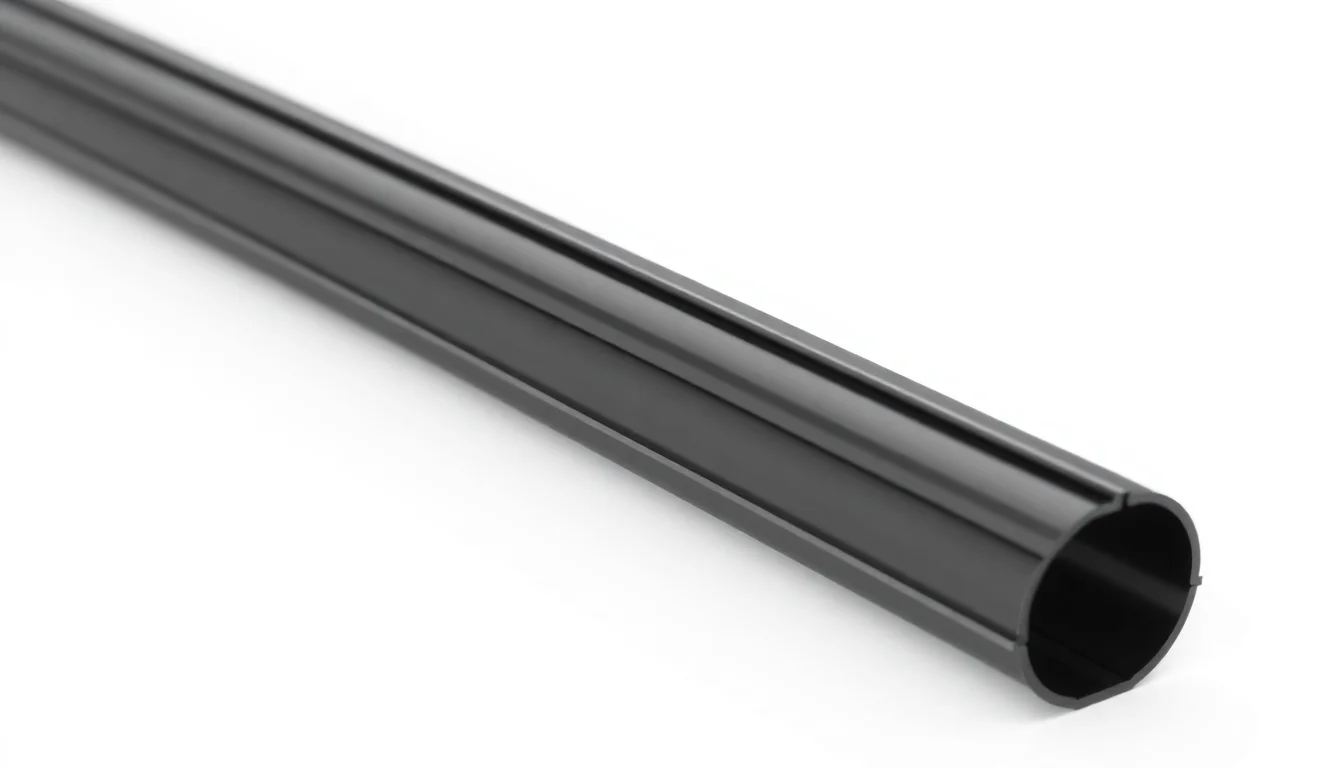
Overseas B2B buyers sourcing rubber extrusion tooling need a cost baseline tied to material properties and tolerance class, not guesswork. This guide compares EPDM, silicone, NBR, and neoprene across tensile strength, compression set, and aging resistance, then maps those specs to tooling cost drivers. Use the tables below to shortlist materials and estimate tooling investment before requesting a quote.
Material Property Comparison for Extrusion Tooling
Tooling cost is directly influenced by polymer selection because shrinkage, vulcanization kinetics, and die swell vary by compound. The table below summarizes typical values for black-filled compounds used in sealing profiles.
| Property | EPDM | Silicone (VMQ) | NBR | Neoprene (CR) |
|---|---|---|---|---|
| Hardness range (Shore A) | 50–90 | 30–80 | 50–90 | 40–80 |
| Tensile strength (MPa) | 10–17 | 6–10 | 10–15 | 10–14 |
| Elongation at break (%) | 250–500 | 200–400 | 200–450 | 200–400 |
| Compression set (%, 22 h @ 70°C) | 15–25 | 20–35 | 15–25 | 20–30 |
| Thermal aging (ASTM D573, 70 h @ 100°C) | ±15% tensile | ±10% tensile | ±20% tensile | ±25% tensile |
| Continuous service temp. (°C) | -40 to +150 | -60 to +200 | -30 to +100 | -40 to +120 |
| Oil resistance (ASTM IRM 903, 70 h @ 100°C) | Poor (swell >100%) | Fair (swell 30–60%) | Excellent (swell <10%) | Good (swell 20–40%) |
| Acid resistance (dilute, 10%) | Good | Fair | Good | Fair |
| Alkali resistance (dilute, 10%) | Excellent | Good | Good | Good |
| Ozone resistance (ASTM D1149, 50 pphm) | Excellent | Excellent | Poor | Good |
| Flame retardancy (UL 94) | HB (FR grades V-0) | HB (FR grades V-0) | HB | V-0 available |
These values are typical for production compounds; always confirm with a material datasheet for your specific grade. Tooling cost scales with hardness and profile complexity—higher durometer EPDM (80–90 Shore A) requires more precise die land lengths and often a separate calibration die.
Tensile Strength and Compression Set Trade-offs
Higher tensile strength generally correlates with better compression set resistance, but the relationship is non-linear. EPDM at 12–15 MPa with 15–20% compression set is the workhorse for door sealing strips and outdoor cabinet gaskets. Silicone offers wider temperature range but lower tensile (6–10 MPa) and higher compression set (20–35%), which affects tooling design for high-precision profiles.
Tolerance, Die Design, and Tooling Cost Drivers
Extrusion tolerance follows ISO 3302-1 or ASTM D2000 class lines. A tighter tolerance class increases tooling cost because die manufacturing moves from CNC-machined to wire-EDM or precision-ground inserts. The table below maps tolerance to typical tooling cost multipliers.
| Tolerance Class | Typical Profile Tolerance (mm) | Tooling Cost Multiplier |
|---|---|---|
| ISO 3302-1 E1 (loose) | ±0.50 | 1.0x (baseline) |
| ISO 3302-1 E2 | ±0.25 | 1.3–1.5x |
| ISO 3302-1 E3 | ±0.10 | 1.8–2.2x |
| ASTM D2000 (precision) | ±0.08 | 2.5–3.0x |
Die swell compensation is the second major cost driver. Compounds with high filler loading (e.g., 80 Shore A EPDM) exhibit 8–15% die swell, requiring iterative die correction. Each correction cycle adds 3–5 working days and 10–15% to tooling cost. For silicone series profiles, platinum-cured compounds show lower swell (5–10%) but require tighter temperature control during vulcanization.
Vulcanization and Polymer Matrix Effects
Peroxide-cured EPDM offers better compression set (15–18%) than sulfur-cured (20–25%) but costs 8–12% more in compound and requires higher die temperatures. The polymer matrix—specifically filler type and cure system—determines shrinkage (1.5–3.5% for EPDM, 2.0–4.0% for silicone), which must be compensated in die dimensions.
Chemical Resistance and Environmental Aging Data
Ozone resistance and thermal aging determine whether a lower-cost EPDM tooling package can replace a higher-cost silicone package. The table below provides aging hours to 50% property retention.
| Material | Ozone (50 pphm, 20% strain) | Thermal Aging (100°C) | Oil Swell (IRM 903) | Acid (10% HCl) | Alkali (10% NaOH) |
|---|---|---|---|---|---|
| EPDM | >1000 h | >2000 h | >100% | Good | Excellent |
| Silicone | >1000 h | >5000 h | 30–60% | Fair | Good |
| NBR | <72 h | 500–1000 h | <10% | Good | Good |
| Neoprene | 500–1000 h | 1000–1500 h | 20–40% | Fair | Good |
For cabinet seals exposed to outdoor UV and ozone, EPDM is the default choice; tooling cost is 15–20% lower than silicone for equivalent profile complexity. NBR tooling is cost-competitive for oil-contact applications but requires secondary ozone protection (e.g., PVC blend) that adds 5–8% to compound cost.
Cost Structure: Tooling, Setup, and Volume
Extrusion tooling cost comprises die fabrication (60–70%), calibration plates (15–20%), and setup/trial runs (10–20%). The table below provides indicative ranges for a 30–50 mm profile cross-section.
| Cost Element | Low (USD) | High (USD) | Notes |
|---|---|---|---|
| Die fabrication (single cavity) | 1,200 | 3,500 | EPDM baseline; silicone +20% |
| Calibration plates | 300 | 800 | Per set; vacuum calibration higher |
| Trial run and sampling | 200 | 600 | 2–3 iterations typical |
| Total tooling investment | 1,700 | 4,900 | Excludes compound development |
Volume affects amortization but not tooling cost directly. For orders above 500 kg, tooling can be amortized at 0.10–0.30 USD/kg. WPC profiles used as rigid carriers require co-extrusion tooling, which adds 25–35% to die cost due to dual-material flow balancing.
In our Hunan factory experience, a European OEM project for EPDM door seals at 70 Shore A with ±0.15 mm tolerance required three die correction cycles because die swell averaged 12%—higher than the 8% predicted from lab rheology. The final tooling cost landed 18% above initial quote, driven by wire-EDM rework on the die land. This underscores the need to specify tolerance class and compound hardness before tooling quotation.
Frequently Asked Questions
What is the MOQ for custom rubber extrusion tooling?
MOQ for custom tooling is typically 500–1,000 kg per profile for EPDM and NBR, and 300–500 kg for silicone due to higher compound cost. Tooling is quoted separately and can be amortized across the first order. For standard cross-sections from existing dies, MOQ drops to 200–300 kg.
What is the lead time for tooling and first articles?
Tooling lead time is 15–25 working days for EPDM and NBR, and 20–30 days for silicone due to cure system complexity. First article samples follow within 5–7 days after trial run approval. Expedited tooling (10–12 days) is available at a 20–30% premium.
What extrusion tolerance can you hold?
Standard production tolerance is ±0.25 mm per ISO 3302-1 E2 for profiles up to 50 mm cross-section. Precision profiles can hold ±0.10 mm (E3) with wire-EDM dies and in-line laser gauging. Tolerance below ±0.08 mm requires secondary grinding or a dedicated calibration die, which adds 40–60% to tooling cost.
How are extruded profiles packed for export?
Profiles are coiled in PE film, packed in cartons or wooden crates with desiccant. Coil length is 50–100 m depending on cross-section stiffness. For door sealing strips, we use reel packing with 300–500 m per reel for automated assembly lines. Custom labeling and barcode per carton are available.
What is your sample policy for tooling projects?
First article samples (2–5 m per profile) are free after tooling approval; buyer covers freight. Pre-tooling material samples (100–200 mm cut sections from existing dies) are free for qualified B2B buyers. Sample lead time is 3–5 days for existing dies and 20–30 days for new tooling.
Specification Summary for RFQ
Use the table below to structure your RFQ and reduce quotation cycles.
| Parameter | Specify |
|---|---|
| Material | EPDM / Silicone / NBR / Neoprene |
| Hardness (Shore A) | 50–90 (EPDM), 30–80 (silicone) |
| Tensile strength (MPa) | Min. 10 (EPDM), min. 6 (silicone) |
| Compression set (%) | Max. 25 (22 h @ 70°C) |
| Tolerance (mm) | ±0.25 (E2) or ±0.10 (E3) |
| Ozone resistance | ASTM D1149, 50 pphm, 20% strain |
| Thermal aging | ASTM D573, 70 h @ 100°C |
| Flame retardancy | UL 94 HB or V-0 |
| Packaging | Coil/reel, PE film, carton/crate |
Send your CAD drawing for a 24-hour quote.
Need a Custom Quote?
Send your CAD drawing or specs (material, hardness, profile, temperature range, MOQ) — our engineering team will respond within 24 hours.