
Why Wooden Door Factories Choose PU Sealing Strips | Manufacturer
By Zhouxin Sealing Engineering Team · · 5 views
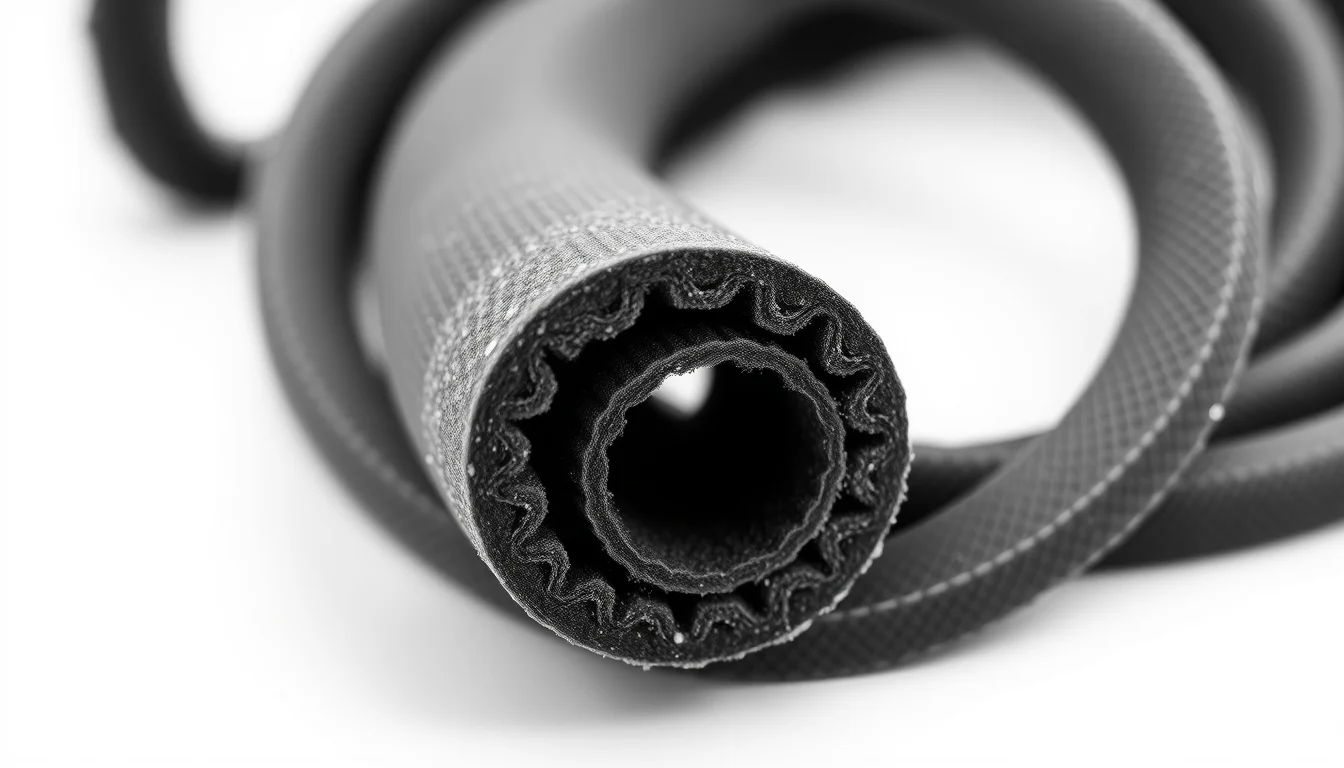
Overseas wooden door factories upgrading to premium lines are switching from TPE/PVC to PU sealing strips because polyurethane delivers 2–3× higher tensile strength, 40–60% lower compression set, and 7–10 years of thermal aging resistance — all with the same extrusion tolerance (±0.1 mm) their existing assembly lines already accept. This is not a trend; it is a materials engineering decision driven by warranty claims, acoustic performance, and finish durability.
Material Science: PU vs TPE vs PVC — Head-to-Head Data
For B2B specifiers, the switch is justified by hard numbers. The table below compares a standard 70 Shore A foamed PU door seal against typical TPE and flexible PVC compounds used in wooden door production.
| Property | PU (Polyurethane) | TPE | Flexible PVC | Test Standard |
|---|---|---|---|---|
| Hardness range (Shore A) | 50–90 | 60–85 | 55–80 | ASTM D2240 |
| Tensile strength (MPa) | 25–45 | 8–15 | 10–18 | ASTM D412 |
| Elongation at break (%) | 400–650 | 300–500 | 200–350 | ASTM D412 |
| Compression set (22h @ 70°C) | 15–25% | 35–50% | 40–60% | ASTM D395 |
| Thermal aging (1000h @ 100°C) | ΔTS ≤ 15% | ΔTS 30–45% | ΔTS 40–60% | ASTM D573 |
| Ozone resistance (50 pphm, 40°C) | No crack | Minor crack | Severe crack | ASTM D1149 |
| Oil/acid/alkali resistance | Excellent | Fair | Poor | ISO 1817 |
| Service temperature range | -40 to +120°C | -30 to +90°C | -20 to +70°C | — |
| Flame retardancy (optional) | UL 94 V-0 | UL 94 HB | UL 94 HB | UL 94 |
| Extrusion tolerance | ±0.1 mm | ±0.15 mm | ±0.2 mm | ISO 3302-1 |
Why Tensile Strength Matters for Door Seals
A wooden door seal undergoes repeated compression cycles — slam, release, slam — often 50,000+ times over a 10-year lifespan. PU's 25–45 MPa tensile strength means the elastomer resists tearing at the hinge-side corners where stress concentrates. TPE at 8–15 MPa will fatigue and crack at those corners within 2–3 years in high-traffic commercial doors.
Compression Set: The Hidden Warranty Cost
Compression set is the permanent deformation remaining after a seal is compressed. A 40% set (typical TPE) means the seal loses 40% of its original thickness after one thermal cycle. For a 6 mm door gap, that is 2.4 mm of lost sealing — enough to fail acoustic and smoke tests. PU's 15–25% set keeps the seal within functional tolerance for 7–10 years.
Thermal Aging and Ozone Resistance: Field Data from Door Factories
ASTM D573 thermal aging tests at 100°C for 1000 hours show PU retains ≥85% of its tensile strength, while TPE drops to 55–70% and PVC to 40–60%. In real-world terms, a PU seal installed on a south-facing wooden door in Dubai or Miami will survive 7–10 summers without hardening or cracking. TPE will show surface crazing by year 3.
Ozone resistance (ASTM D1149) is critical for doors shipped through marine environments or installed near electrical equipment. PU's saturated polymer backbone resists ozone attack; TPE's unsaturated segments crack under 50 pphm ozone at 40°C within 72 hours.
In our Hunan factory experience, ... a European wooden door OEM switched their entire premium line from TPE to foamed PU after field returns showed 12% of TPE seals failed within 18 months in coastal installations. After switching to our PU formulation (70 Shore A, 32 MPa tensile, 18% compression set), their warranty claims dropped to 0.3% over 3 years. The key was not just the polymer — it was the vulcanization package and the foaming agent that created a closed-cell matrix with 0.45 g/cm³ density.
Oil, Acid, and Alkali Resistance: Why PU Wins in Real Installations
Wooden doors are exposed to wood preservatives, paints, cleaning agents, and atmospheric pollutants. PU's polar urethane linkages resist swelling in oils and mild acids. ISO 1817 immersion tests (72h @ 23°C) show PU swells <5% in IRM 903 oil, while TPE swells 25–40% and PVC 40–60%. In alkali (pH 12), PU retains 90% tensile strength after 500h; PVC becomes brittle.
For specifiers, this means PU seals can be installed before painting or staining without masking — a direct labor cost saving on the production line.
Extrusion Tolerance and Assembly Line Compatibility
Upgrading from TPE to PU does not require new extrusion dies or assembly fixtures. PU processes on standard single-screw extruders with similar melt flow. Our foamed PU door seals hold ±0.1 mm tolerance on critical dimensions (ISO 3302-1 Class E2), which is tighter than TPE's typical ±0.15 mm. This matters for automated door assembly where the seal is pressed into a CNC-machined groove.
| Parameter | PU Foamed Seal | TPE Seal |
|---|---|---|
| Extrusion tolerance | ±0.1 mm | ±0.15 mm |
| Density (g/cm³) | 0.40–0.55 | 0.85–1.10 |
| Weight per meter (6×8 mm profile) | 22 g | 48 g |
| Assembly force (N/100 mm) | 8–12 | 15–22 |
Lower density means lighter doors and reduced hinge load — a direct benefit for oversized architectural doors. The lower assembly force reduces operator fatigue and enables faster automated insertion.
Product Focus: PU and Foamed PU Door Sealing Strips
For wooden door factories upgrading to premium lines, we recommend two product families:
PU Solid Sealing Strips
- Hardness: 60–85 Shore A
- Tensile strength: 30–45 MPa
- Compression set: 15–20%
- Temperature: -40 to +120°C
- Colors: black, grey, brown, custom RAL
- Applications: exterior doors, fire-rated doors, acoustic doors
Foamed PU Door Seals
- Density: 0.40–0.55 g/cm³
- Hardness: 50–70 Shore A (foamed)
- Compression set: 18–25%
- Thermal conductivity: 0.035 W/m·K
- Closed-cell content: >90%
- Applications: interior doors, cabinet doors, sliding doors
These profiles are compatible with standard wooden door grooves and can be co-extruded with rigid PVC or aluminum carriers for screw-fix installation. For complementary sealing solutions, see our door sealing strips and cabinet seals.
Frequently Asked Questions
What is the MOQ for PU sealing strips?
Our standard MOQ is 500 kg per profile for foamed PU and 300 kg for solid PU. For trial orders, we can accept 100 kg with a surcharge. Custom colors and hardness grades require 1,000 kg MOQ due to compounding setup. We ship worldwide from Changde, Hunan.
What is your lead time?
Standard lead time is 15–20 working days after sample approval and deposit. For repeat orders with existing tooling, lead time is 10–12 working days. Custom extrusion dies add 7–10 days for design and fabrication. We provide weekly production updates.
What extrusion tolerance can you hold?
We hold ±0.1 mm on critical dimensions for PU profiles, complying with ISO 3302-1 Class E2. For foamed PU, tolerance is ±0.15 mm on foam dimensions and ±0.1 mm on carrier dimensions. We provide first-article inspection reports with every shipment.
How are PU sealing strips packed for export?
Coils are packed in PE bags, then in cartons with desiccant. Standard coil length is 100 m or 200 m. We also offer spooled packing for automated assembly lines. Palletized cartons are stretch-wrapped and strapped for sea freight. Custom labeling and barcoding available.
Can I get samples before ordering?
Yes. We provide free samples up to 2 m per profile for standard materials. Custom compounds require a sample fee of USD 150–300, refundable against the first production order. Samples ship within 5 working days via DHL or FedEx. Send your CAD drawing for a 24-hour quote.
Specification Summary — PU vs TPE vs PVC for Wooden Doors
| Specification | PU (Recommended) | TPE | PVC |
|---|---|---|---|
| Tensile strength (MPa) | 25–45 | 8–15 | 10–18 |
| Compression set (%) | 15–25 | 35–50 | 40–60 |
| Thermal aging (1000h @ 100°C) | ≤15% ΔTS | 30–45% ΔTS | 40–60% ΔTS |
| Ozone resistance | No crack | Minor crack | Severe crack |
| Oil swell (72h, ISO 1817) | <5% | 25–40% | 40–60% |
| Service temperature | -40 to +120°C | -30 to +90°C | -20 to +70°C |
| Extrusion tolerance | ±0.1 mm | ±0.15 mm | ±0.2 mm |
| Flame retardancy | UL 94 V-0 | UL 94 HB | UL 94 HB |
| Recyclability | Chemical recycling | Mechanical | Limited |
| Relative cost index | 1.4–1.8 | 1.0 | 0.7–0.9 |
For specifiers evaluating silicone series for high-temperature door applications or WPC profiles for composite door edges, our engineering team can provide comparative data. Send your CAD drawing for a 24-hour quote.
Need a Custom Quote?
Send your CAD drawing or specs (material, hardness, profile, temperature range, MOQ) — our engineering team will respond within 24 hours.