
P-Profile Sealing Strips | OEM Manufacturer & Bulk Supply
By Zhouxin Sealing Engineering Team · · 10 views
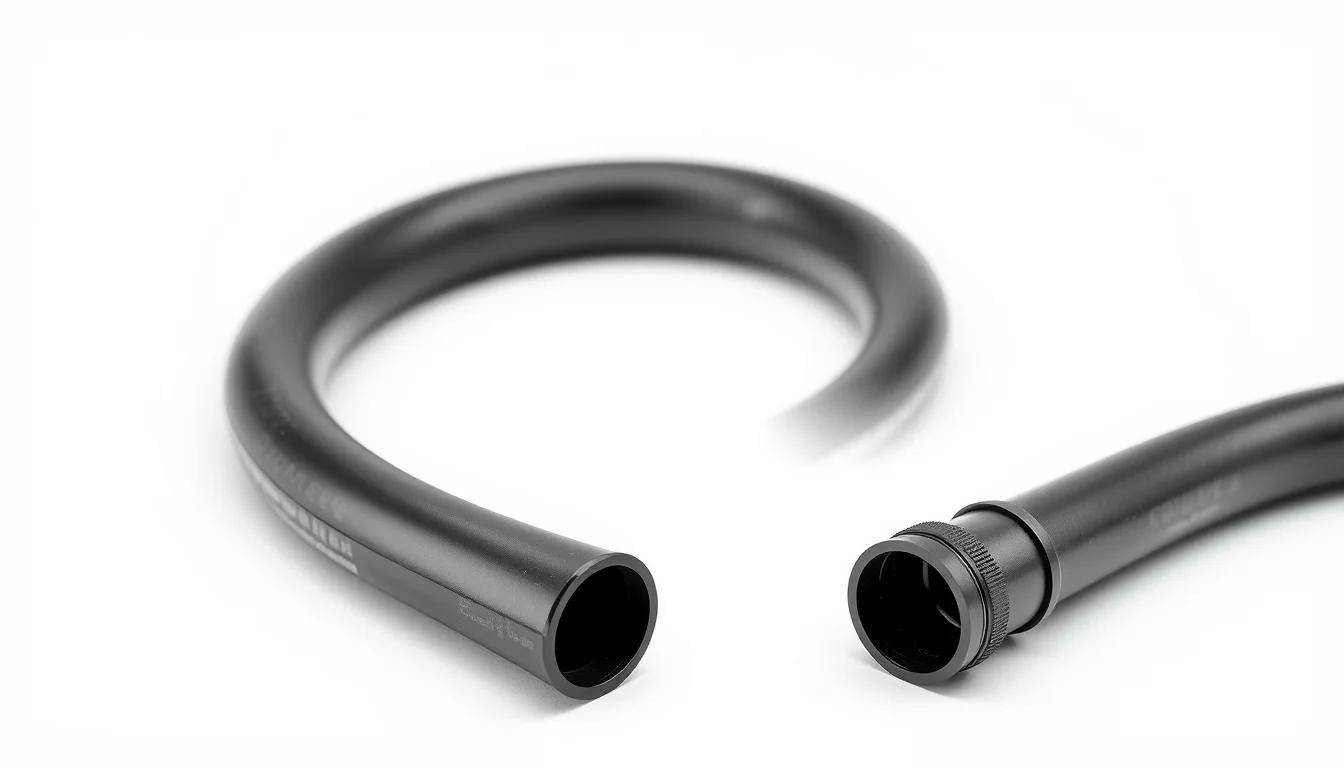
For overseas B2B buyers specifying P-profile sealing strips, the decisive variables are polymer matrix selection, compression set %, and extrusion tolerance — not catalog aesthetics. This datasheet-style comparison covers EPDM, silicone, NBR, and TPE P-profiles across tensile strength, thermal aging, fluid resistance, and durometer. Use the tables below to match material to your enclosure, door, or cabinet sealing requirement.
Material Property Comparison: P-Profile Sealing Strips
P-profile geometry combines a bulb section (compression sealing) with a stem or flange (mechanical retention). The elastomer selected for each zone drives long-term sealing force retention. Values below are typical for dense and sponge P-profiles tested to ASTM D412 (tensile), ASTM D573 (thermal aging), and ASTM D395 Method B (compression set).
| Material | Shore A | Tensile Strength (MPa) | Temp Range (°C) | Compression Set % (70h @ 70°C) | Thermal Aging (years @ 23°C) | Oil Resistance | Acid/Alkali Resistance | Ozone Resistance | Relative Cost |
|---|---|---|---|---|---|---|---|---|---|
| EPDM (dense) | 60–80 | 8–12 | -40 to +150 | 18–25 | 15–20 | Poor | Good | Excellent | $ |
| EPDM (sponge) | 25–45 | 2–5 | -40 to +120 | 20–30 | 12–18 | Poor | Good | Excellent | $ |
| Silicone (VMQ) | 40–70 | 6–9 | -60 to +200 | 15–22 | 20–25 | Fair | Good | Excellent | $$$ |
| NBR | 60–85 | 10–15 | -30 to +120 | 12–20 | 10–15 | Excellent | Fair | Fair | $$ |
| TPE/TPV | 55–85 | 5–10 | -40 to +130 | 25–35 | 10–15 | Good | Good | Good | $$ |
| Neoprene (CR) | 50–80 | 8–13 | -40 to +120 | 20–28 | 12–18 | Good | Good | Good | $$ |
Compression set is the single most predictive metric for P-profile service life. A profile with 18% set at 70°C/70h retains sealing force far longer than one at 30%. For door sealing strips exposed to UV and rain, EPDM remains the default. For high-temperature oven or engine-adjacent cabinets, silicone series profiles hold shape beyond 180°C continuous.
Tensile Strength and Durometer Trade-offs
Higher tensile strength does not automatically mean better sealing. A 12 MPa EPDM at 80 Shore A resists extrusion under pressure but requires higher closure force. A 6 MPa silicone at 50 Shore A conforms to irregular substrates but deforms more under load. Match durometer to gap tolerance: ±0.5 mm gaps favor 50–60 Shore A; ±1.5 mm gaps favor 65–75 Shore A or a sponge bulb.
Fluid and Chemical Resistance Data
Chemical exposure drives material selection for industrial P-profile sealing strips. ISO 1817 immersion testing (70h @ 23°C) yields the volume swell figures below.
| Medium | EPDM Swell % | Silicone Swell % | NBR Swell % | TPE Swell % |
|---|---|---|---|---|
| ASTM Oil No. 3 | 80–120 | 40–70 | 5–15 | 30–50 |
| ASTM Fuel B | 120–180 | 80–120 | 15–25 | 60–90 |
| 10% H₂SO₄ | 5–15 | 10–20 | 15–30 | 10–20 |
| 10% NaOH | 5–10 | 5–15 | 10–20 | 8–15 |
| Deionized water | 2–8 | 1–5 | 3–10 | 2–6 |
| Ozone (50 pphm) | No crack | No crack | Cracks | Slight crack |
NBR is the only economical choice for oil-contact P-profiles — hydraulic cabinets, machine tool enclosures, and transformer gaskets. EPDM and silicone are unsuitable for petroleum-based fluids. For acid/alkali splash zones in chemical plants, EPDM offers the best cost-performance balance.
Thermal Aging and Compression Set Behavior
ASTM D573 thermal aging at 100°C for 70h and 168h reveals how each elastomer retains tensile strength and elongation. EPDM retains 85–95% of original tensile after 168h @ 100°C. Silicone retains 80–90% but maintains flexibility to -60°C. NBR hardens faster above 100°C, losing 20–30% elongation.
| Material | Tensile Retention % (168h @ 100°C) | Elongation Retention % | Hardness Change (Shore A) | Service Life Estimate (years) |
|---|---|---|---|---|
| EPDM | 88–95 | 80–90 | +3 to +8 | 15–20 |
| Silicone | 82–90 | 75–85 | +2 to +6 | 20–25 |
| NBR | 70–80 | 60–75 | +8 to +15 | 10–15 |
| TPE | 75–85 | 70–80 | +5 to +10 | 10–15 |
Compression set measured to ASTM D395 Method B at 70°C/70h separates premium from commodity P-profiles. Vulcanization system choice — peroxide vs. sulfur — shifts set values by 5–10 percentage points. Peroxide-cured EPDM achieves lower set and better thermal aging but costs 8–12% more.
Ozone and UV Resistance
Ozone resistance is non-negotiable for exterior P-profile sealing strips. EPDM and silicone resist 50 pphm ozone without cracking after 100h. NBR requires antiozonant waxes and still cracks under dynamic flex. For outdoor cabinet seals and architectural door sealing strips, specify EPDM or silicone only.
Flame Retardancy and Compliance Grades
UL 94 vertical burn testing applies to P-profiles in electrical enclosures and HVAC plenums. Standard EPDM and silicone fail UL 94 HB unless compounded with halogen-free flame retardants. Achievable ratings:
| Material | UL 94 Rating | Limiting Oxygen Index % | Smoke Density | Notes |
|---|---|---|---|---|
| EPDM (FR grade) | V-0 | 28–32 | Low | Halogen-free options |
| Silicone (FR grade) | V-0 | 30–35 | Very low | Best smoke performance |
| NBR (FR grade) | V-1 | 26–30 | Medium | Contains halogen |
| TPE (FR grade) | V-0 | 27–31 | Low | Halogen-free |
Flame-retardant P-profile sealing strips for cabinet seals must also pass ASTM D2863 LOI testing. Silicone FR grades dominate data center and transit applications where smoke toxicity matters.
Extrusion Tolerance and Profile Geometry
Extrusion tolerance for P-profile sealing strips follows ISO 3302-1 Class E2 or E3 depending on bulb complexity. Typical achievable tolerances:
| Dimension | Tolerance (±mm) |
|---|---|
| Bulb diameter < 10 mm | ±0.15 |
| Bulb diameter 10–25 mm | ±0.25 |
| Stem width < 8 mm | ±0.20 |
| Overall height < 30 mm | ±0.30 |
| Cut length < 1000 mm | ±1.5 |
| Cut length > 1000 mm | ±3.0 |
Tighter tolerances require post-extrusion calibration or CNC trimming. For WPC profiles and composite door frames, ±0.25 mm on the stem ensures consistent press-fit without adhesive.
In our Hunan factory experience, a European cabinet OEM rejected three supplier lots of EPDM P-profiles because compression set drifted from 22% to 31% across shipments. Root cause was inconsistent peroxide dosing during vulcanization. We implemented in-line cure monitoring and batch-level ASTM D395 testing; set values now hold 19–23% across 18 months of production. That single control eliminated field failures in their outdoor telecom enclosures.
Frequently Asked Questions
What is the MOQ for custom P-profile sealing strips?
Standard MOQ is 500 meters per profile for existing dies and 2,000 meters for new extrusion tooling. OEM/ODM buyers with multi-profile orders can consolidate to 1,000 meters total. Tooling amortization is quoted separately and credited against volume above 10,000 meters.
What is your lead time for bulk P-profile orders?
Sample lead time is 5–7 working days after drawing approval. Production lead time is 15–20 working days for orders under 20,000 meters and 25–30 working days above that. Air freight adds 3–5 days; sea freight to Europe or North America adds 25–35 days.
What extrusion tolerance can you hold on P-profile sealing strips?
We hold ±0.15 mm on bulb diameters under 10 mm and ±0.25 mm on 10–25 mm bulbs, per ISO 3302-1 Class E2. Cut lengths hold ±1.5 mm under 1,000 mm. Tighter tolerances to ±0.10 mm are available with post-extrusion calibration at 15–20% cost premium.
How are P-profile sealing strips packed for export?
Coils are packed in PE bags, then cartons, then palletized with stretch wrap. Standard coil length is 100–200 meters depending on profile stiffness. Cut-length profiles ship in rigid tubes or partitioned cartons. All packaging is moisture-barrier with desiccant for sea freight.
Do you provide free samples of P-profile sealing strips?
Yes. We provide 1–3 meter free samples of existing profiles and 5-meter samples for custom compounds. Buyer covers courier only. Sample lead time is 3–5 working days. Send your CAD drawing or cross-section sketch for a 24-hour quote.
| Parameter | Specification |
|---|---|
| Material Options | EPDM, Silicone, NBR, TPE, Neoprene |
| Shore A Range | 25–85 |
| Tensile Strength | 2–15 MPa |
| Temp Range | -60 to +200°C |
| Compression Set | 12–35% (ASTM D395 B) |
| Extrusion Tolerance | ±0.15 to ±0.30 mm |
| Standards | ASTM D412, D573, D395, ISO 1817, UL 94, ISO 3302-1 |
| MOQ | 500 m (existing die) / 2,000 m (new die) |
| Lead Time | 15–30 working days |
| Sample Policy | Free 1–5 m, buyer pays courier |
Send your CAD drawing for a 24-hour quote.
Need a Custom Quote?
Send your CAD drawing or specs (material, hardness, profile, temperature range, MOQ) — our engineering team will respond within 24 hours.