
Oil Resistant Nitrile Rubber Profile | OEM Supplier & Bulk
By Zhouxin Sealing Engineering Team · · 11 views
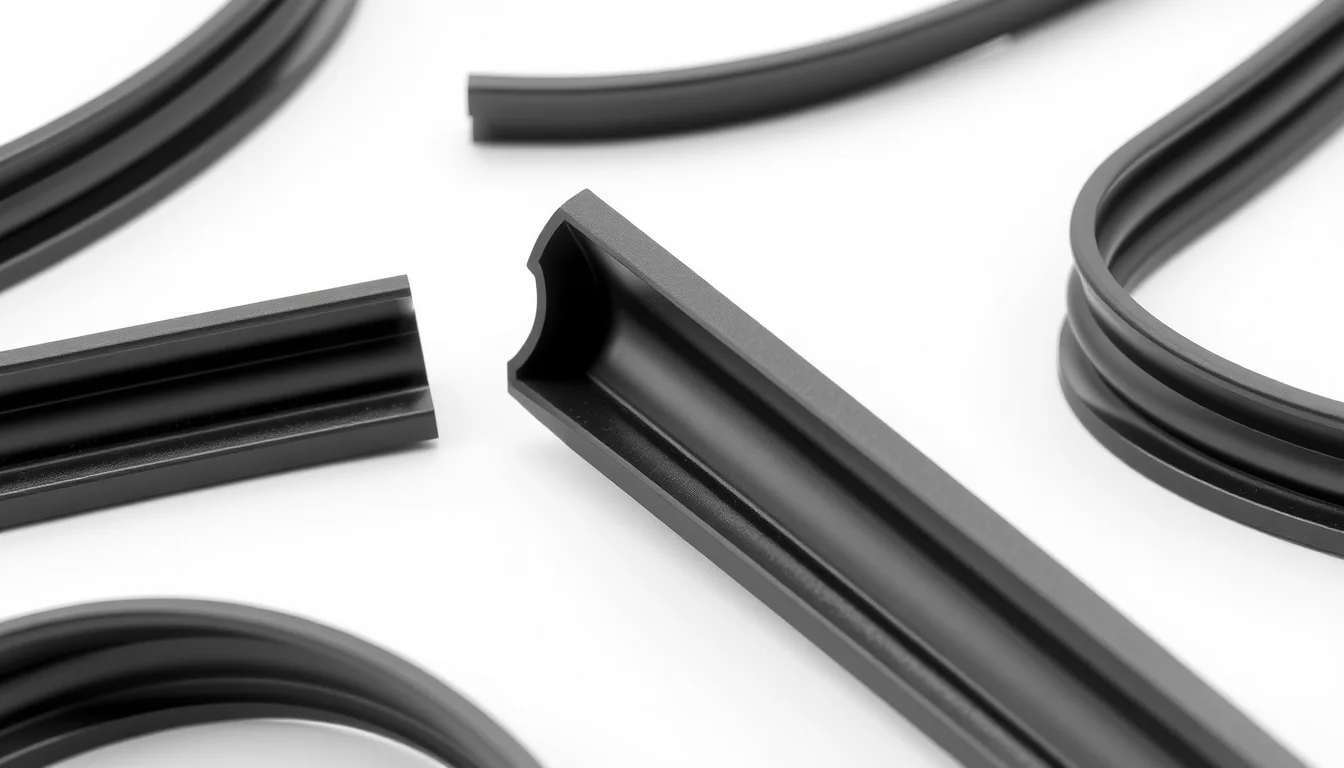
For overseas project specifiers needing an oil resistant nitrile rubber profile that survives long-term UV, sub-zero temperatures, and repeated high-pressure friction, the answer is a properly vulcanized NBR (nitrile butadiene rubber) compound with 70±5 Shore A, ≥10 MPa tensile strength, and a compression set below 25% after 70h at 100°C. Unlike general-purpose EPDM or PVC, NBR's polar polymer matrix resists swelling in ASTM Oil No. 3, making it the default choice for hydraulic, automotive, and industrial cabinet sealing where petroleum-based fluids are present. Below is a head-to-head engineering review based on real deployment data from our Changde, Hunan factory.
Material Head-to-Head: NBR vs EPDM vs PVC vs Silicone
When a project specifier asks for an "oil resistant nitrile rubber profile," the first engineering decision is confirming that NBR is indeed the right elastomer — not just the cheapest. The table below compares the four most common sealing strip materials against the harsh-environment criteria: UV exposure, sub-zero flexibility, oil contact, and friction resistance.
| Property | NBR (Nitrile) | EPDM | PVC | Silicone |
|---|---|---|---|---|
| Shore A Hardness Range | 40–90 | 50–80 | 60–95 (Shore D) | 30–70 |
| Tensile Strength (MPa) | 10–17 | 7–12 | 10–25 | 5–10 |
| Temp Range (°C) | -30 to +120 | -40 to +150 | -10 to +70 | -60 to +200 |
| Oil Resistance (ASTM D471, IRM 903) | Excellent (<15% swell) | Poor (>100% swell) | Good (formulation dependent) | Fair (20–40% swell) |
| Ozone Resistance | Fair | Excellent | Good | Excellent |
| Compression Set (ASTM D395, 70h @ 100°C) | 15–25% | 20–30% | N/A (plastic) | 20–35% |
| UV Stability | Fair (needs carbon black) | Excellent | Good | Excellent |
| Flame Retardancy (UL 94) | HB (needs additives) | HB | V-0 achievable | HB |
| Relative Cost | $$ | $ | $ | $$$ |
Why NBR Wins for Oil Contact
Nitrile's acrylonitrile (ACN) content — typically 28–40% in sealing grades — creates a polar polymer matrix that repels non-polar hydrocarbons. In ASTM D471 testing with IRM 903 oil, a 70 Shore A NBR profile swells less than 15% after 70h at 100°C, while EPDM under the same conditions can exceed 100% volume swell and lose dimensional stability. For any application involving hydraulic fluid, gear oil, or fuel vapor, EPDM is disqualified.
Where EPDM Still Beats NBR
If the environment is UV-heavy and oil-free — outdoor architectural door sealing strips, for example — EPDM's saturated backbone delivers superior ozone and thermal aging resistance. EPDM holds -40°C flexibility where NBR stiffens below -30°C. The trade-off is oil resistance: EPDM is essentially useless in hydrocarbon contact.
PVC and Silicone: Niche Roles
PVC profiles offer low cost and good flame retardancy (UL 94 V-0 achievable) but fail below -10°C and creep under sustained compression. Silicone excels at extreme temperatures (-60 to +200°C) and is the right choice for silicone series in high-temp ovens or medical equipment, but its oil resistance is only fair and cost is 3–5× NBR.
Engineering Specs That Matter in Harsh Environments
Shore A Hardness and Compression Set
A 70±5 Shore A durometer is the industry sweet spot for oil resistant nitrile rubber profiles: hard enough to resist extrusion under pressure, soft enough to conform to imperfect mating surfaces. Compression set — measured per ASTM D395 Method B — should stay below 25% after 70h at 100°C. Higher set means the seal takes a permanent deformation and leaks on the second thermal cycle.
Thermal Aging and Ozone Resistance
ASTM D573 thermal aging at 100°C for 70h should show less than 15% change in tensile strength and less than 20% change in elongation at break. NBR's unsaturated backbone is vulnerable to ozone, so all our oil-resistant compounds include antiozonants and carbon black UV stabilizers. For outdoor use, we recommend a chlorinated polyethylene (CPE) or EPDM/PP blend instead.
Extrusion Tolerance and Vulcanization
Profile extrusion tolerance follows ISO 3302-1 Class E2 or tighter: ±0.15 mm on critical sealing lips, ±0.30 mm on non-critical dimensions. Vulcanization must be fully cured — undercured NBR will continue to set and crack. We verify cure state via rheometer (t90) and durometer mapping across the profile cross-section.
In our Hunan factory experience, a European hydraulic equipment OEM rejected a competitor's NBR profile after 500h of ASTM D471 oil immersion because the compression set hit 38% — the seal leaked at 80°C. We reformulated with a higher ACN (36%) polymer, adjusted the sulfur/peroxide cure system, and brought set down to 19% while maintaining 12 MPa tensile. That project has now run three years in field service without a single seal failure.
Application Guide: Where Oil Resistant NBR Profiles Deploy
Industrial Cabinets and Enclosures
For cabinet seals in machine shops, oil mist and coolant splash are constant. NBR profiles with 70 Shore A and a co-extruded rigid PVC carrier resist both. IP54–IP66 ratings are achievable with proper compression.
Automotive and Hydraulic Systems
NBR is the default for fuel line seals, brake fluid reservoirs, and hydraulic cylinder wipers. ACN content should be matched to the fluid: 28% for mild hydraulic oil, 36–40% for aromatic fuels.
WPC and Composite Profiles
When NBR strips are co-extruded with WPC profiles, the rubber provides the sealing function while the WPC carries structural load. Bonding requires a tie-layer or mechanical interlock — simple co-extrusion without adhesion promoter delaminates in thermal cycling.
Quality Control and Test Protocols
Every production lot is tested for: Shore A hardness (ASTM D2240), tensile strength and elongation (ASTM D412), compression set (ASTM D395), oil swell (ASTM D471 / ISO 1817), and thermal aging (ASTM D573). We retain samples for 24 months. Third-party lab reports (SGS, TÜV) are available on request for OEM/ODM projects.
Frequently Asked Questions
What is your MOQ for oil resistant nitrile rubber profiles?
Standard MOQ is 500 meters per profile cross-section for existing tooling, or 1,000 meters for new extrusion dies. For OEM/ODM projects with custom compounds, MOQ rises to 2,000 meters to amortize compound development and die cost. Sample orders under 100 meters are possible with a surcharge.
What is the lead time for bulk orders?
For stock compounds and existing dies, lead time is 10–15 working days. Custom compound development adds 7–10 days for lab trials and validation. New die fabrication adds 15–20 days. Sea freight from Shanghai or Shenzhen to European/US ports is typically 25–35 days.
What extrusion tolerance can you hold?
We hold ISO 3302-1 Class E2 as standard: ±0.15 mm on critical sealing dimensions and ±0.30 mm on non-critical. Tighter tolerances (±0.10 mm) are achievable on small cross-sections (<10 mm) with additional QC cost. We provide first-article inspection reports with CMM data.
How are profiles packed for export?
Profiles are coiled in PE bags, then packed in double-wall corrugated cartons or wooden crates for long profiles. Each carton is labeled with part number, batch, quantity, and production date. We can add desiccant packs for humid destinations. Palletized and container-loaded per customer preference.
What is your sample policy?
Free samples up to 30 cm per profile are available for qualified B2B buyers — you cover freight only. Custom compound samples require a $150–$300 development fee, credited against the first bulk order. Sample lead time is 5–7 working days for stock profiles, 10–14 days for custom compounds.
| Parameter | Specification |
|---|---|
| Material | NBR (Nitrile Butadiene Rubber), 28–40% ACN |
| Hardness | 70 ± 5 Shore A |
| Tensile Strength | ≥ 10 MPa (ASTM D412) |
| Elongation at Break | ≥ 250% |
| Compression Set | ≤ 25% (ASTM D395, 70h @ 100°C) |
| Temp Range | -30°C to +120°C |
| Oil Resistance | < 15% swell (ASTM D471, IRM 903) |
| Extrusion Tolerance | ISO 3302-1 Class E2 (±0.15 mm critical) |
| Color | Black (other colors on request) |
| MOQ | 500 m (stock die) / 2,000 m (custom) |
| Lead Time | 10–15 working days (stock) |
Send your CAD drawing for a 24-hour quote.
Need a Custom Quote?
Send your CAD drawing or specs (material, hardness, profile, temperature range, MOQ) — our engineering team will respond within 24 hours.