
Low Compression Set Silicone Gasket | OEM Supplier & Factory
By Zhouxin Sealing Engineering Team · · 22 views
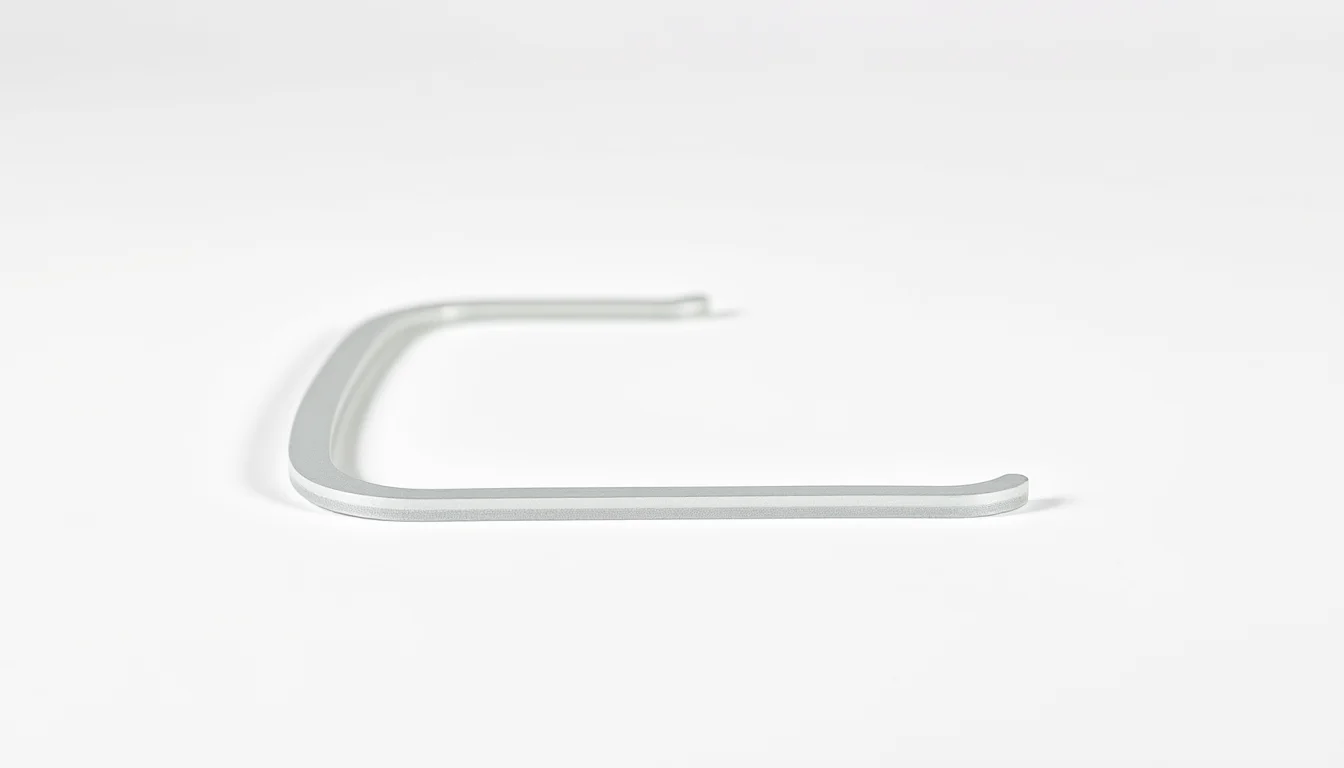
For overseas B2B buyers sourcing low compression set silicone gaskets, the critical factors are verified factory capability, transparent MOQ and tooling costs, and a supplier who can hit ±0.1 mm extrusion tolerance on repeat POs. This guide walks through the real custom extrusion process, how to compare Chinese factories, and how to send CAD drawings that eliminate back-and-forth.
Why Low Compression Set Silicone Gaskets Matter in B2B Applications
Compression set is the permanent deformation remaining after a gasket is compressed and released. For OEMs specifying silicone gaskets in enclosures, cabinets, or door seals, a low compression set value (typically ≤20% per ASTM D395 Method B) ensures the elastomer maintains sealing force over thousands of cycles and years of thermal aging. Standard silicone can drift to 30–40% set after 22 hours at 175°C, causing leaks in outdoor cabinets or HVAC doors.
Low compression set silicone formulations use optimized polymer matrix and vulcanization systems to retain rebound. They are specified where re-sealing is infrequent and long service life is mandatory — telecom cabinets, industrial control panels, medical enclosures, and automotive under-hood components.
Key Performance Numbers Buyers Should Verify
| Property | Test Standard | Typical Low-Set Silicone | Standard Silicone |
|---|---|---|---|
| Compression set (22h @ 175°C) | ASTM D395 Method B | ≤20% | 30–40% |
| Hardness range | ASTM D2240 | 30–70 Shore A | 30–80 Shore A |
| Tensile strength | ASTM D412 | ≥8 MPa | 6–9 MPa |
| Elongation at break | ASTM D412 | ≥300% | 200–400% |
| Thermal aging (70h @ 200°C) | ASTM D573 | Hardness change ±5 Shore A | ±10 Shore A |
| Ozone resistance | ASTM D1149 | No cracking @ 50 pphm | Pass |
| Flame retardancy (optional) | UL 94 | V-0 achievable | HB to V-0 |
These figures are not marketing claims — request test reports from the factory's in-house lab or a third-party like SGS. A supplier who cannot provide ASTM D395 data on the exact compound they will run is a risk.
Factory Capability Comparison: What to Check Before Issuing a PO
Not all Chinese silicone extruders are equal. For low compression set gaskets, the compound formulation and curing line control separate serious factories from traders.
Extrusion and Vulcanization Lines
Ask for the number of silicone extrusion lines, the type of vulcanization (HAV – hot air vulcanization, or CV – continuous vulcanization), and whether they run platinum-cured or peroxide-cured silicone. Platinum cure offers lower compression set and no post-cure volatiles, but costs more. A factory with 5+ lines and in-house compound mixing can hold ±0.1 mm on cross-sections up to 50 mm.
Tooling and Die Capability
For custom profiles, the die is the bottleneck. A capable factory machines its own extrusion dies in-house and can turn a simple profile die in 5–7 working days. Complex multi-lumen or co-extruded profiles may take 10–15 days. Ask for die material (typically 45# steel or S136) and expected die life (50,000–100,000 meters for silicone).
Quality and Testing Lab
Look for in-house tensile testers, durometer, compression set fixtures, and an aging oven. Factories that outsource all testing add 5–10 days to every batch. A factory with ISO 9001 and IATF 16949 (for automotive) is preferable.
In our Hunan factory experience, a European cabinet OEM rejected two suppliers because their compression set drifted from 18% to 28% after six months of production. The root cause was inconsistent platinum catalyst dosing in the compound. We solved it by moving to a closed-loop mixing system and adding a 22-hour compression set check on every fifth batch — the buyer now runs 200,000 meters annually with zero field failures.
MOQ, Tooling Cost, and Sample Lead Time: Real Numbers
B2B buyers need to budget before requesting quotes. Below are typical ranges from a mid-to-large Chinese silicone extrusion factory (not trader markups).
| Item | Typical Range | Notes |
|---|---|---|
| MOQ (standard profile) | 500–1,000 meters | Lower for stock compounds |
| MOQ (custom compound) | 2,000–3,000 meters | Includes compound development |
| Tooling cost (simple die) | USD 150–350 | 5–7 working days |
| Tooling cost (complex die) | USD 400–800 | 10–15 working days |
| Sample lead time (from drawing) | 7–10 working days | Includes die + 20m sample |
| Sample fee | Free for standard, USD 50–150 for custom | Credited against PO |
| Production lead time | 15–25 working days after sample approval | For 5,000m |
These are not fixed — volume commitments and compound complexity move them. A buyer with a 50,000-meter annual forecast can negotiate tooling waivers and 10–15% price breaks.
How to Structure the PO for Low Compression Set
Specify the compound by performance, not just “silicone.” State: “Platinum-cured silicone, 50 Shore A, compression set ≤20% per ASTM D395 Method B (22h @ 175°C), tensile ≥8 MPa, color black, extrusion tolerance ±0.15 mm.” This locks the supplier to a verifiable standard and prevents substitution with cheaper peroxide-cured stock.
The Custom Extrusion Process: From CAD to Container
Understanding the sequence helps you plan POs and avoid delays.
Step 1: Drawing Review and DFM Feedback
Send a 2D PDF or DXF with dimensions, tolerances, and material callout. The factory’s engineer should return a DFM (design for manufacturability) report within 24–48 hours flagging thin walls, undercuts, or tolerance stack-ups. A good factory will suggest tolerance adjustments to reduce cost — e.g., relaxing a ±0.05 mm dimension to ±0.1 mm where function allows.
Step 2: Die Fabrication and Sample Extrusion
Die is machined, then a 20–50 meter sample run is extruded and vulcanized. Samples are checked for durometer, cross-section, and compression set. You receive 5–10 meters for fit test. Approve in writing before production.
Step 3: Production and In-Process Testing
Production runs on the same line. In-process checks include dimensional every 500 meters, durometer every batch, and compression set per batch. Request the batch test certificate with shipment.
Step 4: Cutting, Splicing, and Packing
Gaskets can be supplied as continuous coils, cut-to-length, or spliced into frames. Splicing (vulcanized or glued) adds 3–5 days. Packing for export: coils in PE bags, then cartons with desiccant, palletized and stretch-wrapped. Specify if you need individual poly bags with labels for your warehouse.
How to Send CAD Drawings That Reduce Back-and-Forth
Most delays come from incomplete drawings. Follow this checklist.
- File format: PDF for review, DXF or STEP for die machining. Do not send JPGs of sketches.
- Dimensions and tolerances: Every critical dimension must have a tolerance. Unspecified tolerance defaults to ISO 3302-1 Class E2 (±0.1 mm for small profiles), which may not suit your assembly.
- Material callout: Specify hardness (Shore A), color, and performance standard (e.g., ASTM D395 compression set). If you need flame retardancy, state UL 94 rating.
- Cross-section detail: Show the full profile with radii, wall thickness, and any co-extruded or inserted features.
- Length and cutting: State if continuous coil or cut lengths, and cutting tolerance (±2 mm typical).
- Application notes: Mention mating surface, compression ratio (typically 20–30%), and environment (UV, ozone, temperature). This guides compound selection.
A drawing with these six elements gets a quote in 24 hours and a sample in 7–10 days. Missing tolerances or material specs add 3–5 email exchanges.
FAQ: What Overseas Buyers Ask Before Ordering
What is the MOQ for low compression set silicone gaskets?
Standard profiles in stock compounds: 500–1,000 meters. Custom compound or color: 2,000–3,000 meters. MOQ is negotiable for annual contracts — a 20,000-meter forecast can reduce MOQ to 500 meters per shipment.
What is the production lead time?
15–25 working days after sample approval for 5,000 meters. Add 5–7 days for splicing or complex packing. Repeat orders with existing die: 12–18 working days.
What extrusion tolerance can you hold?
±0.10 mm for cross-sections up to 30 mm, ±0.15 mm for 30–60 mm, per ISO 3302-1 Class E2. Tighter tolerances (±0.05 mm) are possible on request but increase cost and lead time.
How are gaskets packed for export?
Coils in PE bags with desiccant, packed in 5-ply corrugated cartons, palletized and stretch-wrapped. We can add individual poly bags with barcoded labels for your warehouse. Sea freight typically 25–35 days to Europe/US.
What is the sample policy?
Standard profiles: free sample (you pay freight). Custom compound/die: sample fee USD 50–150, credited against your first PO. Sample lead time 7–10 working days from approved drawing. Samples are shipped via DHL/FedEx with tracking.
Specify With Confidence
Send your CAD drawing (PDF + DXF) with material callout and tolerances for a 24-hour quote and DFM feedback. Our Hunan factory runs 8 silicone extrusion lines, in-house mixing, and ASTM D395 testing on every batch. We also produce door sealing strips, silicone series, cabinet seals, and WPC profiles for OEMs worldwide. Email your drawing to sales@gasketsealing.com.
Need a Custom Quote?
Send your CAD drawing or specs (material, hardness, profile, temperature range, MOQ) — our engineering team will respond within 24 hours.