
Industrial Rubber Profiles | Custom OEM Supplier & Wholesale
By Zhouxin Sealing Engineering Team · · 9 views
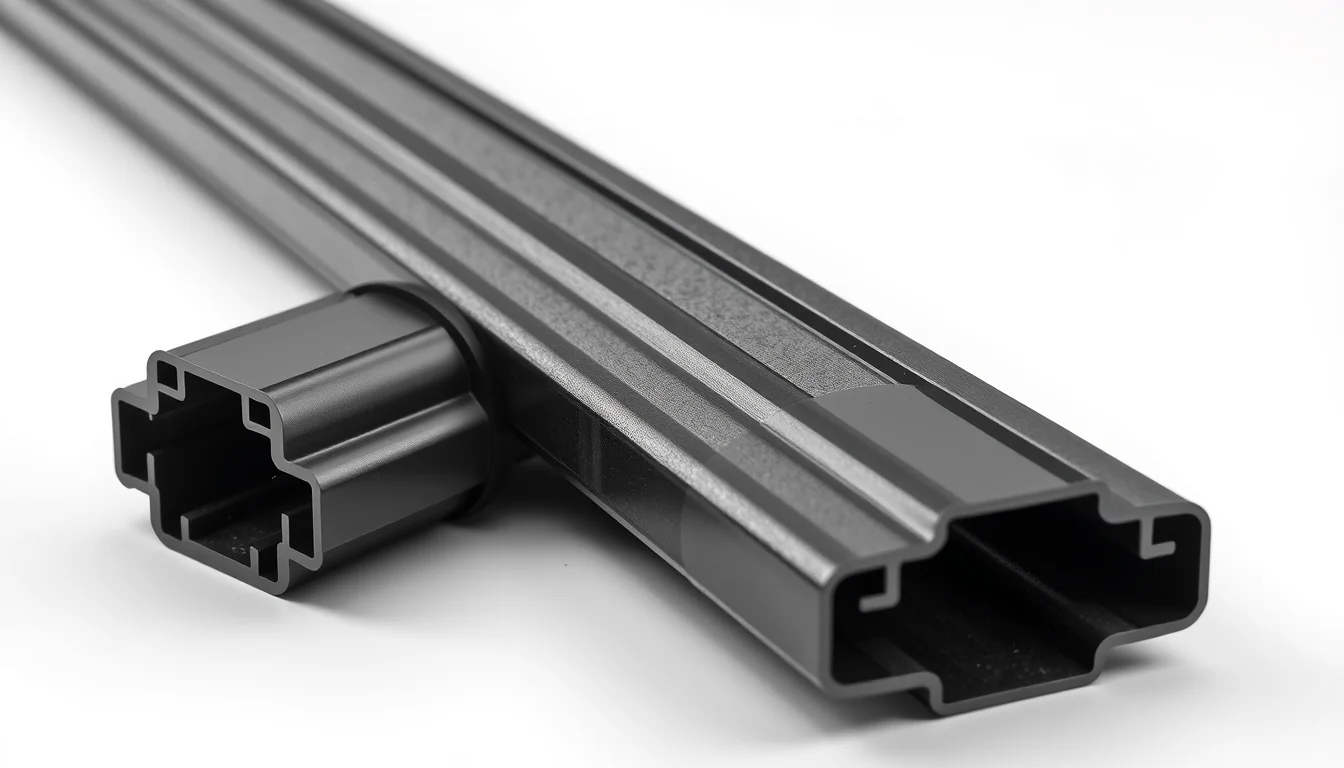
Overseas buyers sourcing industrial rubber profiles need a factory that can match material spec, hold extrusion tolerance, and ship on a predictable schedule — not just a low unit price. This guide walks through the real custom extrusion process, from CAD drawing to export packing, so you can compare suppliers on the metrics that actually affect your PO. Every number below reflects what we quote daily from our Changde, Hunan facility.
What Actually Drives Cost in Industrial Rubber Profiles
Three variables set your landed cost: polymer matrix, cross-section complexity, and tooling amortization. A 70 Shore A EPDM bulb seal and a 70 Shore A silicone U-channel can differ by 40% in unit price even at the same weight, because silicone raw material runs 3–4× EPDM and vulcanization cycles are longer.
Material Selection Matrix
| Material | Temp Range | Tensile Strength | Compression Set (70h @ 100°C) | Ozone Resistance | Relative Cost |
|---|---|---|---|---|---|
| EPDM | -40 to 150°C | 8–12 MPa | 20–30% | Excellent | $ |
| Silicone (VMQ) | -60 to 200°C | 6–10 MPa | 15–25% | Excellent | $$$ |
| Neoprene (CR) | -40 to 120°C | 10–15 MPa | 25–35% | Good | $$ |
| NBR | -30 to 100°C | 10–14 MPa | 20–30% | Fair | $$ |
| TPE/TPV | -50 to 135°C | 5–9 MPa | 30–40% | Good | $$ |
Compression set values reference ASTM D395 Method B. Thermal aging per ASTM D573 at 70h/100°C is standard for our EPDM and silicone series; request 168h or 1000h data if your application demands it.
Cross-Section Complexity
Simple D-profiles and rectangular strips run on standard dies with 2–3 extrusion tolerance windows. Multi-channel profiles, bulb-and-fin combinations, or co-extruded rigid-flexible sections require custom dies and often a secondary vulcanization pass. Expect tooling to scale with cavity count, not just profile area.
Factory Capability Comparison: What to Verify Before You PO
Most overseas buyers compare three or four Chinese suppliers on unit price alone. That misses the variables that cause line stoppages six months later. Ask for these five data points in writing:
| Capability | Baseline Factory | Strong Export Factory |
|---|---|---|
| Extrusion tolerance | ±0.5 mm | ±0.15–0.25 mm on critical dimensions |
| Durometer range | 50–80 Shore A | 30–90 Shore A, ±3 points |
| In-house tooling | Outsourced | CNC + EDM in-house |
| Material traceability | Batch only | Batch + compound lot + cure date |
| PPAP / ISIR | Not offered | Standard on request |
In our Hunan factory experience, the single most common cause of a failed first article is a drawing that specifies durometer without specifying test method. A buyer sends "70 Shore A" and expects ASTM D2240 Type A on a 6 mm test block; the factory tests on a finished 2 mm profile and reads 78. The part meets the drawing on paper and fails on the line. We now require every custom industrial rubber profile RFQ to state durometer, test standard, and test specimen thickness before we cut a die.
The Real Custom Extrusion Process, Step by Step
Step 1 — Drawing Review (Days 1–3)
Send a 2D PDF plus native CAD (STEP, IGES, or DXF). We red-line the drawing for: minimum wall thickness (1.0 mm for dense EPDM, 1.5 mm for sponge), undercut feasibility, and whether the tolerance stack is achievable on a continuous extruder. This is where 80% of back-and-forth is eliminated.
Step 2 — Tooling Quote and Approval (Days 3–7)
Die cost for a standard dense profile runs USD 400–900; multi-cavity or co-extrusion dies run USD 1,200–2,500. Tooling is one-time and owned by the buyer. We send a 3D die model for sign-off before machining.
Step 3 — Sample Extrusion (Days 7–14)
First-article samples ship in 7–14 days depending on compound availability. Sample quantity is typically 5–10 meters, enough for dimensional check and a functional fit test. We include a dimensional report with CMM data on critical features.
Step 4 — Validation (Days 14–28)
Buyer runs fit, compression, and thermal aging per ASTM D573. If compression set exceeds spec, we adjust cure time or compound plasticizer load — not just re-run the same die.
Step 5 — Production and Vulcanization (Days 28–45)
Continuous vulcanization lines run 24/5. Batch records capture compound lot, cure temperature, line speed, and durometer check every 500 meters.
Step 6 — Packing and Export
Coils, straight lengths, or cut-to-length. Standard export packing: PE film + carton + pallet, with desiccant for sea freight. We ship FOB Shanghai or Ningbo, and can quote CIF for first orders.
How to Send CAD Drawings That Get Quoted in 24 Hours
A clean drawing package cuts your sourcing cycle by a full week. Include:
- 2D PDF with all critical dimensions and GD&T callouts
- Native 3D (STEP preferred; IGES and DXF accepted)
- Material spec — polymer, durometer with test standard, color (RAL or Pantone)
- Tolerance class — ISO 3302-1 E1/E2/E3, or your own callouts
- Application notes — UV exposure, contact media (oil, coolant, ozone), compression ratio
- Annual volume and order frequency — drives MOQ and tooling amortization
If your drawing references UL 94 flame retardancy or ISO 1817 fluid resistance, state the exact rating. "Flame retardant" alone is not a spec.
MOQ, Tooling, and Lead Time: What to Expect
MOQ for custom industrial rubber profiles typically starts at 500–1,000 meters per size per compound. Standard catalog profiles — including our door sealing strips and cabinet seals — ship from stock at lower minimums. Custom silicone series profiles carry higher MOQ because silicone compound has shorter shelf life and longer cure cycles.
Tooling lead time: 5–10 working days for standard dies, 12–18 days for complex multi-cavity. Production lead time after sample approval: 15–25 days for 5,000 meters, 25–35 days for 20,000+ meters.
Quality Standards We Hold Ourselves To
Every production lot is tested against the drawing's callouts. Standard tests include:
- Tensile strength and elongation — ASTM D412
- Compression set — ASTM D395 Method B, 22h or 70h
- Thermal aging — ASTM D573, 70h or 168h
- Ozone resistance — ASTM D1149, 50 pphm at 40°C
- Fluid resistance — ISO 1817, when specified
- Flame retardancy — UL 94 V-0 or HB, when specified
For O-ring and sealing-critical profiles, we also reference ISO 3601 dimensional classes. Request the full test report with your shipment — it is standard, not an upcharge.
Frequently Asked Questions
What is the MOQ for custom industrial rubber profiles?
Standard MOQ is 500 meters per size per compound for custom extrusions, and 1,000 meters for silicone. Catalog profiles from our WPC profiles and door seal lines ship at lower minimums. MOQ can be negotiated down for first orders if you accept a tooling amortization surcharge.
What is the sample lead time and sample policy?
First-article samples ship in 7–14 days after drawing approval. Sample cost is typically USD 50–150 depending on profile complexity, credited against your first production PO. We ship samples via DHL or FedEx at buyer's account, or include in a consolidated air shipment if you have other orders in progress.
What extrusion tolerance can you hold?
Standard tolerance is ±0.5 mm on general dimensions and ±0.15–0.25 mm on critical sealing surfaces, per ISO 3302-1 E2 class. Tighter tolerances are achievable on specific features after a capability study — request this at RFQ stage, not after the die is cut.
How are profiles packed for export?
Coils in PE film and cartons, straight lengths in bundles, or cut-to-length in poly bags. Standard export packing is carton + pallet with desiccant for sea freight. We can custom-label and barcode per your warehouse requirements at no extra cost on orders above 5,000 meters.
Can you match a competitor's compound or reverse-engineer a sample?
Yes. Send a 100 mm sample and we run FTIR and TGA to identify the polymer matrix and filler load, then quote a matching compound. We do not copy proprietary tooling, but we can replicate dimensional and performance specs from a physical sample. Allow 10–14 days for material analysis before tooling quote.
| Profile Type | Typical MOQ | Tooling Cost (USD) | Sample Lead Time | Production Lead Time |
|---|---|---|---|---|
| Standard D-profile | 500 m | 400–600 | 7 days | 15–20 days |
| Multi-channel bulb seal | 1,000 m | 800–1,200 | 10–14 days | 20–25 days |
| Co-extruded rigid-flex | 1,000 m | 1,200–2,500 | 14 days | 25–35 days |
| Silicone custom profile | 1,000 m | 600–1,500 | 10–14 days | 20–30 days |
Send your CAD drawing for a 24-hour quote.
Need a Custom Quote?
Send your CAD drawing or specs (material, hardness, profile, temperature range, MOQ) — our engineering team will respond within 24 hours.