
High-Temp Silicone Sealing Strip for Rice Cooker OEM
By Zhouxin Sealing Engineering Team · · 2 views
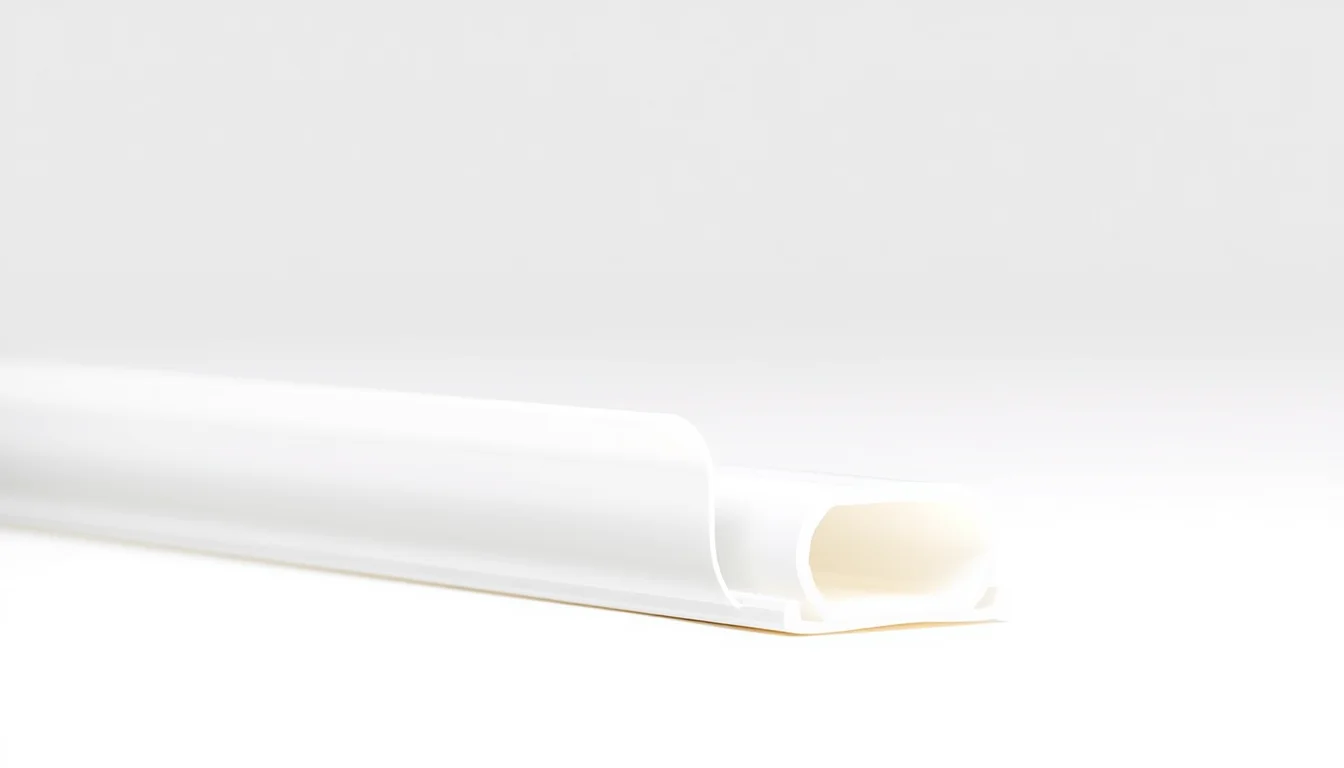
A commercial rice cooker leaks steam because the sealing strip loses compression set and hardens under repeated 100–120°C saturated steam cycles — not because the cabinet structure failed. Food-grade high-temperature silicone sealing strips (VMQ, Shore A 50±5, service range -60°C to +250°C) hold their elastic recovery far longer than EPDM or PVC in this specific environment, which is why OEMs specify them for steam cabinet doors and lid assemblies.
Why Steam Cabinet Doors Fail First
The real failure mode: compression set, not tearing
In a commercial rice cooker (蒸饭柜), the door gasket sits in saturated steam at 100–120°C for 6–10 hours per shift, then cools, then repeats. The killer is compression set — the permanent deformation measured under ASTM D395 (22 h at 175°C, Method B). A generic EPDM strip might show 35–45% set; a properly vulcanized VMQ silicone compound stays under 25%. Once set exceeds roughly 30%, the elastomer no longer pushes back against the door frame, and steam escapes at the hinge side.
Thermal aging is the second hit
ASTM D573 thermal aging at 200°C for 72 h tells you how the polymer matrix survives. Peroxide-cured silicone retains 70–85% of its original tensile strength; sulfur-cured EPDM drops faster and embrittles. For a rice cooker running two shifts, that difference decides whether the gasket lasts 4 months or 24 months.
Material Comparison for Steam-Cabinet Sealing
| Material | Temp Range | Shore A | Tensile (MPa) | Compression Set (ASTM D395) | Steam/Condensate Resistance | Relative Cost |
|---|---|---|---|---|---|---|
| VMQ silicone (food grade) | -60 to +250°C | 40–70 | 6.0–9.0 | ≤25% | Excellent | $$$ |
| EPDM | -40 to +150°C | 50–80 | 7.0–12.0 | 30–45% | Moderate | $$ |
| PVC (flexible) | -20 to +80°C | 60–85 | 4.0–8.0 | High creep | Poor | $ |
| TPE/TPV | -40 to +130°C | 55–80 | 4.0–8.0 | 30–40% | Moderate | $$ |
| FKM (fluoroelastomer) | -20 to +230°C | 60–90 | 8.0–12.0 | ≤20% | Excellent | $$$$ |
Silicone wins on the combination that matters here: wide temperature band, low compression set, and food-contact compliance. FKM performs well thermally but costs 3–5× more and is harder to color-match for appliance aesthetics.
Engineering the Strip for a Rice Cooker Door
Profile geometry and extrusion tolerance
Most steam-cabinet doors use a hollow-chamber profile with a sealing lip, co-extruded or spliced into a closed loop. Extrusion tolerance on the cross-section should be held to ±0.1 mm on critical sealing surfaces and ±0.3 mm on non-critical walls. Wall thickness variation directly drives compression force, so a loose ±0.5 mm tolerance will produce doors that either leak or refuse to latch.
Hardness selection
For a door with a cam latch, Shore A 50±5 is the sweet spot — enough compliance to seal a 1–2 mm frame gap, enough stiffness to resist extrusion into the gap under pressure. For lid seals on pressure rice cookers, drop to Shore A 40±5. Higher durometer (60–70) is only appropriate where the strip sits in a captured groove and the closing force is high.
Surface and food-contact requirements
Food-grade silicone for steam contact should meet FDA 21 CFR 177.2600 and, for EU projects, LFGB or EU 10/2011. Flame retardancy is not typically required on a rice cooker door, but if the OEM also builds combi ovens, specify a UL 94 V-0 rated compound. Ozone resistance is inherent to silicone and rarely a concern indoors — it matters more for door sealing strips used on outdoor kitchen equipment.
In our Hunan factory experience, ...
A Changde-based commercial steamer OEM came to us after their EPDM gaskets were failing at month five, with visible hardening and a 4 mm permanent gap at the hinge. We ran the failed part through ASTM D395 and got 41% compression set — the compound had simply cooked. We replaced it with a peroxide-cured VMQ strip, Shore A 50±5, hollow chamber, ±0.1 mm on the sealing lip, and ran a 1,000-hour saturated-steam aging test at 105°C. Compression set after the test was 22%, tensile retention 78%. The OEM moved the part to a 24-month warranty. That is the entire argument for silicone in this application, in one project.
Sourcing Notes for Rice Cooker OEMs and Kitchen Equipment Manufacturers
What to send us
A 2D drawing with the cross-section, or a 3D STEP file if you want us to propose a profile. Tell us the door closing force, the frame gap range, and the steam temperature. If you already have a failing gasket, send a sample — we will run compression set and durometer and tell you what went wrong.
Related profiles we produce
Beyond rice cooker doors, the same food-grade silicone compound is used in silicone series profiles for steamers, proofing cabinets, and dishwashers. For non-food cabinet doors in the same kitchen line, EPDM or TPE in our cabinet seals range is a lower-cost option. If your project includes cabinetry or decorative trim, WPC profiles are produced on the same extrusion lines.
Standards we test against
- ASTM D395 — compression set, Method B, 22 h at 175°C
- ASTM D573 — thermal aging, 72 h at 200°C
- ASTM D412 — tensile strength and elongation
- ISO 1817 — liquid resistance (relevant for oil-contact kitchen equipment)
- ISO 3601 — dimensional tolerances for elastomeric seals
- FDA 21 CFR 177.2600 / LFGB — food-contact compliance
Frequently Asked Questions
What is your MOQ for a custom silicone sealing strip?
For a new profile, MOQ is 500 meters for a standard compound and 1,000 meters if we need to develop a custom color or hardness. For repeat orders on an existing tool, MOQ drops to 300 meters. We can also quote by the piece if you need spliced closed loops.
What is the lead time?
Sample lead time is 7–10 working days after drawing approval. Production lead time is 15–20 working days for 1,000–5,000 meters, and 25–30 working days for larger volumes. If you have a hard project deadline, tell us at RFQ stage — we can sometimes slot a rice cooker OEM order into an existing silicone run.
What extrusion tolerance can you hold?
Standard is ±0.3 mm on the overall cross-section and ±0.1 mm on critical sealing surfaces. If your door frame gap is tight, we can hold ±0.05 mm on the lip dimension with a dedicated die and in-line laser measurement. Tolerance is agreed in writing on the drawing before tooling.
How do you pack and ship?
Coils in PE bags, then in cartons on pallets, or straight-length in rigid tubes for profiles that must not bend. We ship FOB Shanghai or Ningbo, or CIF to your port. For food-contact orders we include a batch-level compliance certificate with the shipment.
Can I get a sample before committing to tooling?
Yes. For an existing profile we send a 300 mm cut sample free of charge; you cover freight. For a new custom profile, we charge a tooling deposit that is credited against the first production order. Send your CAD drawing for a 24-hour quote.
Need a Custom Quote?
Send your CAD drawing or specs (material, hardness, profile, temperature range, MOQ) — our engineering team will respond within 24 hours.