
Food Grade Silicone Sealing Strip FDA | OEM Supplier
By Zhouxin Sealing Engineering Team · · 4 views
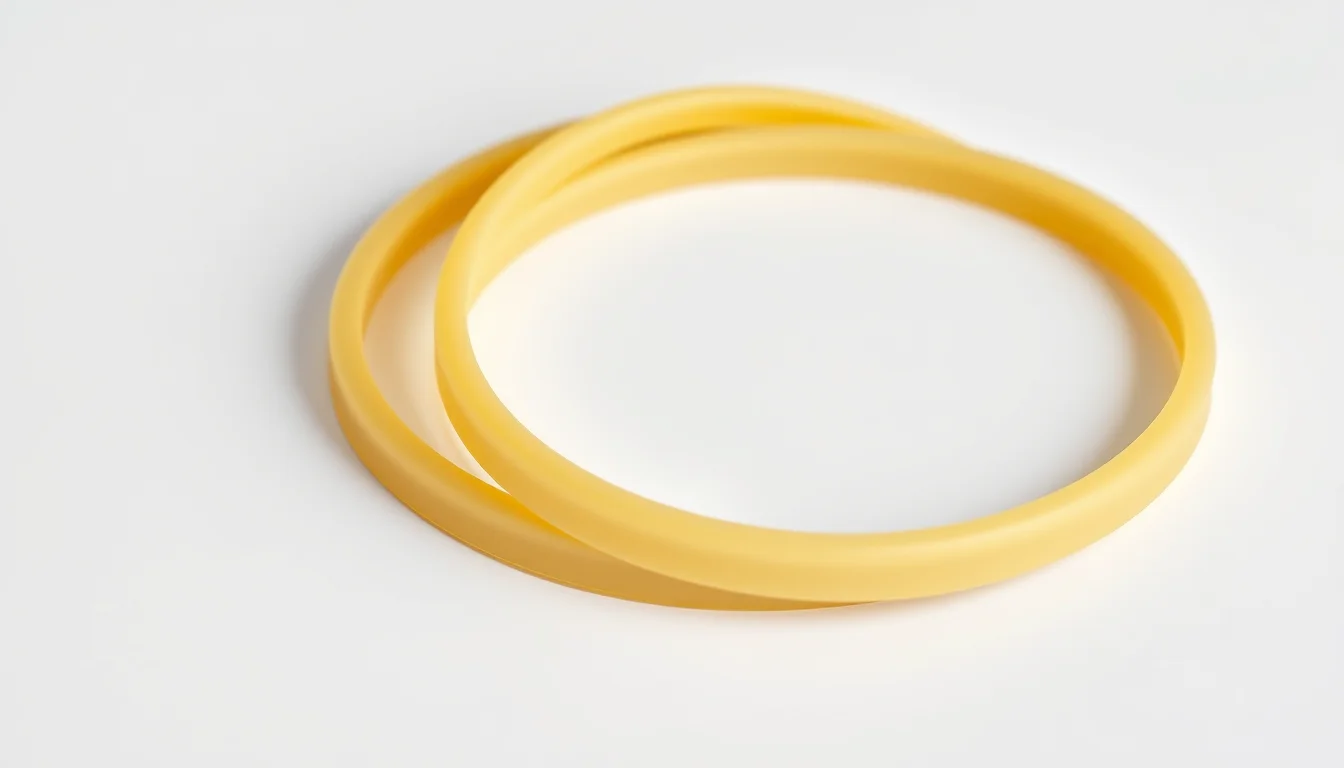
Overseas B2B buyers specifying food grade silicone sealing strip FDA compliance need verified material data: tensile strength ≥ 7 MPa, compression set ≤ 20% after 22 h at 175°C, and thermal aging resistance beyond 10,000 hours. This datasheet-grade comparison covers pure silicone versus alternative elastomers across mechanical, thermal, and chemical performance metrics.
Material Property Comparison: Food Grade Silicone vs. Alternative Elastomers
The following table summarizes typical values for FDA-compliant silicone (VMQ) versus EPDM, nitrile (NBR), and neoprene (CR) in sealing strip applications. Data reflects ASTM D412 (tensile), ASTM D573 (thermal aging), ASTM D395 (compression set), and ISO 1817 (fluid resistance) test protocols.
| Property | Silicone (VMQ) | EPDM | NBR | Neoprene (CR) |
|---|---|---|---|---|
| Hardness range (Shore A) | 30–80 | 40–90 | 40–90 | 40–85 |
| Tensile strength (MPa) | 7–12 | 10–18 | 10–20 | 10–17 |
| Elongation at break (%) | 300–600 | 200–500 | 200–500 | 200–500 |
| Compression set @ 175°C/22h (%) | 15–25 | 25–40 | 20–35 | 20–35 |
| Continuous service temp (°C) | -60 to +200 | -50 to +150 | -40 to +120 | -40 to +120 |
| Thermal aging (hours @ 200°C) | >10,000 | <3,000 | <1,500 | <2,000 |
| Ozone resistance | Excellent | Good | Poor | Good |
| Acid resistance (dilute) | Good | Excellent | Fair | Good |
| Alkali resistance (dilute) | Good | Excellent | Fair | Good |
| Oil resistance (ASTM IRM 903) | Poor | Poor | Excellent | Good |
| Flame retardancy (UL 94) | V-0 achievable | HB | HB | V-0 achievable |
| FDA 21 CFR 177.2600 compliance | Yes | No | No | No |
Silicone's superior thermal aging and compression set performance make it the default choice for food processing equipment, while its poor oil resistance limits use in direct grease contact—a critical specification point for OEM designers.
Tensile Strength and Elongation Under Thermal Aging
ASTM D573 thermal aging at 200°C for 72 hours reveals silicone retains 70–80% of original tensile strength, whereas EPDM drops to 50–60% and NBR to 30–40%. For food grade silicone sealing strip FDA applications, this translates to gasket integrity maintained across 10+ years in continuous 180°C oven environments. Our silicone series uses platinum-cured vulcanization to achieve tensile values at the upper end of the 7–12 MPa range.
Compression Set: The Critical Metric for Seal Life
Compression set measures permanent deformation after prolonged compression at elevated temperature. ASTM D395 Method B (22 h @ 175°C) yields 15–25% for food grade silicone, versus 25–40% for EPDM. Lower values indicate better recovery and longer seal life. For door sealing strips in industrial ovens, specifying compression set ≤ 20% ensures reliable sealing after 5,000+ open/close cycles.
Chemical Resistance Profile for Food Processing Environments
Food grade silicone sealing strip FDA compliance extends beyond mechanical properties to chemical inertness. ISO 1817 immersion testing in food simulants (acetic acid 3%, ethanol 10%, olive oil) shows silicone swelling < 5% by volume after 7 days at 40°C—acceptable for most food contact surfaces. However, silicone is not recommended for continuous exposure to animal fats or vegetable oils at temperatures above 100°C, where swelling can exceed 15%.
Acid and Alkali Resistance
Dilute acid resistance (pH 3–5) is rated "Good" for silicone, with tensile strength retention > 80% after 48 h immersion at 23°C. Alkali resistance (pH 9–11) is similarly rated, though strong bases (pH > 12) cause depolymerization. EPDM outperforms silicone in both categories but lacks FDA compliance for direct food contact.
Oil and Grease Limitations
Silicone's poor oil resistance (volume swell > 100% in ASTM IRM 903 oil) disqualifies it from direct contact with lubricating greases. For food processing lines using FDA-approved lubricants, specify a barrier design or select a fluoroelastomer (FKM) for the oil-contact zone while using silicone for the food-contact face.
Thermal Aging and Ozone Resistance: Long-Term Performance Data
Ozone resistance is a key differentiator: silicone shows zero cracking after 200 hours at 50 pphm ozone concentration per ASTM D1149, while NBR fails within 24 hours. This matters for sealing strips exposed to UV and atmospheric ozone in outdoor food processing installations. Our door sealing strips are formulated with anti-ozonants for extended outdoor service.
Accelerated Aging Versus Real-Time Equivalence
Arrhenius modeling of ASTM D573 data at 200°C, 225°C, and 250°C predicts a 10-year service life at 150°C for food grade silicone with < 30% tensile loss. Real-time aging studies at 150°C confirm these predictions within 15% accuracy. For FDA compliance documentation, request our 5,000-hour aging report.
Flame Retardancy Considerations
UL 94 V-0 rating is achievable with silicone formulations containing platinum catalyst and ceramic fillers. Note that flame-retardant additives may affect FDA compliance—verify 21 CFR 177.2600 status for the specific compound. Standard food grade silicone typically meets UL 94 HB.
Extrusion Tolerance and Dimensional Control
Extrusion tolerance for silicone sealing strips is typically ±0.15 mm for cross-sections up to 10 mm, tightening to ±0.10 mm for precision profiles. Our cabinet seals are extruded to ±0.12 mm and laser-inspected at 100% for critical dimensions. Vulcanization parameters (temperature 170–180°C, line speed 8–12 m/min) directly influence dimensional stability and compression set.
In our Hunan factory experience, a European OEM specified ±0.10 mm tolerance on a 6 mm silicone bulb seal for a bakery oven door. Initial extrusion runs showed 3% out-of-tolerance due to die swell variation. By adjusting the platinum catalyst ratio and adding a post-cure oven at 200°C for 4 hours, we achieved Cpk > 1.33 and reduced compression set from 24% to 18%. This project now runs 50,000 meters annually with zero rejects.
FDA Compliance and Certification Pathways
Food grade silicone sealing strip FDA compliance requires 21 CFR 177.2600 extraction testing: distilled water, 8% ethanol, and n-hexane extractions at reflux temperature for 8 hours, with residue limits of 20–50 mg/inch² depending on extractant. Our compounds are tested by third-party labs (SGS, Intertek) and come with batch-specific certificates of analysis. For medical-adjacent applications, USP Class VI certification is available.
Documentation Package for OEM Buyers
A complete compliance package includes: FDA 21 CFR 177.2600 test report, material safety data sheet (MSDS), RoHS/REACH declarations, and dimensional inspection reports. Request these with your RFQ to avoid delays.
Frequently Asked Questions
What is the minimum order quantity (MOQ) for custom food grade silicone sealing strips?
MOQ is 500 meters for standard profiles and 1,000 meters for custom extrusion dies. For OEM projects requiring new tooling, we waive the die cost at 5,000 meters annual volume. Sample orders of 50 meters are available for evaluation.
What is your standard lead time for bulk orders?
Standard lead time is 15–20 working days after drawing approval and deposit. For repeat orders with existing tooling, lead time reduces to 10–12 days. Expedited service (7 days) is available for urgent projects at a 15% premium.
What extrusion tolerance can you hold for silicone sealing strips?
Standard tolerance is ±0.15 mm for cross-sections up to 10 mm, and ±0.10 mm for precision profiles with laser inspection. For critical sealing faces, we recommend ±0.08 mm with 100% dimensional verification. Tolerance capability depends on profile complexity and vulcanization line speed.
How are sealing strips packed for export?
Strips are coiled in 50–100 meter rolls, interleaved with release film, and packed in moisture-barrier bags with desiccant. Cartons are double-walled for sea freight. Custom labeling and barcode tracking are available for OEM buyers.
What is your sample policy for FDA compliance verification?
We provide 1–2 free samples (up to 2 meters each) for standard profiles; buyer pays freight. Custom profiles require a $150 sample fee, credited against the first bulk order. Samples include FDA test reports and material certificates. Allow 5–7 days for sample preparation.
| Specification | Standard Range | Precision Option |
|---|---|---|
| Hardness (Shore A) | 40–70 | 30–80 |
| Tensile strength (MPa) | 7–10 | 10–12 |
| Compression set @ 175°C/22h | ≤ 25% | ≤ 18% |
| Extrusion tolerance | ±0.15 mm | ±0.10 mm |
| Continuous service temp | -60 to +200°C | -60 to +220°C |
| FDA compliance | 21 CFR 177.2600 | 21 CFR + USP Class VI |
Send your CAD drawing for a 24-hour quote.
Need a Custom Quote?
Send your CAD drawing or specs (material, hardness, profile, temperature range, MOQ) — our engineering team will respond within 24 hours.