
Elevator Door Rubber Bumper Strip | OEM Manufacturer
By Zhouxin Sealing Engineering Team · · 249 views
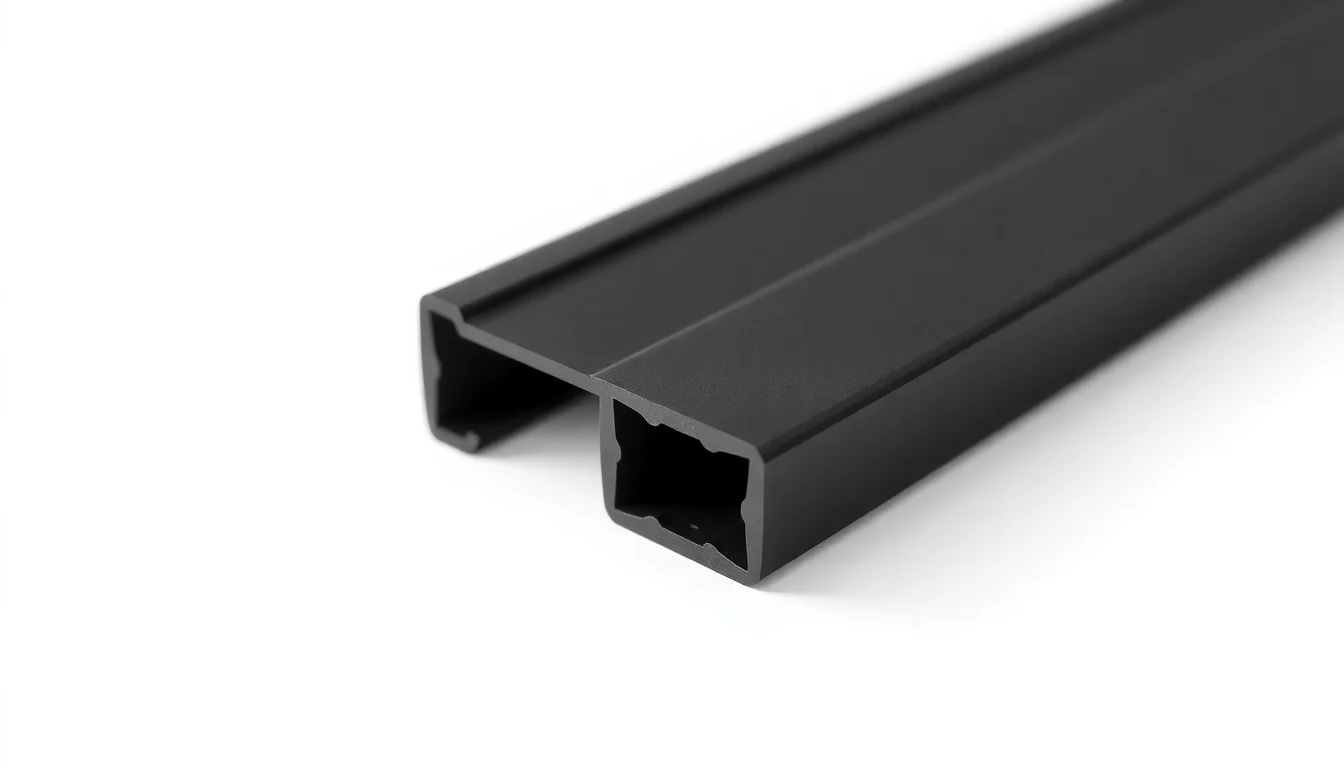
For an elevator door rubber bumper strip, the polymer matrix must withstand 500,000+ door cycles at 0.5 m/s impact velocity while maintaining <15% compression set after 70 hours at 100°C per ASTM D395 Method B. Below are the validated material options for OEM/ODM projects.
Material Selection by Performance Parameters
| Property | EPDM (60-70 Shore A) | Silicone (50-60 Shore A) | NR/SBR Blend (65-75 Shore A) |
|---|---|---|---|
| Tensile Strength (MPa) | 7.0 – 10.5 | 5.5 – 8.0 | 8.0 – 12.0 |
| Elongation at Break (%) | 300 – 450 | 250 – 400 | 350 – 550 |
| Compression Set (%) – 70h/100°C | 12 – 18 | 8 – 15 | 20 – 35 |
| Thermal Aging (ASTM D573, 70h/125°C) | <15% change | <10% change | >30% change |
| Ozone Resistance (50 pphm, 40°C, 100h) | No cracks | No cracks | Cracks within 24h |
| Oil Resistance (ASTM D471, IRM 903, 70h/100°C) | Volume swell 40-60% | Volume swell 80-120% | Volume swell 10-25% |
| Temperature Range (°C) | -40 to +150 | -60 to +230 | -30 to +80 |
| UL 94 Flame Rating | HB (with additives V-0) | V-0 (platinum-cured) | HB |
EPDM: Industry Standard for General Elevator Doors
EPDM delivers the best balance of tensile strength (8.5 MPa typical) and compression set resistance for standard passenger elevators. Our extrusion tolerance is ±0.15 mm on cross-section dimensions. For projects requiring 10-year service life in indoor environments, EPDM is the cost-optimized choice. Reference ASTM D2000 M2CA 710 for material classification.
Silicone: Extreme Temperature & Fire-Rated Applications
For elevator doors near heat sources or requiring UL 94 V-0 flame retardancy, silicone compounds with 55 Shore A durometer provide compression set below 10% after 22h at 175°C. The trade-off is lower tear strength (12 N/mm vs. 25 N/mm for EPDM). We compound platinum-cured silicone for hospital and cleanroom elevator seals.
NR/SBR Blend: High-Abrasion Service
Heavy-duty freight elevators with 2,000+ kg rated loads benefit from NR/SBR blends exhibiting 12 MPa tensile strength. However, ozone resistance requires antiozonant additives, and service life is limited to 3-5 years indoors. Not recommended for exterior or semi-exposed shafts.
Compression Set: The Decisive Metric
| Test Condition | EPDM | Silicone | NR/SBR |
|---|---|---|---|
| 22h / 70°C (ASTM D395 B) | 8-12% | 5-8% | 15-25% |
| 70h / 100°C (ASTM D395 B) | 12-18% | 8-15% | 25-40% |
| 168h / 125°C (accelerated) | 20-28% | 12-18% | >50% |
A compression set exceeding 25% at operating temperature will cause the bumper strip to lose contact pressure, resulting in door rattle and increased wear on guide rails.
Chemical Resistance Profile (ISO 1817)
| Chemical Agent | EPDM | Silicone | NR/SBR |
|---|---|---|---|
| Hydraulic Oil (ISO 46) | Poor – swell >60% | Poor – swell >100% | Fair – swell 15-25% |
| Brake Fluid (DOT 3) | Good – swell <10% | Poor – swell >50% | Poor – swell >40% |
| Dilute Acid (10% H₂SO₄, 23°C) | Excellent | Excellent | Fair |
| Dilute Alkali (10% NaOH, 23°C) | Excellent | Good | Poor |
| Cleaning Detergent (1%, 60°C) | Excellent | Excellent | Fair |
In our Hunan factory experience, a European elevator OEM once specified NR/SBR for a freight elevator bumper strip, expecting 8-year service. After 14 months, ozone cracking appeared along the extrusion lines due to the motor room's ozone-generating VFDs. We retrofitted with EPDM compound HZ-EP85, which has now exceeded 6 years without degradation. The lesson: always audit the shaft environment for ozone sources before finalizing the polymer matrix.
Thermal Aging & Service Life Projections
Accelerated aging per ASTM D573 at 125°C for 168 hours correlates to approximately 8-10 years of indoor service at 40°C average temperature. Key degradation indicators:
- EPDM: Hardness increase of 5-8 points, tensile retention >80%
- Silicone: Hardness increase of 2-4 points, tensile retention >85%
- NR/SBR: Hardness increase of 10-15 points, tensile retention <60%
For door sealing strips in elevator applications, we recommend EPDM as the default compound unless specific chemical, thermal, or flame requirements dictate otherwise.
Extrusion Tolerance & Dimensional Control
| Profile Dimension | Standard Tolerance | Precision Tolerance |
|---|---|---|
| Width ≤10 mm | ±0.20 mm | ±0.10 mm |
| Width 10-25 mm | ±0.30 mm | ±0.15 mm |
| Thickness | ±0.15 mm | ±0.08 mm |
| Lip height | ±0.10 mm | ±0.05 mm |
| Cut length (100-2000 mm) | ±1.0 mm | ±0.5 mm |
Our continuous vulcanization line (CV) with laser profilometry ensures real-time dimensional feedback. For complex profiles, we apply ISO 3601 Class A tolerances.
Flame Retardancy Options
| Standard | Requirement | EPDM with FR Additives | Platinum Silicone |
|---|---|---|---|
| UL 94 | V-0 (vertical burn) | Achievable at 55-65 phr ATH | Inherent V-0 |
| EN 45545-2 | HL3 (hazard level 3) | R22/R23 compliant | R22/R23 compliant |
| BS 476 Part 7 | Class 1 | With FR package | Class 1 |
| ASTM E162 | Flame spread ≤25 | With FR package | ≤15 |
For elevator doors serving as fire barriers, we recommend silicone series compounds with halogen-free flame retardancy.
Frequently Asked Questions
What is your MOQ for custom elevator door rubber bumper strips?
Standard MOQ is 500 meters per profile for new extrusions. For existing tooling (no die charge), MOQ drops to 200 meters. We stock 15 standard elevator bumper profiles — request our catalog for off-tool options.
What is the typical lead time for first samples?
Sample tooling takes 7-10 working days. First article samples (3-meter lengths) ship within 15 working days after tool approval. Production lead time is 20-25 working days after sample sign-off.
What extrusion tolerances can you guarantee?
Standard tolerance is ±0.20 mm on cross-section dimensions. Precision tolerance of ±0.10 mm is available for critical lip geometries. We provide a full dimensional report with each shipment per ISO 3302-1 Class E1.
How are the strips packed for export?
Coils on cardboard cores (50-100 meters per coil) or cut-to-length strips bundled with poly bags and corrugated cartons. Palletized with stretch wrap and corner protectors. Custom labeling in English and destination-language instructions.
Can I request free samples for testing?
Yes. We provide 300 mm sample lengths for up to 3 different profiles free of charge (shipping collect). For full-profile samples (1 meter or more), a nominal sample fee applies, refundable with first production order.
Technical Data Sheet Summary
| Parameter | EPDM (HZ-EP85) | Silicone (HZ-SI60) | Test Method |
|---|---|---|---|
| Hardness (Shore A) | 65 ± 5 | 55 ± 5 | ASTM D2240 |
| Tensile Strength (MPa) | 8.5 | 6.5 | ASTM D412 |
| Elongation (%) | 380 | 320 | ASTM D412 |
| Tear Strength (kN/m) | 25 | 12 | ASTM D624 Die C |
| Compression Set 22h/70°C (%) | 10 | 6 | ASTM D395 B |
| Compression Set 70h/100°C (%) | 15 | 10 | ASTM D395 B |
| Brittle Point (°C) | -50 | -65 | ASTM D2137 |
| Specific Gravity | 1.25 | 1.15 | ASTM D297 |
| Ozone Resistance (50 pphm, 40°C, 100h) | No cracks | No cracks | ASTM D1149 |
For elevator door rubber bumper strips requiring UL 94 V-0, request our cabinet seals fire-rated series. For decorative elevator interiors, explore WPC profiles as a co-extruded aesthetic layer.
Send your CAD drawing for a 24-hour quote.
Need a Custom Quote?
Send your CAD drawing or specs (material, hardness, profile, temperature range, MOQ) — our engineering team will respond within 24 hours.