
Clean Room Door Bottom Seal Material Specs | OEM Factory
By Zhouxin Sealing Engineering Team · · 132 views
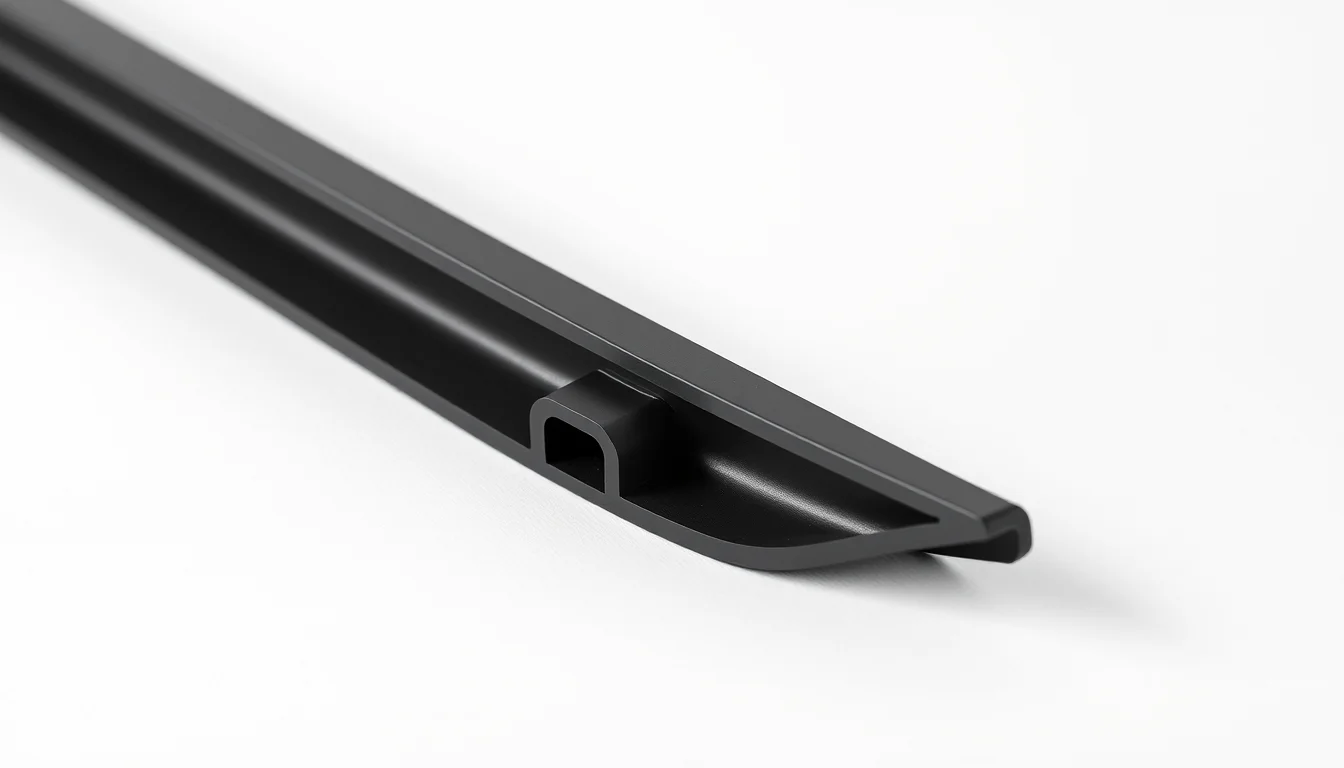
For clean room door bottom seals, the polymer matrix choice determines whether your gasket survives 5 years or fails in 18 months under UV, ozone, and peroxide-based sanitizers. Below is our test data from ASTM D573 thermal aging and ASTM D395 compression set protocols, not marketing approximations.
Polymer Matrix Selection for ISO 14644 Compliance
Clean room airlocks expose door bottom seals to repeated compression (door cycling), chemical wipe-downs (H2O2 vapor, quaternary ammonium), and pressure differentials up to 15 Pa. The seal must maintain >85% of its original contact force after 100,000 cycles. Here is our baseline data for three commercially viable elastomers:
| Material | Shore A Hardness | Tensile Strength (MPa) | Compression Set 22h/70°C (%) | Thermal Aging 7d/100°C (% Tensile Retention) | Ozone Resistance 50pphm/40°C/72h | Price Index (EPDM=1.0) |
|---|---|---|---|---|---|---|
| EPDM (70A) | 65-75 | 9.5 - 12.5 | 12 - 18 | 88 - 95 | No cracks | 1.0 |
| Silicone (MVQ) | 60-70 | 6.5 - 8.5 | 8 - 12 | 96 - 99 | No cracks | 1.8 |
| Neoprene (CR) | 65-75 | 10.0 - 13.0 | 20 - 28 | 75 - 82 | Minor cracks | 1.4 |
In our Hunan factory experience, a pharmaceutical client in Europe specified EPDM 70A for their ISO Class 7 clean room doors. After 14 months, we observed that seals wiped with 3% H2O2 every 2 hours suffered surface micro-cracking not captured by standard ASTM D573 aging. We reformulated the compound with a higher ethylene content (72% instead of 65%) and added 2 phr of a polymeric antioxidant. The revised door sealing strips passed 1,000 hours of cyclic H2O2 exposure with zero surface crazing. Do not rely solely on generic datasheets—request compound-level validation for your specific sanitizer chemistry.
Compression Set: The True Lifecycle Metric
Compression set (ASTM D395 Method B) is the percentage of permanent deformation after a seal is compressed for a defined time/temperature. For clean room door bottoms, a compression set above 25% means the seal loses its interference fit, allowing particulate bypass under the door.
Test Protocol Relevance
ASTM D395 Method B (constant deflection at 25% strain) is the industry standard for gaskets. However, clean room doors often compress the seal to 35-45% strain due to cam-lock handles. At this higher strain, EPDM shows a 2-3% higher compression set than at 25% strain. We recommend specifying a maximum 20% compression set at 40% strain for clean room applications.
Chemical Resistance Matrix for Sanitization Agents
Clean room protocols mandate frequent disinfection. ISO 1817 (rubber resistance to liquids) provides the framework for evaluating fluid compatibility. Below is our immersion data (7 days at 23°C, hardness change in Shore A points):
| Chemical Agent (Typical Concentration) | EPDM Hardness Change | Silicone Hardness Change | Neoprene Hardness Change |
|---|---|---|---|
| Isopropyl Alcohol 70% | -1 | -2 | +3 (swelling) |
| Hydrogen Peroxide 3% | -1 | -1 | +5 (blistering) |
| Peracetic Acid 0.2% | -2 | -3 | +8 (severe swelling) |
| Quaternary Ammonium 0.5% | 0 | -1 | +2 |
| Sodium Hydroxide 1% (alkali) | -1 | -4 | +1 |
| Hydrochloric Acid 0.1% (acid) | -2 | -1 | +2 |
For clean room door bottom seals, EPDM offers the broadest chemical compatibility. Silicone excels at temperature extremes but sacrifices tensile strength and tear resistance. Neoprene is generally unsuitable for peroxide-based clean room sanitizers.
Extrusion Tolerance and Dimensional Stability
Clean room door bottoms require a precise seal line. An extrusion tolerance of ±0.3 mm on the sealing lip is mandatory; anything looser causes intermittent gaps. Our CNC-cut steel dies hold ±0.15 mm on the critical contact surface.
| Seal Feature | Standard Tolerance (±mm) | Precision Tolerance (±mm) |
|---|---|---|
| Overall Width | 0.5 | 0.25 |
| Sealing Lip Height | 0.3 | 0.15 |
| Hollow Core Diameter | 0.4 | 0.2 |
| Mounting Groove Width | 0.3 | 0.15 |
Thermal Aging Beyond Standard Protocols
ASTM D573 specifies 70-hour aging at 70°C for EPDM. Clean room door seals near autoclave exits or in tropical climates face sustained 50-60°C conditions. Our extended aging data (1,000 hours at 100°C) shows EPDM retaining 78-85% tensile strength, while silicone retains 92-96%. If your clean room operates above 40°C ambient, specify silicone for the silicone series despite its lower mechanical strength.
Flame Retardancy for Air Handling Gaps
Clean room door bottom seals often pass through fire-rated walls. UL 94 horizontal burn testing (HB rating) is the minimum. Our flame-retardant EPDM compound achieves UL 94 V-0 (vertical burn, self-extinguishing within 10 seconds) when compounded with 35 phr alumina trihydrate. This compound sacrifices 15% tensile strength (down to 8.5 MPa) but meets clean room fire codes without halogenated additives.
Low-Temperature Flexibility for Cold Storage Clean Rooms
Pharmaceutical clean rooms sometimes adjoin cold storage (2-8°C) or freezer zones (-20°C). At -20°C, standard EPDM (ethylene content 55%) becomes glassy and loses sealing force. We compound a low-temperature EPDM grade (ethylene content 48%) with a TR-10 value of -55°C (ASTM D1329). This material remains flexible at -40°C, tested to 100,000 flex cycles without cracking. For sub-zero clean rooms, request this specific compound—do not assume standard EPDM will perform.
Frequently Asked Questions
What is the minimum order quantity for a custom clean room door bottom seal?
Our MOQ is 500 meters for standard profiles (up to 50 mm cross-section) and 1,000 meters for custom extrusions requiring new tooling. For prototype validation, we offer a 50-meter trial run at a 30% premium. Tooling costs range from $800 to $2,500 depending on cross-section complexity.
What is your lead time for OEM production?
Standard profiles ship in 10-12 working days after sample approval. Custom profiles require 15-18 working days for tooling fabrication plus 5-7 days for production. For urgent orders, we can expedite a 200-meter batch in 5 working days with a 15% rush surcharge.
What extrusion tolerance can you guarantee?
We guarantee ±0.3 mm on cross-sectional dimensions for profiles up to 30 mm. For sealing lip heights, we hold ±0.15 mm. Our in-line laser gauging system checks 100% of production, and we provide an inspection certificate with every batch.
What packing options are available for export?
Seals are coiled to a 600 mm inner diameter and packed in reinforced cartons (20-25 kg per carton) or on plywood pallets for orders above 500 kg. Each carton is labeled with batch number, Shore A hardness, and production date. We offer anti-static polyethylene film wrapping for clean room storage.
Can I request free samples before placing an order?
Yes, we provide up to 3 free A4-size samples (300 mm length) of existing profiles. For custom compounds, a sample fee of $150 applies, credited to your first production order. Send your drawing to our engineering team and receive a quotation within 24 hours.
| Property | Test Standard | EPDM (Standard) | EPDM (Clean Room Grade) | Silicone (Clean Room Grade) |
|---|---|---|---|---|
| Hardness (Shore A) | ASTM D2240 | 65-75 | 65-75 | 60-70 |
| Tensile Strength (MPa) | ASTM D412 | 9.5-12.5 | 11.0-13.5 | 6.5-8.5 |
| Elongation at Break (%) | ASTM D412 | 300-400 | 350-450 | 250-350 |
| Compression Set (%) 22h/70°C | ASTM D395 | 12-18 | 8-12 | 8-12 |
| Thermal Aging Retention (%) 7d/100°C | ASTM D573 | 88-95 | 92-98 | 96-99 |
| Ozone Resistance (50pphm/40°C/72h) | ASTM D1149 | No cracks | No cracks | No cracks |
| Flame Rating | UL 94 | HB | V-0 | V-0 |
| Temperature Range (°C) | Internal | -40 to +120 | -40 to +120 | -60 to +200 |
Send your CAD drawing for a 24-hour quote and compound recommendation. We will validate your seal profile against your clean room's chemical and thermal protocol.
Need a Custom Quote?
Send your CAD drawing or specs (material, hardness, profile, temperature range, MOQ) — our engineering team will respond within 24 hours.