
CAD Drawing Rubber Extrusion Quote | OEM Supplier
By Zhouxin Sealing Engineering Team · · 13 views
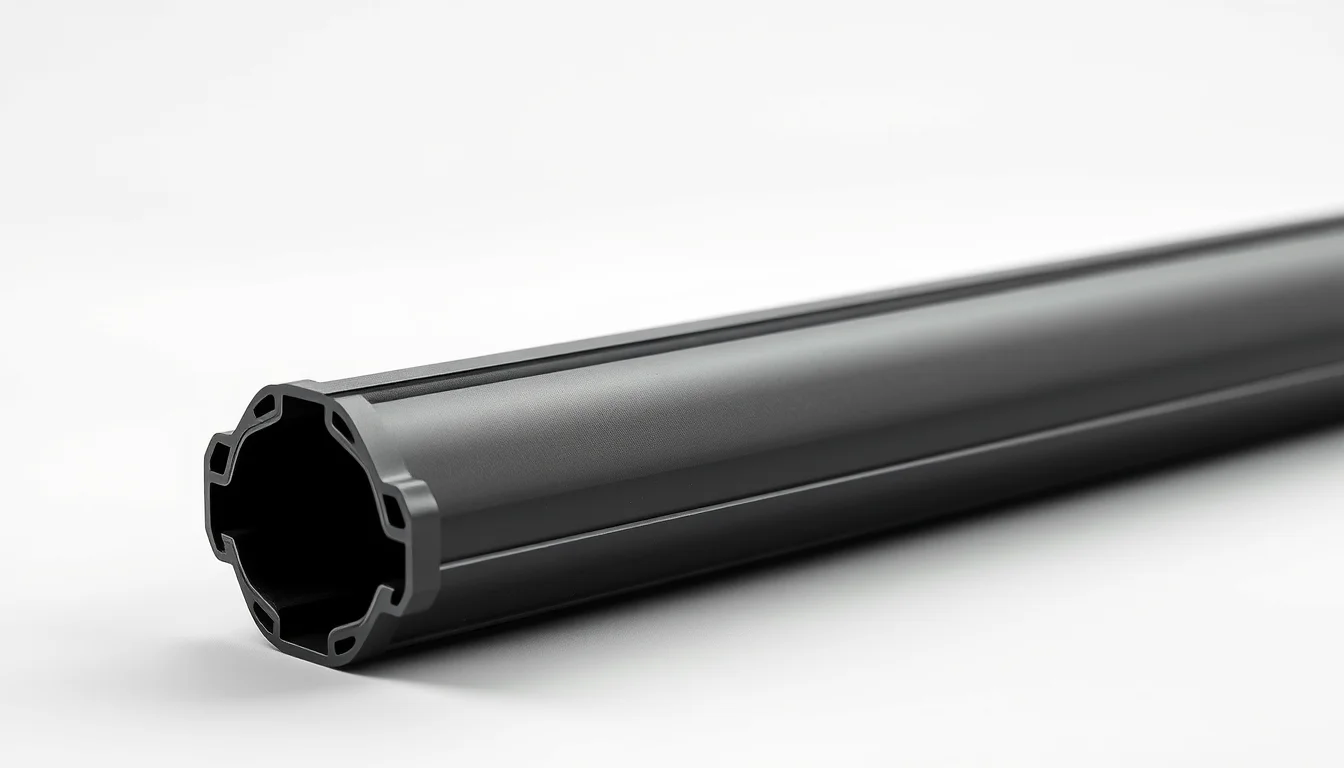
A CAD drawing rubber extrusion quote is the fastest way to lock in per-meter pricing, tooling cost, and lead time for a custom profile — but only if the drawing carries the process-critical data the factory needs. As a sourcing engineer who has quoted 100+ overseas extrusion projects, I can tell you that a well-prepared DWG or DXF file cuts the back-and-forth from two weeks to two days. Below is the real workflow, the numbers behind it, and how to send drawings that get an accurate quote on the first pass.
What a Rubber Extrusion Quote Actually Needs From Your CAD File
A rubber extrusion quote is not a CNC machining quote. The factory is pricing a vulcanized elastomer profile that will shrink, sag, and spring back differently depending on compound, wall thickness, and cure system. Your drawing must communicate geometry, tolerances, material, and end-use environment in a single package.
Geometry and Cross-Section Data
Send a 2D cross-section in DWG, DXF, or PDF at 1:1 scale. Include the full profile outline, all internal cavities, lip thicknesses, and corner radii. For hollow profiles, mark the mandrel or air-cure direction. For multi-durometer or co-extruded parts, color-code each polymer zone and note the bond line.
Tolerance Callouts That Match Extrusion Capability
Uncured rubber extrusion tolerance is governed by ASTM D3182 and the more specific ASTM D2231 for dimensional tolerances of rubber products. A general-profile line typically holds ±0.5 mm on critical dimensions and ±0.8 mm on non-critical walls; tighter than ±0.3 mm requires post-cure grinding or a different process. Mark critical-to-function dimensions with a box or a GD&T frame. Do not tolerance every dimension equally — it inflates tooling and inspection cost.
Material and Performance Specification
Name the elastomer family and the durometer: EPDM 70 Shore A, silicone 60 Shore A, NBR 80 Shore A, or TPE 85 Shore A. Add the service temperature, compression set target (ASTM D395, e.g., ≤25% at 70 h / 100°C), tensile strength (ASTM D412, e.g., ≥10 MPa), and any thermal aging requirement (ASTM D573, e.g., 70 h at 125°C with ≤15% change in tensile). For outdoor applications, specify ozone resistance per ASTM D1149. For flame-retardant grades, cite UL 94 V-0 or a specific glow-wire index.
Factory Capability Comparison: What to Verify Before You Commit
Overseas buyers with active POs should compare extrusion lines on four axes: screw diameter, cure method, downstream tolerance control, and in-house compounding. The table below reflects typical capability bands across Chinese extrusion suppliers, including our own lines in Changde, Hunan.
| Capability | Entry-Level Supplier | Mid-Tier Supplier | Export-Grade Supplier (e.g., Zhouxin) |
|---|---|---|---|
| Screw diameter | 45–65 mm | 65–90 mm | 90–120 mm, dual line |
| Cure method | Hot air only | Hot air + salt bath | Microwave + hot air + salt bath |
| Extrusion tolerance (general) | ±0.8 mm | ±0.5 mm | ±0.3 mm on critical dims |
| In-house compounding | No | Partial | Yes, full polymer matrix control |
| Durometer range | 50–80 Shore A | 40–85 Shore A | 30–90 Shore A |
| Max profile width | 80 mm | 150 mm | 250 mm |
| Tensile strength (EPDM) | 6–8 MPa | 8–10 MPa | 10–14 MPa |
| Compression set (70 h / 100°C) | 30–40% | 25–30% | 18–25% |
| Thermal aging (ASTM D573, 70 h / 125°C) | ±25% | ±20% | ±15% |
| Ozone resistance (ASTM D1149, 50 pphm) | Pass with cracks | Pass | Pass, no cracks |
| Flame retardancy option | None | UL 94 HB | UL 94 V-0 |
If your project involves door sealing strips for architectural or appliance use, the compression set and thermal aging columns matter more than raw tensile. For high-temperature or food-contact applications, review the silicone series capability before comparing price per meter.
The Real Custom Extrusion Process, Step by Step
Step 1 — Drawing Review and DFM Feedback (24–48 h)
The factory reviews your CAD file for undercuts, wall-thickness transitions, and tolerance stack-ups that will not survive vulcanization. You receive a DFM note listing suggested radii, draft, and any dimension that needs relaxation.
Step 2 — Tooling and Sample Quotation (24 h)
Tooling cost for a single-cavity extrusion die ranges from USD 300 to USD 1,200 depending on profile complexity. A multi-cavity or co-extrusion die runs USD 1,500 to USD 3,500. The quote should break out die cost, sample cost, and per-meter price at your target volume.
Step 3 — Sample Extrusion and Validation (7–12 days)
A first-article sample is extruded on the production line, not a lab press. Expect 5–10 m of sample. Validate durometer, cross-section, and compression set before approving. Sample lead time is typically 7–12 working days after drawing approval and tooling payment.
Step 4 — PPAP / First Article Inspection
For automotive and appliance OEMs, request a dimensional report, material cert, and compression set data. This is where a ±0.3 mm callout gets verified against a vision system or optical comparator.
Step 5 — Production, Packing, and Export
Production runs 15–25 days for 5,000–20,000 m. Packing is typically 100–200 m per coil, wrapped in PE film, in a carton or woven bag. Export terms are usually FOB Shanghai or Shenzhen, or CIF to your port. Confirm HS code 4008.19 or 3926.90 depending on material.
In our Hunan factory experience, the single biggest cause of quote delay is a PDF drawing with no tolerance callouts and no material spec. One European buyer sent a DXF with 14 dimensions, none toleranced, and a note that said "EPDM, black." After two rounds of clarification we discovered the part was a cabinet seal for an outdoor enclosure requiring ozone resistance and a 70 Shore A durometer with ≤25% compression set. Once the drawing carried those three data points, the quote went out in 18 hours and the sample passed first-article inspection. The lesson: the drawing is the contract.
How to Prepare a CAD Drawing That Gets a Fast, Accurate Quote
File Format and Layer Discipline
Send DWG or DXF with the profile on a single closed polyline. Remove title blocks, logos, and revision clouds from the geometry layer. Include a separate PDF for human review. If you send STEP or IGES, confirm the factory can read 3D — many extrusion shops still quote from 2D cross-sections.
The Five Data Blocks Every Drawing Should Carry
- Material family and durometer (e.g., EPDM 70 ±5 Shore A)
- Tolerance table or per-dimension callouts
- Surface finish and any cosmetic requirements
- Service temperature and environmental exposure
- Volume forecast and target annual quantity
Volume and MOQ Signals
State your annual volume and first PO quantity. A factory quoting 500 m and a factory quoting 50,000 m will price tooling differently. MOQ for custom extrusion is typically 1,000–3,000 m per profile, but sample and trial orders of 300–500 m are negotiable for repeat buyers.
Frequently Asked Questions
What is the MOQ for a custom rubber extrusion?
Standard MOQ is 1,000–3,000 m per profile for a new die. Trial orders of 300–500 m are accepted for buyers with a documented annual forecast. For WPC profiles and co-extruded parts, MOQ may rise to 5,000 m because of line setup time.
What is the lead time from CAD drawing to delivered parts?
Tooling takes 7–10 working days, first-article samples 7–12 working days, and production 15–25 days for 5,000–20,000 m. Add 3–5 days for export packing and sea freight booking. A complete cycle from drawing approval to FOB port is typically 35–45 days.
What extrusion tolerance can you hold on a rubber profile?
General profile tolerance is ±0.5 mm, with ±0.3 mm on critical dimensions and ±0.8 mm on non-critical walls. Tighter than ±0.3 mm requires post-cure grinding or a precision mandrel, and should be discussed at DFM stage. Cite ASTM D2231 for the tolerance class you need.
How are rubber extrusions packed for export?
Coils of 100–200 m wrapped in PE film, packed in cartons or woven bags on pallets. Hollow profiles may be nested to reduce volume. We provide packing lists with gross/net weight, dimensions, and HS code for customs clearance.
What is your sample policy for a new extrusion project?
First-article samples are free of charge; the buyer covers courier cost (typically USD 30–60 via DHL or FedEx). Sample lead time is 7–12 working days after drawing approval and tooling payment. Samples are retained for 12 months for repeat-order reference.
Send Your CAD Drawing for a 24-Hour Quote
| Data to Include | Format | Why It Matters |
|---|---|---|
| Cross-section geometry | DWG / DXF, 1:1 | Drives die cost and per-meter price |
| Tolerance callouts | Per-dimension or ASTM D2231 class | Sets inspection and scrap rate |
| Material + durometer | EPDM 70 Shore A, etc. | Determines compound and cure system |
| Compression set target | ASTM D395, % | Predicts seal life |
| Thermal aging spec | ASTM D573, h/°C | Validates service temperature |
| Annual volume | Meters/year | Sets MOQ and tooling amortization |
| Packing and export terms | Coil length, FOB/CIF | Finalizes landed cost |
Send your CAD drawing for a 24-hour quote — DWG, DXF, or PDF with material and tolerance data. Our Changde, Hunan lines run EPDM, silicone, NBR, and TPE from 30 to 90 Shore A, with in-house compounding and full first-article documentation.
Need a Custom Quote?
Send your CAD drawing or specs (material, hardness, profile, temperature range, MOQ) — our engineering team will respond within 24 hours.