
ASTM D573 Rubber Thermal Aging Test | OEM Supplier
By Zhouxin Sealing Engineering Team · · 277 views
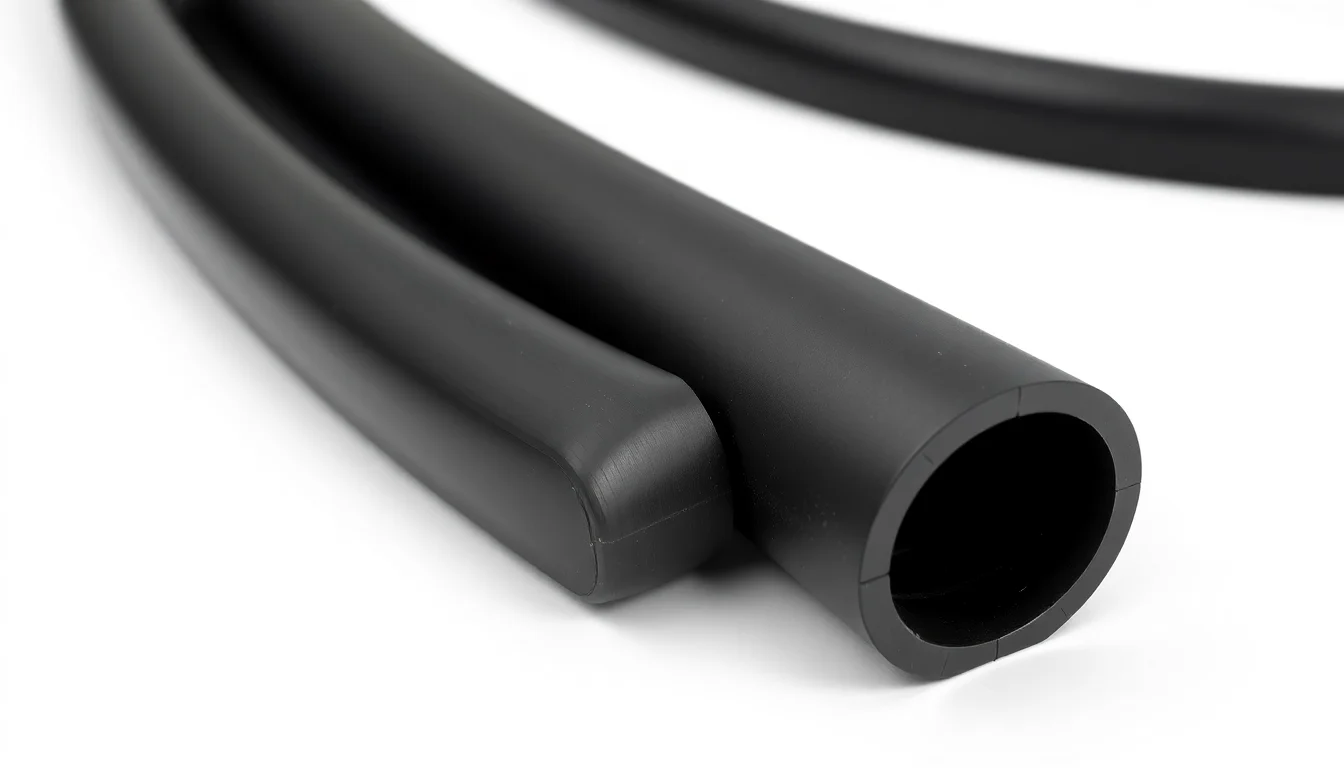
If you are sourcing custom rubber sealing profiles for outdoor or high-heat equipment, the ASTM D573 rubber thermal aging test is the standard you reference to guarantee long-term sealing performance under sustained heat exposure. This accelerated aging method — typically run at 70°C for 70 or 168 hours — measures changes in tensile strength, elongation, and hardness. As a B2B specifier or OEM buyer, requesting ASTM D573 data upfront separates commodity rubber from engineered compounds that hold their durometer and compression set after years in service.
Why ASTM D573 Matters for Custom Extrusion Projects
Thermal aging directly affects the polymer matrix of your seal. When a rubber compound is not formulated for your operating temperature range, the elastomer stiffens, cracks, or loses its ability to recover after compression. ASTM D573 gives you a numeric pass/fail on three critical metrics:
- Tensile strength change (max ±25% recommended for most dynamic seals)
- Elongation at break change (max ±30% for EPDM and silicone)
- Hardness change (max ±10 Shore A points)
In our Hunan factory experience, a European HVAC OEM once shipped 12,000 meters of door sealing strips that failed after 18 months in a Middle East solar field. The compound had passed standard QC but had never been ASTM D573 tested at 100°C. We reformulated with a higher-vinyl EPDM and a peroxide cure system, then ran 168-hour aging. The result: tensile retention above 90% and zero surface cracking. That project taught us to always match the aging spec to the real-world ambient temperature — not just the catalog rating.
Comparing Thermal Aging Performance Across Elastomers
Not all rubbers age the same. When you specify a material for a custom extrusion, you must balance thermal aging resistance with other requirements like ozone resistance, flame retardancy (UL 94), or fluid exposure (ISO 1817). Below is our standard comparison table for the three most common extrusion polymers:
| Material | ASTM D573 70h/70°C Tensile Retention | Max Continuous Temp (°C) | Hardness Change (Shore A) | Compression Set (ASTM D395, 22h/70°C) | Typical Use Case |
|---|---|---|---|---|---|
| EPDM (sulfur cure) | 85-92% | 120 | +3 to +6 | 25-35% | Outdoor door seals, automotive window channels |
| EPDM (peroxide cure) | 92-98% | 150 | +1 to +3 | 15-25% | Solar frame gaskets, high-temp cabinet seals |
| Silicone (VMQ) | 95-100% | 230 | 0 to +2 | 10-20% | Oven door gaskets, LED lighting seals |
| Neoprene (CR) | 75-85% | 100 | +5 to +10 | 30-45% | Oil-resistant electrical enclosure seals |
| FKM (Viton) | 90-98% | 200 | +1 to +4 | 15-25% | Chemical pump gaskets, aerospace fuel seals |
Note: All values are based on in-house QC data from our Changde production lines. For your specific application, we recommend adding ASTM D573 to your incoming inspection protocol — especially if your seal will face cycling temperatures above 80°C.
The Custom Extrusion Process: From CAD Drawing to Bulk Shipment
A proper CAD drawing eliminates 80% of the back-and-forth. Here is the step-by-step flow we follow for overseas OEM orders:
Step 1: Send a Cross-Section Drawing (DWG or PDF with Dimensions)
Your drawing must include:
- Overall width and height (tolerance ±0.3mm for non-sealing surfaces, ±0.15mm for sealing lips)
- Critical sealing surfaces (label them with compression ratio targets)
- Material shore A hardness (e.g., 70±5 Shore A)
- Mounting method (compression fit, adhesive backing, mechanical lock)
If you don't have a drawing, we can reverse-engineer from a sample. Lead time for a new tool: 10-15 working days.
Step 2: Tooling Cost and MOQ
| Extrusion Profile Size | Tooling Cost (USD) | MOQ (meters) | Sample Lead Time |
|---|---|---|---|
| Solid cord up to 6mm | $300-$500 | 500 | 7 working days |
| Hollow profile up to 30mm | $600-$1,200 | 1,000 | 10 working days |
| Complex multi-durometer | $1,500-$3,000 | 2,000 | 15 working days |
Tooling is a one-time cost — we store it for 5 years for repeat orders. MOQ can be negotiated for first-time trial orders in some cases.
Step 3: Compound Development and ASTM D573 Verification
Once we have your drawing and target hardness, our lab formulates a compound that meets your thermal aging requirement. We run a small batch (5 kg) and test:
- Tensile strength (ASTM D412)
- Hardness (ASTM D2240)
- Thermal aging (ASTM D573)
- Compression set (ASTM D395 Method B)
Only after passing all three do we cut the extrusion tool.
Step 4: Production and Packing for Export
Extrusion runs at 10-30 meters per minute depending on profile complexity. We vulcanize in a continuous hot-air oven (200-250°C). Final inspection includes:
- Dimensional check every 100 meters (laser micrometer)
- Durometer check per coil
- Visual inspection for surface defects
Packing: Standard export packing is 50-100 meter coils on cardboard reels, wrapped in kraft paper and polybag, then in plywood pallet boxes. For door sealing strips and longer profiles, we use steel-reinforced crates. FOB Shanghai or Shenzhen.
How to Reduce Back-and-Forth on Your CAD Drawing
Three specific rules we give every new overseas buyer:
-
Include a tolerance block — State ±0.2mm for sealing dimensions, ±0.5mm for non-sealing. If no tolerance is given, we default to our extrusion standard of ±0.3mm, which may be too loose for your press-fit application.
-
Show the flash line location — Extrusion dies leave a witness line. If you want the flash on the non-visible side, mark it on the drawing. We can orient the die accordingly.
-
Specify the mating surface material — If your seal compresses against painted steel, aluminum, or glass, tell us. We can adjust the compound's friction coefficient and thermal aging profile accordingly.
For complex profiles, we recommend sending a 2D DWG and a 3D STEP file. Our engineers review both to confirm the seal's compression behavior in the installed position.
Frequently Asked Questions
What is your MOQ for custom rubber extrusions?
Standard MOQ is 500 meters for solid profiles and 1,000 meters for hollow profiles. For first-time buyers, we can offer a trial quantity of 300 meters at a slightly higher per-meter rate. MOQ includes the first production run after sample approval.
What is the typical sample lead time?
7-15 working days from tooling completion. If we have a similar die in stock, we can produce a prototype sample in 3-5 days. Samples are free for the first 2 meters; shipping is at your cost.
What extrusion tolerance can you hold?
Standard extrusion tolerance is ±0.3mm for profiles up to 50mm width. For critical sealing lips, we hold ±0.15mm. Tighter tolerances are possible with post-extrusion calibration — please specify on your drawing.
How do you pack for ocean freight?
Coils on cardboard reels (max 50 kg each), wrapped in polybag + kraft paper, packed in plywood crates or pallet boxes. Each coil is labeled with material grade, Shore A hardness, and lot number. We can also do custom labeling per your requirements.
Can I get a sample before committing to tooling?
Yes. If you send us a physical sample or a detailed drawing, we can cut a prototype using a 3D-printed die or a modified existing tool. Sample cost: $50-$200 depending on complexity, refundable with your first production order.
Send Your CAD Drawing for a 24-Hour Quote
| Profile Type | Max Width | Tooling Cost | Sample Lead Time | Production Lead Time |
|---|---|---|---|---|
| Solid cord | 20mm | $300 | 7 days | 3 weeks |
| Hollow extrusion | 100mm | $800 | 10 days | 4 weeks |
| Multi-durometer | 60mm | $2,000 | 15 days | 5 weeks |
| Sponge rubber | 50mm | $1,200 | 10 days | 4 weeks |
Email your DWG or PDF to our engineering team. We will review your thermal aging requirements, confirm the compound, and return a formal quotation within 24 hours. For WPC profiles or silicone series, please specify the application environment in your inquiry.
Need a Custom Quote?
Send your CAD drawing or specs (material, hardness, profile, temperature range, MOQ) — our engineering team will respond within 24 hours.